
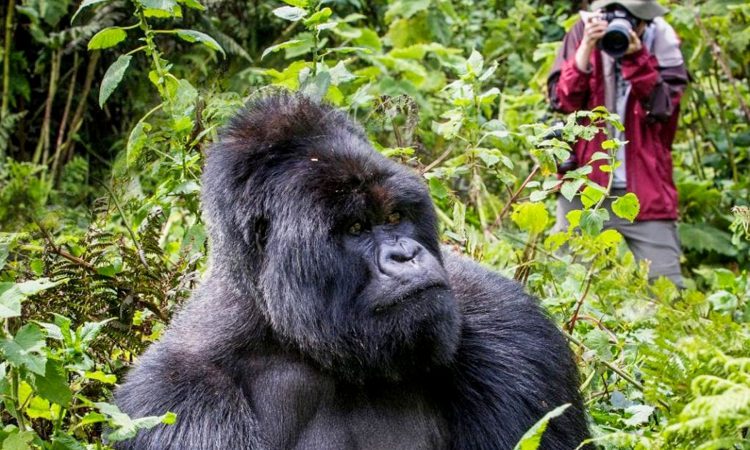
Trekking mountain gorillas in the rainy season is very possible regardless of the fact the experience might be a bit challenging. Gorilla trekking is one of the most popular safari activities in the East African region. All the remaining mountain gorillas in the wild globally survive in this region. This has made East Africa a popular region, especially for gorilla trekking activities and it explains why both local and international visitors from all parts of the world flock to the region for this lifetime adventure.
Gorilla trekking safaris to the region are remarkable and worthy of more visits. About a thousand mountain gorillas remain in the wild and 95% of them survive in the Virunga region that spans three countries including Rwanda, Uganda, and the democratic republic of Congo. It is only these three countries in the entire world where the surviving mountain gorillas call home. They cannot be found anywhere else apart from these three countries. Virunga region is dominated by dense lush tropical forests and volcanic mountains including Mount Bisoke, Mount Karisimbi, mount Sabyinyo, and Mount Muhabura, to mention but a few.
The three countries are also popular gorilla trekking destinations and have made a name of their own as the only host for endangered mountain gorillas in the whole world. During the peak season that coincides with the European and western summer, these tourism destinations are almost inaccessible as a result of the many visitors that are received annually.
Some insist that gorilla trekking is a lifetime activity, especially those who have been part of the gorilla trekking experience before. They believe that the breathtaking lifetime adventure of spending some quality time with the endangered human-like mountain gorillas is top-notch, comes once in a while and is worthy of every penny and more visits.
WHERE GORILLA TREKKING IS DONE IN EAST AFRICA.
Gorilla trekking in East Africa is done in three countries including Rwanda, Congo, and Uganda and they are the only home for the remaining mountain gorilla in the whole world. Gorilla trekking in Rwanda is done from the country’s prominent game park known as Volcanoes National Park which shelters 13 habituated gorilla families and is one of the best spots to sight these human-like primate species. Gorilla trekking in Uganda is done from the great Bwindi Impenetrable National Park and Mgahinga National Park both situated in the southwestern part of the country. Mgahinga is the country’s smallest national park though one of the most visited ones and shelters only one gorilla family.
Bwindi on the other hand shelters almost half of the remaining mountain gorillas in the wild. Congo’s Virunga National Park is the only home for mountain gorillas while Kahuzi-Biega National Park shelters the the Eastern lowland gorillas.
IF GORILLA TREKKING CAN BE DONE IN THE RAINY \ WET SEASON.
ADVANTAGES AND DISADVANTAGES OF TREKKING GORILLAS IN RAINY SEASON Vs DRY SEASON.
All gorilla trekking activities can be best done in the dry season of the year even though one can still trek during the rainy season of the year. Trekking in the rainy period is quite challenging, annoying and disturbing since gorilla trekking involves getting through dense lush forests and hiking hilly areas that make it hard to maneuver, especially during the rainy wet season as the trekking and hiking routes are slippery, muddy, and hard to pass through as a result of lush vegetation.
During the rainy season, there’s grown and increased vegetation making it hard for trekkers to access the easiest tracking routes and also destructing wildlife views of the other animal species in the spot.
During dry season on the other hand, gorilla trekking is made easy and in time since the trekking routes are dry with reduced vegetation making it easier for trekkers to access the most convenient tracking routes and have clear views of other plant and wildlife in the spot.
The only advantage for gorilla trekking in the rainy season over the dry season is the reduced costs on services like accommodation, transportation since there are few visitors during this season unlike the peak season where they are many and prices are hiked therefore most of the prices on services and other items in the low season are reduced.


