Gorilla Safaris in Democratic Republic of Congo
Gorilla safaris in the Democratic Republic of Congo are primarily conducted in Virunga National Park and Kahuzi-Biega National Park. Beyond these two, the DRC has 5 more national parks and 57 reserves and hunting areas, including Garamba, Salonga, Maiko, Kundelungu, and Upemba, home to a wide range of endemic and endangered wildlife species.
Inquire NowMountain Gorilla Trekking in Virunga National Park

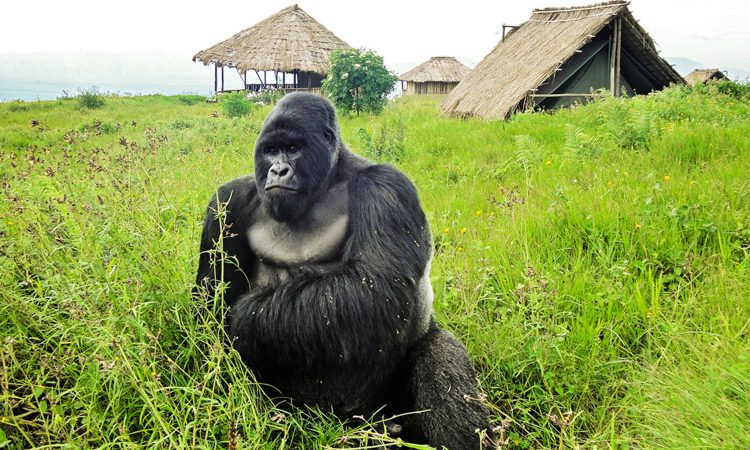
Virunga National Park in eastern DR Congo covers about 7,769 square kilometers and is well known for mountain gorilla trekking. With altitudes ranging from 680 to 5,109 meters above sea level, the park holds a wide range of habitats, including savannahs, forests, lava plains, steppes, wetlands, and snowfields.
With at least 2,000 plant species, Virunga is made up of afro-montane forests, tree ferns, and lobelia, among others. The park holds about a third of the world's remaining mountain gorillas, alongside elephants, hippopotamuses, kob antelope, and buffaloes.
Virunga has 13 gorilla groups, 8 of which are habituated and open for trekking year-round, including Lulengo, Munyanga, Nyakamwe, Mapuwa, Rugendo, Humba, Kabirizi, and Bageni. Treks are guided by experienced Virunga rangers or local trackers, involving a hike through the forest to locate a gorilla group. Treks start around 8:00 a.m. and take 2 to 5 hours or more depending on the group's location and terrain. Once visitors find the gorillas, they get one hour to observe and photograph them before heading back. The minimum age for trekking is 15, and participants must be free of diseases transmissible to gorillas.
Other activities in Virunga include birdwatching, chimpanzee habituation experiences, nature walks through forest trails, hiking Nyiragongo volcano, landscape photography of the Virungas and Mount Rwenzori, and visiting the Senkwekwe Orphanage Center.
Inquire NowLowland Gorilla Trekking in Kahuzi-Biega National Park
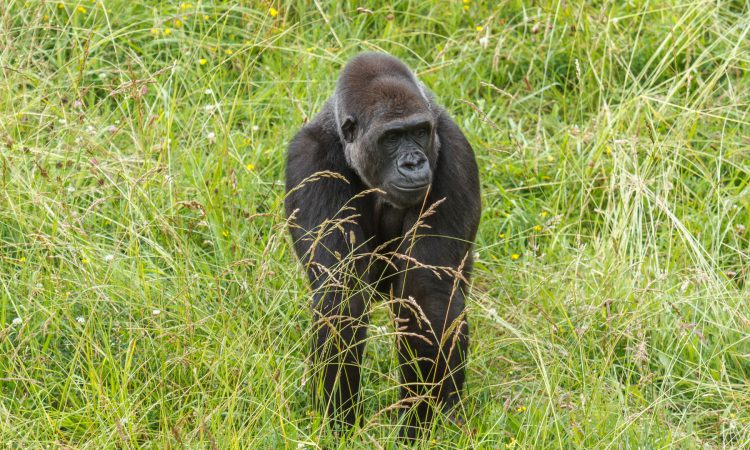
Kahuzi-Biega National Park in eastern DR Congo spans about 6,000 square kilometers and is known for eastern lowland gorilla tracking. The park takes its name from Mount Kahuzi (3,308 meters) and Mount Biega (2,790 meters), covered in afro-montane forest, bamboo forest, and sub-alpine prairie. Straddling the Albertine Rift and the Congo Basin, Kahuzi-Biega is a biodiversity hotspot, home to bush buffaloes, bush elephants, bongos, bats, and chimpanzees alongside the eastern lowland gorillas.
The park holds at least 9 gorilla groups, with at least 2 habituated for tracking. Treks generally start around 8 a.m. with a briefing from park rangers, followed by a guided hike through the gorilla trails. Along the way, trekkers may spot red-tailed monkeys, olive baboons, blue monkeys, and grey-cheeked mangabeys.
Trekkers spend an hour with the gorilla group once located, observing and photographing them in their natural habitat, before returning to the starting point. The full trek can take 4 to 6 hours or longer, depending on fitness level. Eastern lowland gorilla trekking is restricted to those aged 15 and older. Other activities in Kahuzi-Biega include birding, visits to Lwiro Chimpanzee Sanctuary, and hiking the Kahuzi and Biega volcanoes.
Inquire Now
Mount Nyiragongo Hiking Tours
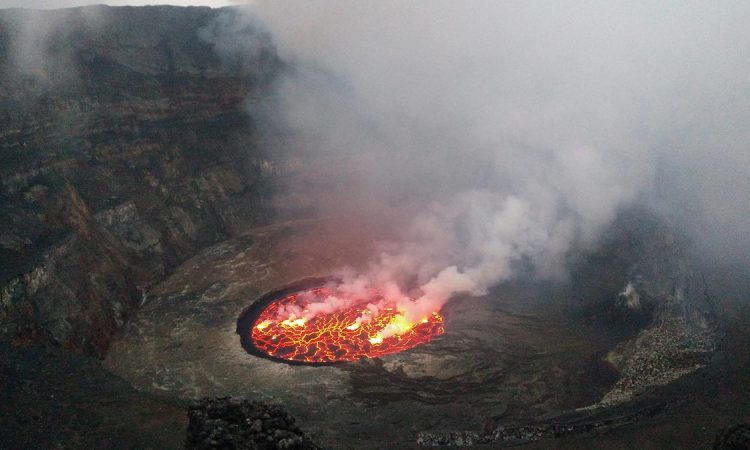
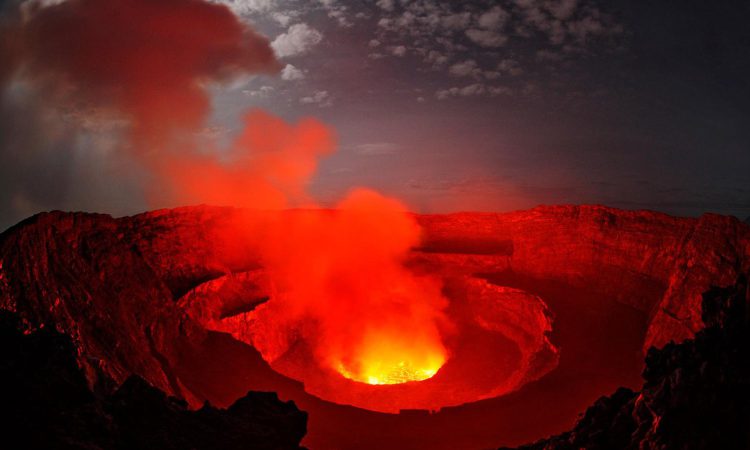
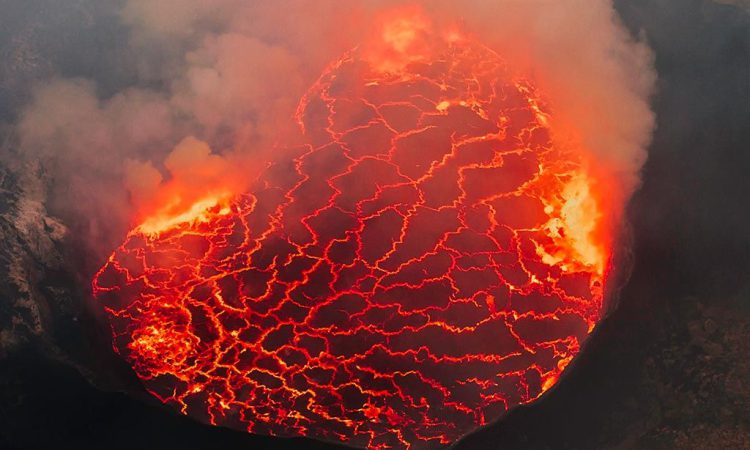
Hiking Mount Nyiragongo pairs well with a gorilla trekking tour in Virunga National Park. Nyiragongo is an active volcano in eastern DR Congo and one of eight volcanoes in the Virunga Massif, alongside Mount Gahinga, Mount Bisoke, Mount Sabyinyo, Mount Muhabura, Mount Karisimbi, and Mount Nyamuragira. Standing at 3,470 meters above sea level and overlooking Virunga National Park, Nyiragongo is considered one of the most dangerous volcanoes in the world, with lava occasionally flowing toward the settlements of Goma on its foothills.
The hike to the summit takes about 5 to 6 hours and offers views of the surrounding landscape, including Virunga National Park and neighboring volcanoes. At the top, the Nyiragongo crater lake, about 600 meters deep, can be viewed up close. Wildlife along the route includes chimpanzees, monkeys, and the Albertine Rift-endemic three-horned chameleon, alongside bird species such as the yellow-billed waxbill, double-collared sunbird, red-faced cisticola, yellow-fronted canary, spectacled weaver, and regal sunbird. The descent takes about three hours.
The safest route to Mount Nyiragongo runs through Gisenyi town in Rwanda and into Goma, the starting point for the hike. Hikers are guided to the Kibati village trailhead for a briefing on the rules and what to expect. The climb is split into five segments, starting with lower-elevation terrain and gradually becoming more challenging with loose rocks, smooth stones, and steeper slopes. The final segment, though steep, is shorter, with views of the summit cabins to keep hikers motivated. Warm clothing is essential, as conditions at the summit are cold and windy.
Inquire NowOther Safari Destinations in DR Congo
Lake Kivu: a freshwater lake covering about 2,700 square kilometers on the border of the DRC and Rwanda. Its proximity to Virunga and Kahuzi-Biega National Parks makes it a convenient stop before or after gorilla trekking, with activities including birdwatching, swimming, island exploration, canoeing, cycling, sport fishing, and visits to local fishing communities.
Garamba National Park: a 4,920 square kilometer UNESCO World Heritage Site in northeastern DR Congo, known for its wide range of flora and fauna across dense forest and savannah grassland. Activities include game viewing of lions, elephants, hippos, hyenas, and Kordofan giraffes, birdwatching for species such as the Egyptian goose, plain nightjar, and squacco heron, guided nature walks, boat cruising, and sport fishing on the Garamba River.
Salonga National Park: the largest national park in Central Congo at around 36,000 square kilometers, and one of the largest tropical forest protected areas in the world, with swamps and rivers among its features. The park shelters the endangered bonobo, also known as the pygmy chimpanzee, alongside forest elephants, Congo peafowl, blue duikers, giant ground pangolins, African forest buffaloes, Wolf's mona monkeys, sitatunga, and African grey parrots. Activities include game viewing, birdwatching, guided nature walks, and sport fishing.
Inquire Now
Okapi Wildlife Reserve: a UNESCO World Heritage Site within the Ituri Forest in northeastern DR Congo, covering about 13,700 square kilometers of dense evergreen and semi-evergreen forest and swamp forest, watered by the Ituri, Epulu, and Nepoko rivers. The reserve is home to okapi, forest elephants, chimpanzees, bongo antelope, duikers, genets, and African forest buffaloes, with vegetation including ficus, albizia, and celtis. Communities near the reserve include the Mbuti and Efe people. Key activities include tracking okapi, wildlife viewing, birdwatching, guided nature walks, camping, and cultural encounters with the Mbuti pygmies.
Upemba National Park: located in southeastern DR Congo and covering approximately 11,730 square kilometers, making it the country's second-largest park. Its ecosystem includes afromontane grassland, tropical rainforest, miombo woodland, marshes, the Kibara Mountains, Lake Upemba, and the Lualaba River. The Upemba Depression's archaeological sites make it a UNESCO World Heritage Site. Wildlife includes zebras, racket-tailed rollers, buffaloes, elephants, shoebills, and fire-finches. Activities include nature walks, hiking the slopes of Mount Kibara, sport fishing, birdwatching, wildlife viewing, and cultural encounters with the Luba people.
Inquire NowLivingstone Falls
Located in the western DRC, Livingstone Falls is a series of rapids and waterfalls on the Congo River, named after David Livingstone. The falls include seven distinct sections, including the Grand Inga Falls, the largest and among the most powerful waterfalls in the world.
The site offers kayaking, canoeing, rafting, and other water sports, and is bordered by forest that offers hiking trails and the chance to spot a variety of birds, insects, and plant life.
Inquire NowBest Time to Visit Congo
The best time to visit Congo for gorilla trekking in Virunga or Kahuzi-Biega National Park is during the dry seasons, which run from June to September and December to February. These months bring sunny, clear days with minimal rainfall, keeping the gorilla trails drier and the vegetation less dense, making trekking easier.
Some visitors prefer the wet season for a more challenging trek, when denser vegetation and muddier trails make the hike harder and finding the gorillas more difficult, but the eventual encounter more rewarding.
Inquire NowFacts About Gorilla Tours in Congo
Before you head out on a gorilla trek in Congo, keep the following in mind:
- Gorilla trekking safaris in Congo are only open to people aged 15 and above, since younger visitors are less likely to follow instructions or understand the importance of conservation.
- Visitors are allowed only one hour in the presence of the gorillas, to keep disturbance and stress to the group to a minimum.
- Only eight people are allowed to visit a gorilla group each day, for the same reason.
- Visitors are advised to keep at least a 7-meter (23 feet) distance from the gorillas to reduce the risk of spreading disease.
- All participants should be free of any illness transmissible to gorillas, and fit enough to trek long distances over difficult terrain.
- Stay within the group while trekking, and avoid spreading out or surrounding the gorillas. This keeps you from getting lost in the forest and keeps the gorillas from feeling threatened.
- If a silverback thumps its chest or charges, do not run. Stay still, avoid eye contact, and wait for the ranger guide's instructions.
- Littering is prohibited in the forest, so carry all trash back to the park offices for proper disposal. If you need the toilet, ask the ranger guide, who will help you dig and cover a hole properly.
- Stay quiet throughout the trek, as noise can disturb the gorillas.
- Treks typically start at 8 a.m. with a briefing and are only conducted during the day.
- Flash photography is not allowed, as it can startle the gorillas and provoke a charge.
- If you need to cough or sneeze, turn away from the group and use the crook of your elbow to cover your mouth and nose.
Inquire Now
Cost of Congo Gorilla Tours
To trek gorillas in either Virunga National Park or Kahuzi-Biega National Park, you'll need a gorilla permit, available through the park headquarters or a registered tour company. A permit to trek mountain gorillas in Virunga costs US$450 per person during peak season, or US$200 in low season.
To trek eastern lowland gorillas in Kahuzi-Biega, a permit costs US$400 for foreign non-residents, US$200 for East African residents, and US$20 for Congolese citizens.
Inquire NowCongo Weather
The Democratic Republic of Congo has an equatorial climate, with weather conditions varying by region. The country experiences two rainy seasons and two dry seasons each year. Rainy seasons run from March to May and September to November, while dry seasons run from December to February and June to August.
Average monthly temperatures sit at around 24.4°C, with mean annual rainfall of about 1,500 millimeters. The eastern regions, home to Virunga and Kahuzi-Biega, tend to be cooler and wetter than the northern and southern regions, where weather is largely shaped by the Congo Basin.
Inquire NowCongo Gorilla Trekking Clothing
Packing the right clothing makes for a more comfortable trekking experience in the DRC. Pack the following:
- Comfortable hiking shoes or boots with good traction, since gorilla treks involve walking on rugged, sometimes slippery terrain.
- Long-sleeved shirts or blouses, since treks take place in tropical forest with biting insects and thorny plants.
- A raincoat or jacket, since rainfall is unpredictable in these forests even during the dry season.
- Garden gloves, to protect your hands if you need to steady yourself on slippery ground.
- A wide-brimmed hat or cap, to shade your eyes, face, neck, and ears from direct sunlight.
Inquire NowHow Long Should Your Congo Gorilla Tour Be?
The right length for a Congo gorilla tour depends on the national park you choose, your travel arrangements, and permit availability. For Virunga National Park, plan for at least 3 to 6 days to account for travel to and from the park, the trekking day itself, accommodation, and other activities. The same applies to eastern lowland gorilla tours in Kahuzi-Biega National Park.
Inquire Now