
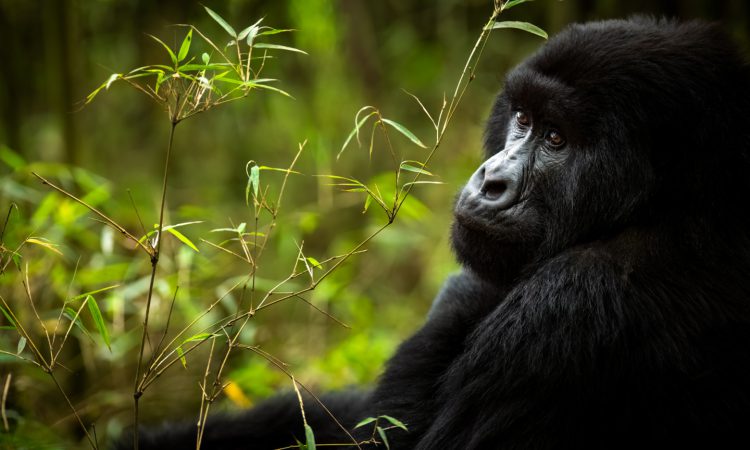
Gorilla trekking is an activity of moving through thick rainforests in search of wild gorillas. This activity is carried out in both Uganda and Rwanda and it is apparently the most popular tourist activity in the East African region bringing in travelers from all corners of the world. Travelers willing to go for this activity in Uganda partner and make all the necessary arrangements through the tour operators registered with Uganda Tourism Board. In Rwanda, tour operators still do the job, however it is important to note that Ugandan tour operators can do business of gorilla tracking in both countries and the reverse is true.
Comparison of the prices for gorilla tracking in Uganda and Rwanda.
Engaging in the exciting activity of gorilla tracking in both countries requires one to pay a fee that is non-negotiable. This fee is paid to the tour operator who later makes the bookings on behalf of the traveler to acquire the gorilla tracking permits. Travelers going for gorilla tracking in Uganda national parks are required to pay $700 for the foreign non residents, $600 for the foreign residents and the East African citizens pay Uganda shillings 250,000.
Comparison of the population of gorillas.
It is important to remember that there are only 1063 mountain gorillas left in the wild today and these are concentrated in the Virunga massif that is shared by three countries. Uganda accounts for the highest percentage of the mountain gorillas which adds up to 604. Rwanda on the other hand has 305 mountain gorillas.
Comparison based on the number of gorilla national parks.
The national parks that are inhabited by mountain gorillas in East Africa are concentrated in an area of mountain ranges known as Virunga. It is in this conservation area that most national parks are situated. Uganda has a total of two national parks harboring mountain gorillas that is to say Bwindi impenetrable and Mgahinga National Parks located in the southern parts of the country in Kanungu and Kisoro district respectively. Rwanda on the other hand has only one gorilla National Park that is to say Volcanoes National Park located in the northern provinces of the country.
Nature of tracking.
The walk of gorillas in Uganda takes you through the dense tropical rainforests. Bwindi impenetrable National Park has the oldest tropical rainforest on the African continent that is a favorable home for mountain gorillas living in the four sectors of the park that is to say Ruhija, Nkuringo, Rushaga and Buhoma. Travelers to Bwindi impenetrable National Park choose on which sector to trek which is not the case in Rwanda’s Volcanoes National Park.
The gorilla tracking walk in Rwanda takes the trekkers through the bamboo forests on the lower slopes of the dormant volcanoes in the National Park. Gorillas in Rwanda inhabit these bamboo forests since they usually feed on their shoots.
Main similarities between gorilla tracking in Rwanda and Uganda.
Even though there are some differences between the gorilla tracking experiences in both Uganda and Rwanda, there are also similarities and they incorporate;
Both countries have one gorilla specie that is to say the mountain gorillas. This is such a uniting factor and the fact that they live in the Virunga conservation area that is shared between the countries makes them much more similar genetically.
All the gorillas in these countries live in organized families that are led by lead silverbacks. Bwindi impenetrable National Park has 21 families, Mgahinga has only 1 family and volcanoes National Park has 10 families.
Each of the gorilla families in both Uganda and Rwanda is visited by a maximum of eight people per day. This helps to ensure that the gorillas are not over exploited and intimidated by the human beings.
The gorilla tracking activities in these countries is also similar in the way how they are conducted since they usually start very early in the morning with a briefing that is conducted by the professionals of the national parks, later the visitors are accompanied to the forests to embark on the tracking activity. It’s done in only one session that usually goes from morning to the afternoon since finding the gorillas may take a little bit longer time due to the different moving patterns.


