
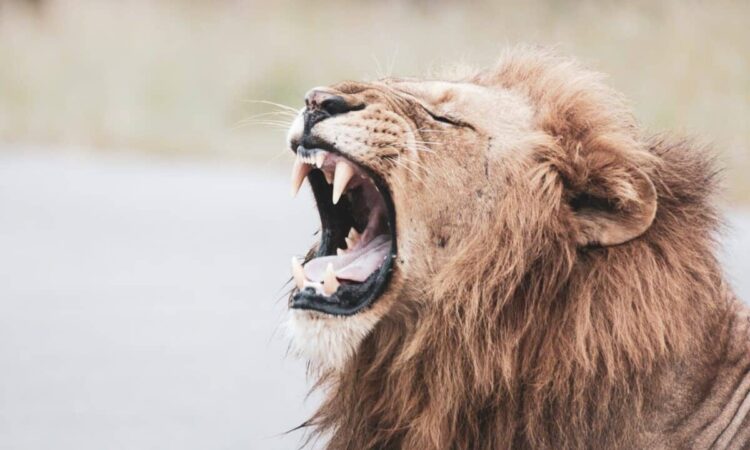
The lion also known scientifically as Panthera Leo is a large cat with a muscular broad-chested body that lives in Africa’s savannah ecosystem. This apex predator has a short and spherical head with round ears on either side of the head and a dark hairy clump at the tail tip. Adult male lions are typically larger than adult females with the former having prominent manes. The average weight of a Ugandan male lion is around 175 kilograms while the females weigh around 120 kilograms. Lions are social animals that live in groups known as pride. A pride can consist of about 15 individuals which are maintained by the females. Each pride may consist of up to 4 males with the rest being female. Both males and females can defend their pride with the former offering better protection.
In pride, the dominant male or males can drive out the younger males after the latter turn 3-4 years old. However, when they reach the age of 7-10, they tend to come back and take over the pride. The dominant male or male can sustain pride for 2-3 years before another male or coalition of males can overthrow them. The Uganda females on the other hand remain with their mothers in the pride and occasionally move to an adjacent pride when subadult. These can give birth to a cub every 2 years. Hunting is generally done by a group of females and the main prey consists of buffaloes, antelopes, giraffes, warthogs, etc. Though male lions do not hunt alongside the female members of their pride, they do hunt solo and have similar success rates.
Unlike other felines like cheetahs, lions are not known for their resilience in hunting prey because they can run at around 59 kilometers per hour and in short bursts. They rely more on blending in with the grass as they stalk and use surprise attacks to take down prey. They even prefer hunting after dark when the chances of being spotted by prey are much lower. Lions have very good eyesight in the dark which is 10 times better than humans. The adult females use their powerful claws to pull down the prey by the hindquarters and a lethal fastening bite to the throat or sometimes the muzzle to suffocate prey. The bite can last even up to 13 minutes and it can only stop when the prey stops moving. Most of the time lions will consume prey at the site of the hunt or drag them into a cover if it is a large prey.
Lions can also scavenge on carcasses, especially when they get the opportunity to do so. They face a lot of competition for this with hyenas being their main rivals among others. Each lion has quite different home ranges that overlap for them to have frequent interactions even when they split up. Lions are also keystone species and thus play a significant role in sustaining ecosystem health by preying on weak or sickly herbivores to curb diseases.
According to the IUCN Red List, lions are vulnerable species and their low population in Uganda is mainly attributed to habitat loss and conflicts with humans. There are about 310 individual lions in Uganda and they are mostly found in the large savannah national parks including Queen Elizabeth National Park, Murchison Falls National Park, and Kidepo Valley National Park. The Ishasha sector of Queen Elizabeth National Park has tree-climbing lions. This tree-climbing behavior is phenomenal and is shared only by the lions in both Uganda and Tanzania. These attract thousands of visitors to Uganda each year, which adds to government revenues.
When to see Lions in Uganda
A safari to view lions in Uganda’s savannah national parks can be done throughout the year. But the experience depends on your preference for weather conditions and crowds in the national parks. The dry season is the optimal time to go for a game drive to see lions since the weather is relatively warmer and drier. The tracks in the national parks are relatively drier and easier to navigate during this time. The chances of rainfall falling during the dry season are much lower thus making the adventure uninterruptible. The lions are usually in the open and can be more accessible during the dry season. This is because they have to follow prey and scarce water sources within the park. The dry season is experienced in January, February, June, July August, and December.
However, if you want to spot lions in Uganda’s national park during the low season when tourist numbers are low, the wet season is ideal. This season is characterized by frequent heavy rains that can interrupt your trip. This causes the tracks to become muddy and thus more difficult to navigate hence more intriguing and suspenseful to encounter lions. The vegetation is also denser thus providing cover for the lions and making them more difficult to encounter. The wet season occurs during March, April, May October, and November.
What to pack to see lions in Uganda
- Light clothes (long-sleeved shirt and trousers)
- Wide-brimmed hat
- Refillable water bottle
- Small daypack to carry some essentials while on tour
- Camera or smartphone to take photos of the lions
- Sunglasses to protect your eyes from UV light
- Bug repellent to apply to your body and protect against insect bites like the anopheles mosquitoes
- Energy-giving snacks
- Sunscreen


