
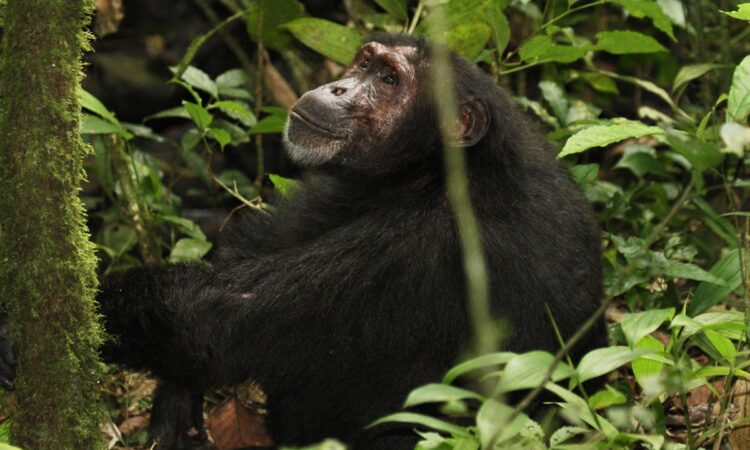
Did you know that you can do a chimpanzee habituation tour in Kibale Forest National Park? Yes it is. Chimpanzee habituation is a process in which chimpanzees are trained to get used to human presence without interfering with their natural behaviors. This is a long process that can take several years, and it involves a team of researchers, trackers, and conservationists. The chimpanzee habituation tour takes about 3 days since it begins and ends in Kampala or Entebbe. This experience allows tourists to spend a maximum of 4 hours in the presence of chimpanzees. To some, this is more interesting than chimpanzee tracking, where trekkers are only allowed to spend an hour with the chimpanzees.
About Kibale Forest National Park?
Kibale Forest National Park spans 765 square kilometers, covered by forests, swamps, and small patches of savannahs. It’s known as the primate capital of the world since it homes 14 primates, both dials and nocturnal. The park is home to over 350 bird species, including the green breastfed pita, double-toothed barbet, the blue turaco, Ross’s turaco, hornbills, hadada ibis, and more. Approximately 1,500 chimpanzees roam in the forest that consists of hardwood trees of mahogany that are over 100 years old. The chimpanzees live together with olive baboons, red-tailed monkeys, vervet monkeys, and more of the big mammals like elephants, buffalos, duikers, bushbucks, and many more.
What to pack for your chimpanzee habituation tour
For a successful chimpanzee habituation experience, you need to pack the following items listed.
- Trekking boots to make you stable in the forest
- A camera to capture and record memories
- Binoculars to magnify distant attractions
- Rain gear like the raincoat since you can’t predict Uganda’s weather
- Enough drinking water to keep you fresh
- An energy-giving snack to keep you strong
- Long-sleeved clothing to protect against bites and thrones
- Sunscreen to protect you from direct sunlight
- Insect repellant to protect you from insect bites and more.
Costs for a chimpanzee habituation permit in Kibale?
On top of that, you need a habituation permit, which costs USD 300 for foreign non-residents, USD 250 for foreign residents, and 250,000 UGX for East African citizens. The permits can only be booked from Uganda Wildlife Authority offices in Kampala through a registered and licensed tour operator.
On January 1 2027, chimpanzee habituation rates will be different for visitors. Each chimpanzee habituation experience will now cost $400 for foreign nonresidents. It will be $300 for foreign residents and $250 for Rest of Africa.
We advise our clients to book the chimpanzee permits in advance to avoid disappointments. Also, be physically fit since you will be in a position to walk long distances while following the chimps. Visitors with colds or any infectious disease are not allowed to visit these beautiful primates.
When to do a chimpanzee habituation tour?
The tour can be conducted throughout the year, but we recommend doing it in the dry seasons, which occur from June to August and December to February. The roads can be easily passed. Hence, the park is accessed, and there is no interruption with the rain compared to the wet season, which occurs from March to May and September to November.
Chimpanzee habituation experience is more than just a wildlife encounter. It’s an opportunity to actively participate in conservation efforts. Spending more time with chimpanzees during this experience rewards you with a better understanding of the behaviors, ecology, and social structures of these primates.
On the other hand, the tour is an opportunity for the surrounding communities. Revenue generated from the permits contributes to community development projects like schools, health care facilities, water-catching entry tanks and more others. Also, the locals are employed in the park as rangers and porters, and even others are employed in the safari lodges.
Are you planning for a great and memorable chimpanzee habituation tour in Kibale Forest National Park? We are ready to create with you remarkable memories. Contact us today!


