
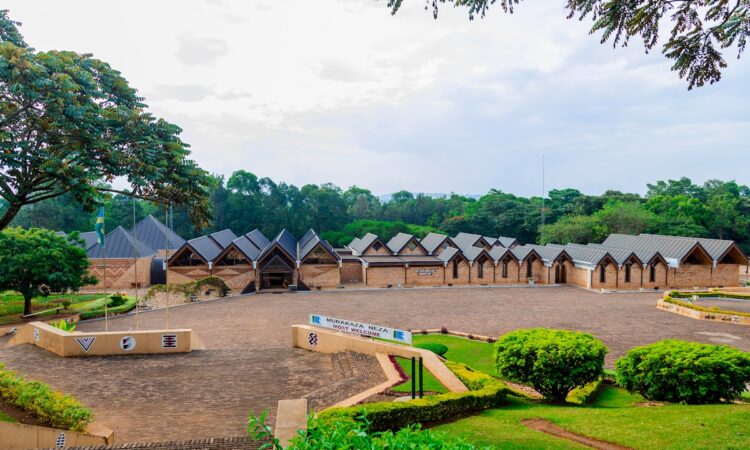
Rwanda’s exotic beauty is not limited to only the natural tourist attractions but it also has an impressive 8 museums that are worth visiting on an adventure safari in Rwanda. These museums include the following.
Ethnographic Museum of Rwanda
The Ethnographic Museum of Rwanda is situated in Huye district in the Southern Province of Rwanda. Opened in 1989, the Ethnographic Museum was formerly the National Museum of Rwanda. This museum is a site for educating visitors about Rwanda’s pre-colonial and modern socio-economic lifestyle. Among the unique things visitors can see are the Kagondo traditional drum, and the Nanguburundi drum. Entertainment is offered by the Urugangazi Cultural Troup.
Visitors have an opportunity to witness the items used by the Rwandese in the past. These include pottery, carpentry, agricultural tools, hunting tools, and leather. The architecture and fashions are also available to see. Folklore about Rwanda is also told and this is a great moment to listen and appreciate the experiences of the country’s forefathers. There is a gift shop with various unique handmade crafts for visitors to purchase as mementos.
Nyanza King’s Palace Museum
The King’s Palace Museum in Nyanza district, Southern Province of Rwanda was constructed in 1931. This was originally the home of King Mutara III Rudahigwa and his household until he died in 1953. In 2008, it became the King’s Palace Museum. Visitors to the Nyanza King’s Museum are shown Rwanda’s monarchy legacy from the 15th century to their abolition in the 1960s. There is the Mwima Mausoleum where the King’s body was laid to rest.
Visitors also enjoy exploring displays of unique furniture, artifacts, and photographs of the king. There is more insight into how the monarchy was mobile until this permanent palace in 1898. Visitors will also witness 3 huts, each with a royal life revelation. The first hut was for the audiences and gathering, while the second was where milk and beer were prepared. The third hut showcases the king’s esteemed long-horned cows. Also, the king’s 1930s house.
Kwigira Museum
The Kwigira Museum is situated on the lovely Rwesero hill in the Southern Province district of Nyanza. Originally constructed as a Royal Palace for King Mutara III Rudahigwa, he, however, died before its inauguration in 1959. Following his death, the premise was used by several government entities. These included the Supreme Court, Court of Appeal, Financial Court, and the office of the Prosecutor General.
The Kwigira Museum was also the Art Museum from around 2006. Since 2018, it has become the Kwigira Museum to display initiatives of Rwandans. These initiatives are aimed at rebuilding and uniting the nation of Rwanda, many years after the genocide. Visitors will explore various traditional artifacts and historical documents. These showcase Rwanda’s cultural heritage and its role in dealing with various matters caused by the Rwandan Genocide of 1994.
Rwanda Liberation Museum
The Rwanda Liberation Museum is an open-air museum located in the Northern Province district of Gicumbi. Through texts, artifacts, and visual media, visitors to the Rwanda Liberation Museum learn about the Rwandan Liberation Struggle. Visitors also learn about how courage, defiance, determination, and pain motivated the Rwandan Patriotic Army (RPA) and Rwandan Patriotic Force (RPF) to stop the Rwandan Genocide against the Tutsis.
The highlight of the Rwanda Liberation Museum is the unique bunker. This was significant in protecting the Chairman of High Command, Paul Kagame, and other high-ranking officials during those tough times. There is also great insight into the Arusha Agreements and the radio that were significant among the Rwanda Patriotic Force to mobilize people for the struggle. You will take photos following instructions from the site guide.
Museum for Campaign Against Genocide
The Museum for Campaign Against Genocide is situated in Kigali City in the Parliamentary Building. This museum was inaugurated in December 2017 by President Paul Kagame. Visitors to this unique site get to explore details of how the Rwandan Patriotic Army (RPA) played a huge role in stopping the Rwandan Genocide. The journey includes seeing details of the Third Battalion trenches, the Third Battalion sickbay, the Outdoor Monuments, and the Heroes Garden.
At the Museum for Campaign Against Genocide, you will learn more about why the museum is located in the Parliamentary Building. This is because it sheltered RPF politicians from 1993 to 1994. Visitors here are informed about the 600 RPA soldiers and how they rescued some victims of the genocide. You will also learn about how the chairman of high command, Paul Kagame planned with the RPF to end the genocide and defeat the violent regime.
Kandt House Museum
The Kandt House Museum was opened in December 2017 and is situated in Kigali City. Named after the first German resident in Rwanda, Richard Kandt. The Kandt House Museum is formerly a natural history museum. Visitors here will gain a lot of insight into the lives of the Rwandese before and during colonialism by the Germans. Visitors also get to learn about how and why Kigali was considered the colonial capital city.
More insight to get into the Kandt House Museum includes the life of Richard Kandt the first governor of Rwanda on behalf of the colonial masters. Visitors also gain insight into his life until 1916. This was when the Belgium government took over from the Germans as the new colonial administrators of Rwanda. Along with this colonial heritage, visitors will see well-preserved photos of Richard Kandt.
Rwanda Art Museum
The Rwanda Art Museum is located in Kanombe, Kigali city. This was the former Presidential Palace Museum. Some debris from the plane that crashed, killing the late President Juvenal Habyarimana is still there. Visitors to the Rwanda Art Museum will see exhibitions of various pieces of artwork, from over 60 Rwandan and foreign artists. The numerous lovely creations are received from donations, workshops, competitions, and festivals.
The imaginations of the artists convey themes of peace, reconciliation, tolerance, and healing. This is very important to people who experienced the tragedy of the genocide. Visitors are also provided insight into how art has combined the old style and modern styles of creating masterpieces in Rwanda. Visitors will see over 120 pieces of art and are offered opportunities to paint. You are also allowed to take photographs but be sure to follow the rules and regulations.
Museum of Environment
The Museum of Environment is situated in Karongi district in the Western Province of Rwanda. Near Lake Kivu is where the Museum of Environment was opened in the mid-2010s. This was to showcase some of the unique flora collections of Rwanda. Numerous species of medicinal plants are available here. Visitors acquire immense knowledge about their survival through indigenous knowledge and are encouraged to conserve them for future generations.
Visitors will also learn and appreciate the benefits of the medicinal plants regarding healing various ailments. How to use medicinal plants for healing is also demonstrated at the Museum of Environment. Medicinal plants available at the Museum of Environment include Maasai stinging nettle, aloe vera, ginger bush, balloon cottonbush, woolly plectranthus wild Jasminum, etc.


