
Rwanda Genocide Memorial sites are a reminder to the public of the 100 days of terror that fell on this beautiful land of a thousand hills. 7th April 1994 is a day the Rwandans will forever remain deep-rooted in their lives because it was the beginning of the Rwandan genocide against the Tutsi. This day broke the silence of the long-standing tensions between the Hutus and Tutsi that were often on a cold war. To trace the cause of the unfortunate Rwanda genocide of 1994, we need to go back in history. The tensions between these two tribes began when a Tutsi-backed rebel group from Uganda began a war on the Hutu government of President Habyarimana.
However, the spark that ignited the genocide came when H.E. Juvenal Habyarimana, the then president of Rwanda, was killed in a plane crash as he was attending peace talks in Arusha, Tanzania. It is believed that a rocket-propelled grenade hit his plane, causing it to crash. The news of his death spread through the country like wildfire, thus fuelling the hate the Hutus had for the Tutsi, thinking they were responsible for his death.
The false propaganda against the Tutsi began to spread on television and radio stations, hence beginning the terrific Rwanda genocide against the Tutsis and moderate Hutus. This genocide lasted for 100 days from April to July 1994 when the rebel forces took power and stopped the genocide. Between 800,000 and a million people died in this terror. This genocide is highly remembered by the whole world and not just in Rwanda, and thus the country set up sites to commemorate this tragic event, especially in areas that were highly affected. Below are some of these sites.
Kigali Genocide Memorial site
The Gisozi hill of Kigali is one of the places in the country that was highly affected by the Rwandan genocide. This is because of the many people, especially the Tutsi, that were killed on this hill. Over 250,000 people died on this hill alone and a mass grave was constructed to bury the victims. It is on this hill that the Kigali Genocide Memorial was built.
The Kigali Genocide Memorial showcases the names of the 250,000 people killed and buried on this hill. It is divided into three sections that help visitors to understand how the genocide on this hill was carried out. The first section is for the children killed in this genocide, the second is for the adults who died here, and the third is for the different genocides that have taken place across the whole world.
Nyamata Genocide memorial site
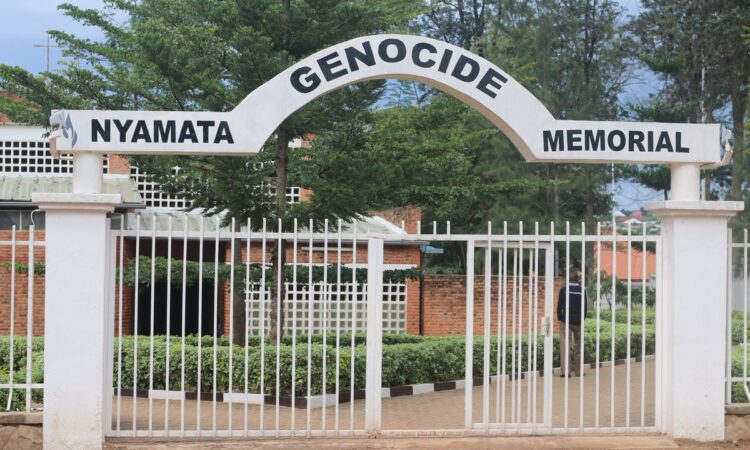
The Nyamata Genocide Memorial site is one of the genocide sites in Rwanda that tells the most horrific stories. Nyamata church is the main place where this tragic event took place. Nyamata church is a catholic church in Nyamata town, located 30 kilometers from the capital Kigali. As the Rwandan genocide was at its peak, it spread to the town of Nyamata where Hutu militias unleashed their wrath on the Tutsis in this town. Most of them fled in fear and hid in the Nyamata church and closed the doors.
With the religious background of Rwanda, the Tutsi thought they would be safe in the church as the militias may have respect for the church and not attack them. To their shock, the Hutu militias busted open the doors of the church with hand grenades. Upon entry, they open fire on the 20,000 Tutsis hiding in the church, killing most of them. The blood stains and clothes of the victims are still visible today. Visitors to the church can have a glimpse of the remains of the victims.
Murambi Memorial Site
Murambi Memorial Site was a former technical school in the town of Murambi in the southern region of Rwanda. As the genocide stretched to this town, a group of over 65,000 Tutsi had prepared and was defending itself for some days. However, as they sought refuge in the nearby church, the Bishop and Mayor tricked them into hiding in the Murambi Technical School, and that the French troops would protect them.
However, they were left there with no water or food for days and became too weak to defend themselves until the Hutu militias attacked and killed most of them as the French troops had left them. It is believed that over 50,000 Tutsi lost their lives in this school, and in 1995 it was turned into a memorial site to commemorate the Tutsi who died there.
Nyarubuye Genocide Memorial site
The Nyarubuye massacre took place in the Kibungo province, 140 kilometers from Kigali, in a Roman catholic church. As Tutsis sought refuge from the Hutu militias, they hid in the Nyarubuye Roman Catholic church. As the way it was at Nyamata church, the Hutu Interahamwe made their way to the church and using bulldozers broke open the church walls, and using grenades busted open the doors. They then proceeded to the Tutsis and reigned terror on them, killing over 20,000 occupants. The church together with other homes of priests and nuns turned to the Nyarubuye Genocide Memorial site.
Bisesero Memorial Site
The Bisesero Memorial site is located over 60 kilometers from Kibuye Kigali. The hill at Bisesero represents a sad story of the Rwandan genocide of 1994 where 40,000 Tutsi were killed by the Hutu militias as they counter-attacked in self-defence.
Nyange Memorial Site
The story of the Nyange Memorial site is a twist of sadness and heroism. At the peak of the genocide, Tutsis were hiding in a catholic church at Nyange hill when the regional and renowned priest Seromba had the church demolished by caterpillars and bulldozers, hence killing the hiding Tutsi. In March 1994, the Hutu militias and Interahamwe advanced to a school in Nyange where they ordered the students to separate themselves, the Hutus on one side and the Tutsi on the other.
The students bravely told the militias that they were all Rwandans and they were not discriminating. The Hutu Interahamwe militias open fire and throw grenades into the classroom, killing the occupants. The Nyange Memorial site was established to commemorate the sad terror that happened in this area and to pay respect to the heroism shown by the students.


