
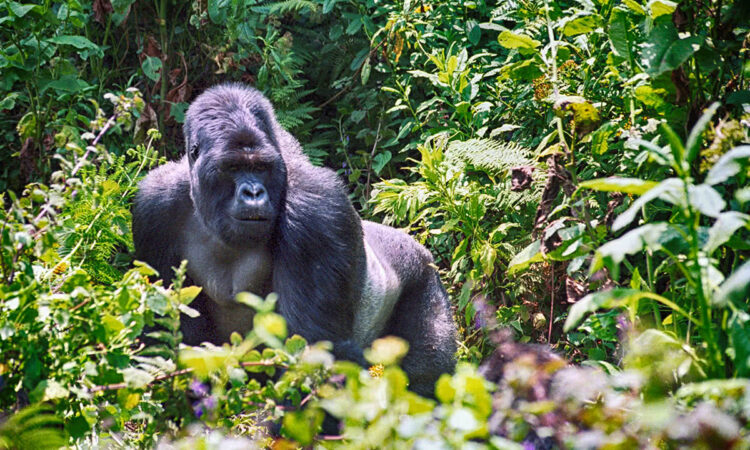
Mountain gorillas are these awe-inspiring gentle titans of the primate specie kingdom. These aren’t the kind of creatures one would sight in zoo cages. Unlike their lowland relatives, the majestic mountain gorillas don’t adapt to captivity that their lives are so much into the wild and volcanic highlands. As of today, no zoos shelter the mountain gorillas anywhere in the world.
Their survival is only attached to the rugged landscapes of just three countries that include Uganda, Rwanda, and Democratic Republic of Congo (DRC). Let’s take a deep dive into the only hosts of these rare primate species, exploring the beauty of their gorilla habitats and human efforts combined to keep the giant yet shy primates alive and safe.
Uganda – the pearl of Africa.
Uganda’s Bwindi Impenetrable forest National Park is the leading gorilla destination, situated in the south western part of the country. This isn’t just a forest but a fortress of life, sheltering nearly half of the world’s only remaining mountain gorillas. With over 500 of these primates roaming in its slopes, it is of no doubt that Bwindi is a global treasure, earning its UNESCO World Heritage status for a very good reason.
There are 4 gorilla sectors in the vast Bwindi including Buhoma sector, Rushaga sector, Ruhija and Nkuringo gorilla sectors. Depending on the traveler’s choice, one can choose to track gorillas in any of the regions even though Rushaga is the right choice for both gorilla tracking and gorilla habituation experiences.
On the other hand, there’s Mgahinga Gorilla National Park, a smaller yet stunning slice of Virunga Range Mountains. In here, it’s like gorillas coexist with the ethnic indigenous Batwa, an ancient group that have lived long within the forests of Mgahinga. Luckily enough, one would join a cultural hike with the Batwa, having remarkable interactions, hearing stories of their old hunting lifestyle while having the most iconic views of volcanic peaks.
Rwanda – The land of a Thousand Hills.
Rwanda’s nickname, “Land of a thousand Hills,” feels like one diving into a hilly region with less or nothing at all to offer apart from the hills! One would also highly doubt their eyes if they stepped their foot in Kigali City, the largest business center and capital city of the country. Through Rwanda Development Board, infrastructure has been elevated to the next level especially roads to meet the international standard and ease way for tourism sector growth and development.
Volcanoes national park is the most gorilla trekking destination in the country. Situated in the Virunga range, this vast park is a gorilla haven and home to about 13 habituated gorilla families as of 2025. The trek kicks off with a small briefing at the park’s headquarters before diving into bamboo thickets and volcanic slopes.
As the gorilla trek goes on, anything can almost happen, guests should expect to bump in anything, from wide range bird species and wildlife to a silverback giving you the most side of an eye. Either way, the whole feeling is simply unforgettable.
Democratic Republic of Congo.
Democratic Republic of Congo, the land of untamed wilderness is also a popular gorilla trekking destination in Africa. Virunga National Park one of the vibrant gorilla homes is Africa’s oldest national park dominated by active volcanoes and dense jungles alongside a good number of mountain gorillas numbering to over 350 gorilla individuals.
Trekking here involves long nature walks, hiking through steep slopes undergrowth and dodging the lava fields, all while expecting nothing but the best experience with the gentle shy mountain gorillas. The DRC’s slice of the gorilla pie is not for the faint hearted and that’s what makes extra exciting!
All gorilla trekking adventures kickoff in the early hours of the morning with a briefing on the dos and don’ts while on the exciting trek by park rangers.
Together, Uganda, Rwanda and D.R. Congo form a fragile lifeline for these humble mountain gorillas even though threats like poaching, diseases, and habitat loss still affect their life. With combined efforts of park rangers, tourism activities and neighboring communities, there’s a slow grind towards their continued well-being and survival.


