
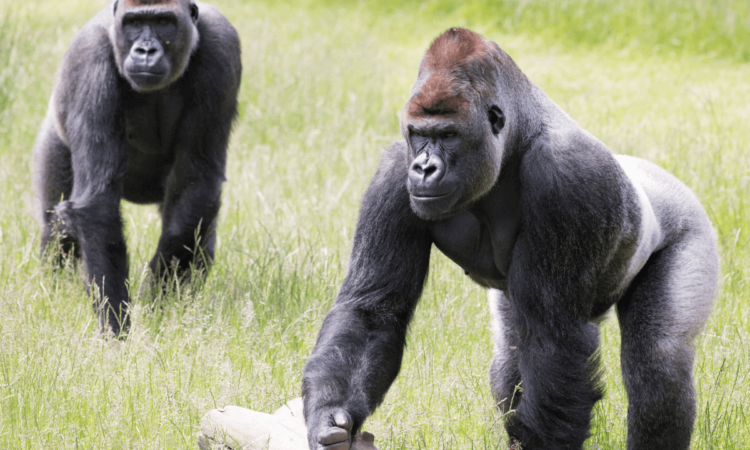
A combined primate experience couples the rare lowland gorillas of Kahuzi-Biega National Park of the Democratic Republic of Congo and the chimpanzees of Nyungwe in Rwanda. Visitors on a combined lowland gorilla and chimpanzee trek are tasked with venturing through the jungle for a time with the primates. East Africa is a gifted region with incredible attractions, and primates are one of the major tourist attractions that have invited visitors from far and wide to participate in their exploration adventures.
Embarking on this combined trekking experience to see the lowland gorillas of Kahuzi-Biega and the chimpanzees of Nyungwe is straightforward, as the visa rules of the East African countries simplify travel between these destinations. A traveling visa can be purchased at once upon entry in either country. Understanding what a combined lowland gorilla trekking and Nyungwe chimpanzee trek entails, we need to split these adventures and explain them in detail, as unveiled below.
Lowland gorilla trekking
In the entire East African region, trekking lowland gorillas in their natural environments is only done at Kahuzi-Biega National Park. This park is situated in the southeastern region of the Democratic Republic of the Congo, bordering Rwanda across the border. Lowland gorilla trekking is an interesting adventure that brings visitors on an exploration venture into the dense tropical forests of Kahuzi-Biega National Park on a search for the untamed lowland gorillas.
Part of the gorilla species, lowland gorillas, also known as the Grauer’s gorillas, dwell in this region of Africa, and most cases are regarded as Eastern lowland gorillas. Rare in many countries, the lowland gorillas of the Democratic Republic of Congo bless visitors with up to an hour of uninterrupted play, rest, and feeding. True to their name, these lowland gorillas dwell in the lower slopes of mountain bases. Trekking these lowland gorillas is not very challenging due to the relatively flat terrain of the part and their dwelling environments.
These primates are social beings, and they exhibit this feature by living in groups known as gorilla families. Kahuzi-Biega National Park has a combined number of about 12 gorilla families, and of these, 5 families are habituated and available for trekking on a daily basis. The park in its entirety hosts approximately 400 lowland gorillas. Therefore, a trekking experience in Kahuzi-Biega National Park assures you, the visitor, of encountering these incredible primates.
Chimpanzee trekking
Just like other primate treks, chimpanzee trekking involves navigating the dense forest canopies looking for chimpanzees and spending over an hour in their presence. Chimpanzee trekking comes in second place for the major tourist attractions in Rwanda. It is done in Nyungwe Forest National Park, located in the southern region of the country.
Rwanda is an ultimate primate destination, and chimpanzees rule the tropical forests. The enchanted jungles of Nyungwe Forest offer a seamless and alluring one-on-one encounter with the chimpanzee primates. The chimpanzee population in Nyungwe Forest has been on a tremendous increase, with now totalling of over 500 chimpanzees. These primates rank first in intellect due to their similarity in DNA with human beings, with approximately 98.8% DNA similarity.
Costs for a combined lowland gorilla trekking and Nyungwe chimpanzee trek
Both lowland gorilla trekking in Congo’s Kahuzi-Biega National Park and chimpanzee trekking in Nyungwe National Park of Rwanda require a trekking permit each. These trekking permits are the gate passes for venturing to these two destinations for chimpanzees and lowland gorillas. A chimpanzee trekking permit in Rwanda costs about USD 150 for foreign non-residents, USD 75 for foreign residents, and USD 25 for East African citizens. However, these costs do not include the park entry fees for individuals and vehicles. Lowland gorilla permits in the Democratic Republic of Congo cost USD 400 for foreign non-residents in high seasons and USD 400 in low seasons, USD 250 for resident foreigners, and USD 25 for nationals.
Both lowland trekking and chimpanzee trekking permits are only obtained from the governing bodies of the primate destinations in these countries through a tour company like Standard Safaris. With limits on the visitors allowed to trek these primates daily, visitors are advised to get in touch with us at Standard Safaris to purchase their permit at least 3 months before the trekking date.
Best time to take on a combined lowland gorilla trekking and Nyungwe chimpanzee trek
Lowland gorilla and chimpanzee trekking are best done during the dry months of the year. Kahuzi-Biega and Nyungwe Forest National Parks, where these primate treks happen, receive an equatorial type of climate. This climate is also sometimes called a tropical climate and characterized by dry weather conditions of hot temperatures due to the low levels of rainfall patterns. As a result of these conditions, the primate parks of Nyungwe and Kahuzi-Biega remain dry with sparse vegetation.
These conditions favor the outdoor activity of chimpanzee trekking in Nyungwe and lowland gorilla trekking in Kahuzi-Biega. Generally, the dry season favours navigation of visitors through the parks during the trekking adventures since the trails and dry. The sparse vegetation also aids visibility as these primates tend to climb trees, and overgrown forest canopies may hinder this visibility. The dry months of the year include June, July, August, September, December, January, and February.
However, there are many advantages of trekking chimpanzees in Nyungwe and lowland gorillas in Kahuzi-Biega in the wet season. The wet season is a period of prolonged rainfall and very cool temperatures that lead to vegetation growth. This rainfall, besides soaking the trekking trails, adds a touch of adventure to the visitors trekking experience by making it more challenging. With these conditions, the two primate destinations of Kahuzi-Biega and Nyungwe see a low turnout of visitors, thus promoting these destinations to offer discounts on permits. The accommodation facilities also tend to reduce their prices in the wet season, as it is the low season. The wet season is experienced from March to May and October to November.


