
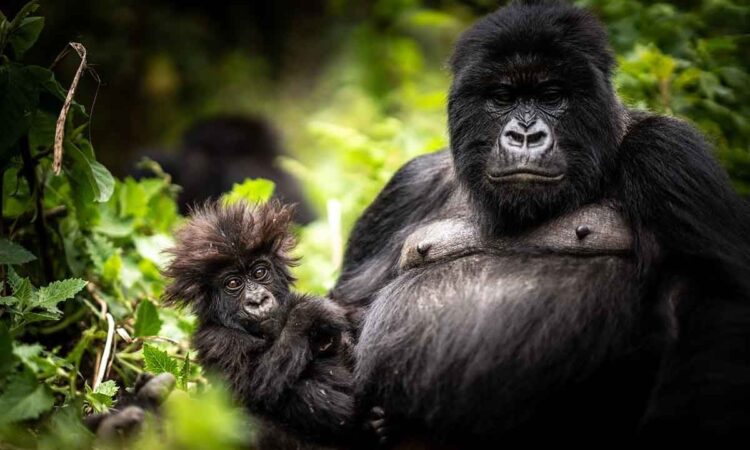
If you do not see gorillas on the day of trekking, your gorilla permit may be rescheduled to the following day. However, you might be unlucky that there are no available slots for rescheduling your permit for the next day. Also, your tour package might not include an extended stay at the park to trek on the rescheduled date. Therefore, your gorilla trekking permit will be cancelled and you will be given a refund of 60% of your payment.
Why 60% refund on the gorilla trekking permit?
It is 60% of the payment you made when purchasing the permit, as part of it covered taxes and bank charges. Remember, these are incurred by the Uganda Wildlife Authority, which is responsible for issuing and selling the permits. You should also consider that the refund is only authorized after confirmation by the warden in charge. The Executive Director of Uganda Wildlife Authority is responsible for processing your payment.
With a reputable tour operator such as Standard Safaris, we shall help you during the entire process. Buying a gorilla permit in Uganda is only possible through a tour operator, implying that you will do it with us. With us, consistent communication will be maintained prior to and during the entire gorilla trek so that you are not inconvenienced.
Other reasons why you may not see gorillas on the day of trekking?
If you develop signs of illness before tracking gorillas, you will not be permitted to participate in the activity. Instead, you will be taken to a medical facility nearby for diagnosis. If your assessment is positive, your permit will be cancelled, and a 50% refund will be processed for you. However, you will not be refunded if you were already tracking gorillas in the forest. You should also know that all medical check-up expenses are fully covered by you.
Then, you might also fail to see gorillas after sustaining an injury due to an accident before the tracking even begins. In this case, your permit will be cancelled, and a 50% refund of your payment will be given. Discounts are also given if you request cancellation of your permit 61 plus days, 46 to 60 days, and 15 to 45 days before the trekking day. The discounts given respectively are 75%, 50% and 25%. No refund is offered for cancellations made within 14 days of trekking.
What is the cost of a gorilla permit in Uganda?
The Uganda Wildlife Authority sells gorilla trekking permits at USD 800 each. These are limited to only 8 buyers per gorilla family to be tracked. Since there are fewer than 23 gorilla families to track each day, a few gorilla trekking permits can be offered for purchase each day. This causes intense competition to get a permit. Therefore, you might just choose to buy one in advance, at least 3 months before the trekking date.
Where to see gorillas?
Uganda is one of the best places to see gorillas, finding them in the 2 forest national parks, Bwindi and Mgahinga. These national parks are both situated in southwestern Uganda. Collectively, they host half of the global population of mountain gorillas, with Bwindi sheltering around 459 of them. In addition, Bwindi has at least 22 gorilla families familiarized with human presence. Mgahinga currently has only one habituated gorilla family.
How to see gorillas?
In Uganda, the best way of seeing gorillas in either Mgahinga or Bwindi is during a gorilla trekking tour. A gorilla trekking tour is done by tracking a habituated gorilla family in the forest for some time. This is after a meeting is conducted by the warden or anyone in charge while at the trailhead. Once the gorillas are found, you get the opportunity to see them for 1 hour. The entire gorilla trek is a guided one by the Uganda Wildlife Authority guides and trackers.
Gorilla trekking takes 2-4 hours or even more if the gorilla family spent the night quite far away from the trailhead. Nevertheless, you must be fit enough to walk on rugged ground. This also enhances your body fitness. After observing the gorillas, you will return to the trailhead for debriefing. Since gorillas are not the only mammals living in these destinations, you might also encounter bush elephants, bush buffaloes, chimpanzees, olive baboons, and duikers, etc.
Dressing to see gorillas?
Ensure that you are wearing a wide-brimmed hat and sunglasses to avoid the effects of ultraviolet rays from the sun. Wear light clothes made of dull colors to offer comfort while avoiding distractions caused by bright colors to wild animals. Clothes to wear must be long trousers, and the shirts should be long-sleeved to protect against insect bites in the forest. Also, wear proper hiking boots or shoes to navigate the rugged terrain.
A light rain jacket is also handy, along with a warm sweater in case of rainfall and coldness, respectively. Wear gaiters to cover your shoes and lower parts of the legs, for protection against mud, water, insects, and others. You should also come with a scarf, and pair of trekking gloves, and socks. These will offer you protection against scratches from thorns and simply warmth during cold weather conditions.


