
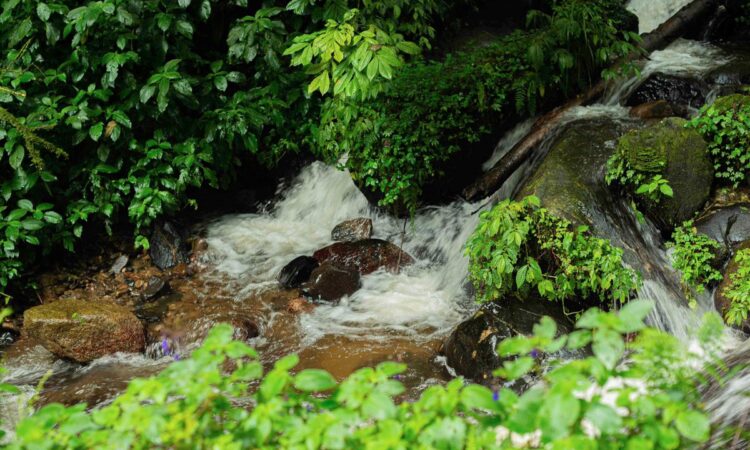
Mahoma Falls is located 30 kilometers from Fort Portal town, Kabarole district, western Uganda. The falls are nestled within a private community-managed area, a region celebrated for its fertile soils, crater lakes, and vibrant culture of the Bakiga and Batooro people. It is in proximity to Fort Portal and makes it easily accessible for both domestic and international tourists who always combine a visit here with Queen Elizabeth National Park, Rwenzori Mountains National Park, Semuliki National Park, and Kibale National Park.
Like many natural wonders in the pearl of Africa, Mahoma Falls is strongly tied to the local traditions and folk tales. It is named after the River Mahoma, which comes from the Rwenzori Mountains. Among the Batooro people who are natives of this area, Mahoma Falls holds a spiritual significance. Oral traditions say that the falls were once a place for cultural rituals for sacrifices to connect people to the gods of fertility, prosperity, and rain.
For generations, communities around these falls have preserved their sanctity, considering it not only a natural resource but also a spiritual site. Today, the spiritual rituals are no longer practiced, but the cultural stories remain alive, adding depth of meaning to the visitor’s experience.
Mahoma Falls is unique in a way that it stands out for its combination of natural beauty and cultural heritage. Unlike other falls in Uganda that are widely known and mostly visited, Mahoma Falls remains untouched and tranquil, offering a peaceful and authentic experience. The falls are managed by the community, meaning that visiting the falls, the funds directly support the community.
The area is home to different birds and butterflies that can be spotted in the greenly surrounded environment. Visitors also learn traditions and history associated with the falls from the local guides.
What to see here at Mahoma Falls?
The waterfall itself is the main attraction, trekkers can view the falls from different angles, like from the basement, admiring the cascades from above, or viewing the falls from the top. The caves are also visited since the trail to the falls passes through the caves. These are believed to have been shelters for the locals, and ritual practices were done from here.
Bird lovers will find Mahoma Falls a home as they spot Turaco, weaver birds, cuckoos, barbets, flycatchers, and more. The constant presence of water supports plant growth, hence attracting more bird life. The surrounding vegetation comprised coffee gardens, Banana plantations, vanilla gardens, and small patches of the natural forest. A tour to the Muhoma falls gives you a picture of Uganda’s agricultural richness and greenery.
What to do on a tour to Mahoma Falls?
A nature walk through different homesteads, caves, farms, natural forests, and local gardens provides a glimpse of Uganda’s rural life. Photography can be another activity as the falls have a backdrop of the Rwenzori mountain ranges. Bird watching can be another activity since the greenery and fruits around the falls attract several birds.
Cultural immersion since the community home two tribes, and these are the Batooro and Bakiga. Dive into the cultural dance, participate in local farming, and prepare local dishes, craft making, among others. The Crater Lakes tour, since Mahoma Falls, is located in the heart of Crater Lakes. Exploring crater lakes such as Lake Mwamba, Lake Kifuruka, Lake Nyinambuga, and more creates a great day.
Where to stay?
Travelers to Mahoma Falls are spoilt for choice when it comes to accommodation around Mahoma Falls. Options range from budget guesthouses to luxury lodges. Some recommended accommodations are Chimpanzee Forest Lodge, Lake Mwamba Lodge, Papaya Lodge, Ndali Lodge, Tabebuia Resort, Isunga Lodge, Lake Nkuruba Nature Reserve, and more.
A tour to Mahoma Falls is an experience that blends natural beauty with cultural richness. It offers more than just a view-it offers a story of the past that meets the present, where traditions meet nature and where every visitor leaves with a deeper appreciation of Uganda’s hidden gem.


