
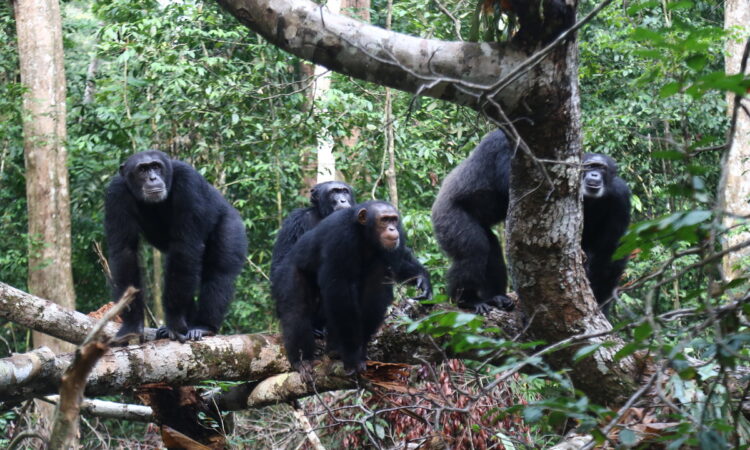
As you look to have an adventure in Kibale Forest National Park, it is important to have a thorough understanding of the park. This is why in this article, you will learn the facts and major details of the park as your guide. Kibale National Park, or Kibale Forest National Park as some may define it, is an epic primate destination widely known as the primate capital of the world.
Brief history
Kibale Forest National Park’s existence started way back in 1932 when the park was first gazetted as a crown forest. Its elevation to a forest reserve came quickly in 1948 under the colonial government. It was termed as a logged forest area that formed a series of forests connecting from Queen Elizabeth National Park. These two destinations combine to form a wildlife corridor. Fast forward to 1993, after the country fully gained independence, Kibale Forest Reserve was established and elevated to a national park status. This establishment was largely due to the discovery of several chimpanzee primates in this forest. So, as a way to protect these primates from poachers, it was established as a national park. The park’s management, following its establishment, was under the Uganda National Parks. This body was in charge of overseeing and managing all the national parks in the country. By 1996, the management of the park changed to the Uganda Wildlife Authority after it was established and given the mandate to manage all the protected areas in the country.
About Kibale Forest National Park
Kibale Forest National Park is located in the western region of Uganda, covering the districts of Kamwenje, Kyenjojo, Kabarole, and Kasese. From the capital Kampala, Kibale National Park is found about 330 kilometers away. The average mass area of Kibale is about 776 square kilometers. The park represents a huge percentage of Uganda’s primate destinations since it leads as the number one chimpanzee destination in East Africa. These amazing facts ranked it to be later known as the primate capital of the world. Although the chimpanzee primates are the face of the park, plenty of other attractions, like the flora and fauna. The chimpanzees in Kibale National Park are part of the 13 primate species in the park.
What to see in Kibale National Park?
Kibale Forest National Park offers a wide range of tourist attractions that visitors can engage in for an incredible time. Some of these attractions include the following.
Chimpanzees
Chimpanzees are, without any doubt, the major attractions in Kibale National Park. These chimpanzee primates make up the largest percentage among the 13 primate species in the park. The park hosts over 1,500 chimpanzee primates, and this number positions the park as the leading chimpanzee destination in the region with the most chimpanzees. These primates have a great likeness to humans after they share over 98.8% of our DNA. These chimpanzees in Kibale National Park can be encountered on a chimpanzee trekking experience.
Bigodi Wetland Sanctuary
The Bigodi Wetland Sanctuary is also a top attraction, seeing several tourists visit it. The sanctuary is community-managed and owned, thus, a visit to the wetland is a way to develop the community. Bigodi wetland is located on the outskirts of Kibale National Park and is an animal sanctuary that hosts multiple primates like olive baboons, Uganda red colobus monkey, black and white colobus monkey, vervet monkeys, and L’Hoest monkeys, and several bird species.
Birdlife
Kibale National Park is an important birding area since it hosts several bird species. These bird species are scattered across the different ecological systems of the park. These birds range from the resident endemic species to the migratory birds only seen in specific seasons. Some of the bird species to spot in Kibale National Park include black bee-eater, African pitta, western nicator, blue-throated roller, red-chested sunbird, little greenbul, papyrus gonolek, Afep pigeon, green-breasted pitta, black-capped apalis, and bronze sunbird, among many others.
What is the cost of a chimpanzee permit in Kibale?
The cost of a chimpanzee permit in Kibale National Park varies in originality of visitors. Visitors of foreign non-resident status pay USD 250, foreign residents pay USD 200, and East African citizens, including Ugandans, pay UGX 180,000. As visitors gear up for a lifetime discovery of the chimpanzee primates in their natural environment on a chimpanzee trekking experience, a chimpanzee permit is required. This important document guides and grants access to the chimpanzees in Kibale Forest National Park to the visitors. A chimpanzee permit can only be obtained through a tour company like Standard Safaris from the governing body, Uganda Wildlife Authority. Purchasing a chimpanzee permit is best done at least 3 months before the trekking date.
Where to stay in Kibale?
Accommodation is very important for the success of one’s exploration of Kibale National Park. Accommodation in Kibale National Park is arranged to fit a visitor’s preferences, especially financially. The accommodation facilities are located very close to the park, giving visitors quick access to the park. These facilities offer different amenities that differ in the classification of the facility. Accommodation ranges from luxury and midrange to budget, thus every visitor has an uninterrupted stay around the park. Some of the facilities to look out for include Kyaninga Lodge, Ndali Lodge, Primate Lodge, Kibale Forest camp, and Chimpanzee Guesthouse, among others.
How to get to Kibale National Park?
Visitors can get to Kibale National Park by either road or air transport. This is because of the improved transportation networks that have eased access to the park. Road transport is the cheapest and most common, but it also takes longer to get to the park. Different roads or routes connect to the park from multiple directions. The Mubende-Mityana-Kasese road is the quickest route to the park, which takes about 6 hours of straight driving.
Air transport is the quickest and most reliable means of transport from the capital to the park. Although there are no direct flights to Kibale National Park, there are alternative airstrips like Kasese, where a scheduled flight can land and then connect to the park by road.


