
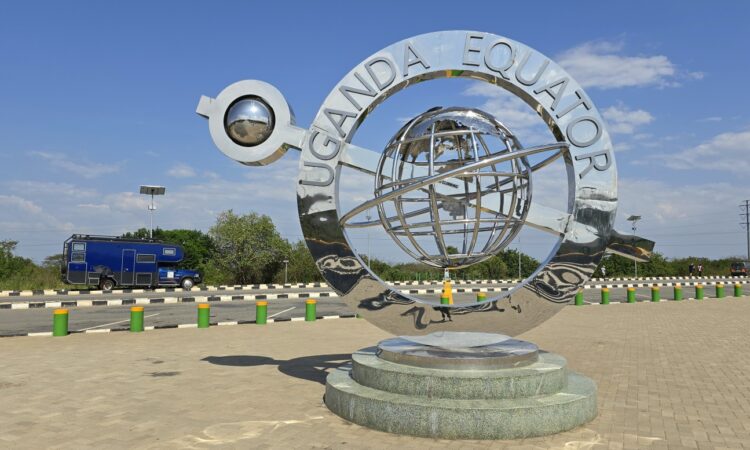
Uganda is blessed with a number of Equator Monuments that visitors can explore. The equator is the imaginary line that divides our planet into two hemispheres, creating the northern and southern hemispheres. There are at least 3 destinations where this imaginary line offers immersive photography experiences, complete with scenic backdrops. The Equator, which is 0° latitude, can be experienced at Kayabwe, at Lake Victoria, and in the Ibanda district, etc.
Kayabwe Equator Monument
Located in the Mpigi district, this Kayabwe Equator Monument is the most visited among all the Uganda Equator Monuments. Most visitors to the southwestern part of Uganda make a stop here. While having fun at the Equator Monuments, enjoy local delicacies and fresh roadside fruits to add flavor to the already exciting journey. With dedicated local guides, your knowledge of the destinations and demonstrations will be enhanced.
Lake Victoria Equator Monument
Found in Entebbe, on the northern part of Lake Victoria. This crossing is unique because it offers visitors a chance to stand above the biggest freshwater lake in Uganda.
Ishongoro Equator Monument
The Ibanda district is just 2.8 kilometers from Ibanda town. This offers a beautiful backdrop to visitors.
What to do at the Equator Monuments?
A lot can be done at the Equator Monuments since they offer a geographical link to two hemispheres of incredible scenery. Below is what can be done at these monuments.
Photography
Photo experiences at any of the destinations with Equator Monuments are almost mandatory. Standing with a foot in either hemisphere is very exhilarating. The beautiful backdrop, including greenery, people, and open water, makes the bold, iconic monuments look even prettier. Capture as many photos as possible to preserve the memories of your equator monument experience for years to come.
Coriolis effect demonstrations
At Kayabwe, a guide will demonstrate the unique physical properties that confirm your position right at zero degrees latitude. The demonstration shows how water drains clockwise while in the southern hemisphere. Meanwhile, the same water will drain anticlockwise in the northern hemisphere. Right at the equator, the water will instead flow straight down, indicating the Earth’s rotation.
Souvenirs
At the equator monument in Kayabwe, you will get some souvenirs, including handmade crafts, colorful fabrics, and fine art, among others. These pieces are handmade by Ugandans, which enhances their local charm. Purchasing them is beneficial to both you and the sellers. You will keep them for memories of visiting the equator crossing. The money you offer for buying the piece is to support local livelihoods.
Local engagement
This brings the equator monument experience to life when you meet the friendly local people at the destinations. With the indigenous people, you will share stories, experiences, traditions, crafts, and much more. Connect with cultures to appreciate their unique way of life and history. Find out their different sources of livelihoods and how they cope with the unique weather patterns right at the equator.
Birdwatching
For visitors to the Equator Crossing at Lake Victoria, you will have an opportunity to watch unique bird species. There are so many aquatic bird species, including the iconic shoebill stork, that can be watched at Mabamba swamp, just 31.9 kilometers away. Other bird species include cattle egrets, hamerkop, herons, and grey crowned cranes, among others. You will take photos for future memories.
What to travel with?
Plan your travel to the Equator Monuments of Uganda with light, breathable clothes. This is for your comfort. A camera or even a smartphone to capture all the iconic moments while standing at the center of the earth. Do not forget sunscreen, sunglasses, and wide wide-brimmed hat to protect yourself from the effects of direct sunrays. Come with comfortable walking shoes to ensure that you enjoy your exploration in any of the destinations.
For the souvenirs, you will have to come with some cash to purchase some pieces. A refillable water bottle is handy to ensure that you are hydrated at all times while at the equator crossing. Since rainfall can fall anytime in the equatorial regions, you will need to move with a light rain jacket to avoid getting wet.
How to travel?
The best mode of transportation to the equator crossings is by road. The Lake Victoria Equator Crossing is just 8.1 kilometers south of Entebbe town. Driving to this destination takes around 16 minutes. Via Masaka and Lwengo, the Equator Monument in the Ibanda district is 311 kilometers west of Kampala. This scenic trip to the Ishongoro Equator Crossing point typically takes between 6 to 7 hours. Traveling by road to the Equator Monument in Kayabwe takes 2-3 hours along 81.2 kilometers.
Best time to visit
The best time is mostly the dry season, running from June to August. December to February is another period where Uganda experiences a dry season. Rainfall during the dry season is mostly rare, and usually less frequent if it occurs. This causes clear blue skies and navigable access roads. But dry seasons run during peak seasons, which implies larger crowd levels at the destinations. So, for fewer crowds and quieter experiences during this season, go on weekdays.


