
Uganda does not seem to stop with its surprising wildlife adventures, and a tour to Ajai Wildlife Reserve is no exception. A tour to Ajai Wildlife Reserve feels like stepping into another world of unlimited discoveries and adventures. Think of a place tucked in a remote location, driving you away from your busy work schedules into a world ready to be explored. Ajai Wildlife Reserve is in a highly sought-after, serene place that evokes the African savannah wilderness. A tour to Ajai Wildlife Reserve is a special adventurous that rejuvenates the spirit of exploration.
Brief background and location of Ajai Wildlife Reserve
The formation of the Ajai Wildlife Reserve dates back to the early 1900s, when Uganda was under British administration. Ajai, for whom this reserve is named, was a popular chief in the West Nile region. In 1937, he offered part of his chiefdom’s land and palace as a protected zone for wildlife living in this area. During this time, it was declared as a game sanctuary. Unfortunately, the wildlife population boomed following numerous inter-clan wars and sleeping sickness epidemic. This had forced people out of this area fearing for their lives.
During the 1950s and 1960s, Ajai Wildlife Reserve became a popular destination in West Nile region for sport hunting. In 1962, Ajai was established as a White Rhino Sanctuary, then Ajai Game Reserve in 1965. Following poor management of Ajai a lot of wildlife species reduced in number. By 1994, buffaloes became locally extinct in Ajai. In 1996, after the formation of the Uganda Wildlife Authority, they took charge of its management. This resulted in Ajai Wildlife Reserve. Ajai Wildlife Reserve is 166 square kilomters in size in Madi-Okollo district.
Introduction of rhinos to Ajai Wildlife Reserve
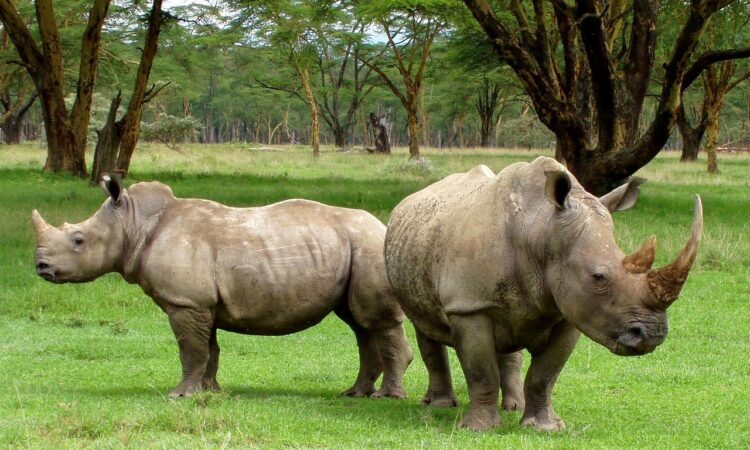
The southern white rhinos are the identity of Ajai Wildlife Reserve from the time it was formed by Chief Ajai. This reserve once had a thriving population of white rhinos, but they were killed by poachers. This poaching was caused by the increasing human population, which resulted in food insecurity. This poaching increased when the illegal sale of rhino horns in South Sudan had become lucrative. By the late 1979, the last wild rhino was killed in Ajai Wildlife Reserve. This made them locally extinct in the place for decades.
Since then, the government planned to reintroduce white rhinos to their natural home of Ajai Wildlife Reserve. This plan was later executed in January 2026 when 4 rhinos of the first batch of the planned 20 were reintroduced to Ajai from Ziwa Rhino Sanctuary in Nakasongola district. This was also the first ever successful translocation of rhinos within Uganda. This is expected to safeguard and enhance the population of white rhinos in the country. The remaining 16 rhinos will be translocated once the 4 have stabilized in Ajai Wildlife Reserve.
What to see on a tour to Ajai Wildlife Reserve?
Ajai Wildlife Reserve features a wide range of attractions that put it at the apex of many wildlife reserves in Uganda. Below are some of the attractions to see at Ajai Wildlife Reserve.
Wildlife
Wildlife species can be spotted during a tour to Ajai Wildlife Reserve. Ajai Wildlife Reserve has a large surviving population of mammals that roam across its vast wilderness. These wildlife species are the major attractions of this reserve, and the notable ones are the southern white rhinos. Other than rhinos, Ajai Wildlife Reserve is home to animals like buffaloes, hippos, hartebeests, bushbucks, waterbucks and Uganda kobs etc. Ajai also has primates like the olive baboons, black and white colobus monkeys, vervet monkeys, and pattas monkeys etc.
Bird species
A tour to Ajai Wildlife Reserve is a chance for you to see birds. The different vegetation zones in Ajai Wildlife Reserve are home to 122 bird species, both migratory and resident species. The seasonal visiting birds are the migratory birds, as the common residents of Ajai are the endemic species. Some of these birds include African open-bills, lizard buzzards, malachite kingfishers, black kites, African thrushes, bataleurs, African cuckoo-hawks and red-eyed doves.
Scenic beauty
Ajai Wildlife Reserve has a variety of habitats including swamps, rivers and savannah woodland and grassland. Ajai Wildlife Reserve is on the west bank of the Nile River. This is a catchment of rivers, Ala, Acha and Gazi. During the wet season, the floodlands of Ajai are flooded, leaving an elevated island of savannah woodland. The vegetation in Ajai Wildlife Reserve is mixed to offer unmatched beauty. Riverine vegetation in Ajai Wildlife Reserve shelters plenty of plant and tree species. Plants to see include Pennisetum, and Hyparrhenia species.
Cultures
The villages surrounding Ajai Wildlife Reserve are occupied by a diversity of cultures and backgrounds. The predominant tribes here are from Madi and Alur, while others are Lugbara and Aringa among others. These people engage in a diverse range of economic activities, but small scale farming is the highlight. They grow cassava, maize, ground nuts, sorghum, simsim and millet on the riverbanks and in swamps. Tobacco and cotton are also grown on a large scale.
The people also have a long history associated with Ajai Wildlife Reserve. They have been fishing in the rivers since time immemorial. They used to hunt wildlife and get their products to use for different purposes. For example, they used wear rhino horns for various purposes including expressing loyalty to their chief. The people also consider Ajai Wildlife Reserve as a sacred place where they seek guidance, protection and blessings from their ancestors and gods.
What to do during a tour to Ajai Wildlife Reserve?
There are a variety of tourist activities done at Ajai Wildlife Reserve. These activities help visitors to explore this reserve and appreciate what it offers. Below are some of the activities.
Game viewing
A tour to Ajai Wildlife Reserve also presents opportunities to do wildlife viewing safaris. With a vast population of wildlife species in Ajai Wildlife Reserve, visitors on a game viewing experience can explore here. Game drives offer visitors a chance to spot and get close to the wild animals while comfortably seated in the vehicle. Animals to see include hippos, rhinos, hartebeests, waterbucks, bushbucks and olive baboons.
Birdwatching
A tour to Ajai Wildlife Reserve also offers thrilling birdwatching excursions. This is a chance to spot as many bird species as possible with the help of a professional birding guide. The reserve has designated birding trails that lead visitors across the different vegetation zones to spot these birds. Other bird species to spot in Ajai include striped kingfisher, piacpiac, laughing dove, whistling cisticola, and broad-billed roller etc.
Nature walks
A nature walk in Ajai Wildlife Reserve is done on foot with a guide from the reserve helping you to explore the wonders. This is a chance to view the lush landscapes while you identify plenty of butterflies and birds. You will also walk beside the shimmering rivers to soak in the cool and peaceful atmosphere they create.
Cultural encounters
A tour to Ajai Wildlife Reserve is a big opportunity to witness the unique lifestyles of the Alur and Madi people. This is availed so that you can learn a lot about their distinctive clans, beliefs and practices. If you are seeking for the best traditional music and dance these people will give you an unforgettable time. Learn more about what makes Ajai Wildlife Reserve culturally significant to them. For example, this is where Chief Ajai had his palace. It is also in Ajai Wildlife Reserve where the locals believe their gods answered their prayers, especially bringing rains.
Cost of entering Ajai Wildlife Reserve?
Visitors to Ajai Wildlife Reserve a charged different rates based on their nationality. For foreign non-residents the cost is $10 dollars per person. Foreign residents and citizens from the rest of Africa each pay $5. Ugandans and citizens of the East African Community pay UGX 2,500 per person. This covers wildlife viewing experiences in Ajai Wildlife Reserve but not activities such as birdwatching, naturewalks and also car entrance.
How to travel for a tour to Ajai Wildlife Reserve?
To enjoy a tour in Ajai Wildlife Reserve you will have to be transferred to the destination. Road transport is the most suitable means if your journey starts in Kampala or Entebbe. The distance you will cover by road from Kampala to Ajai Wildlife Reserve is 378 kilometers. The vehicle will pass via Kampala-Gulu highway, through Masindi and Pakwach. If the traffic is okay, driving to Ajai Wildlife Reserve takes 7-8 hours. The recommended vehicle to drive is a 4X4 safari land cruiser. But, safari vans, buses, SUVs and sedans can also take you there. We have all these at Standard Safaris.


