
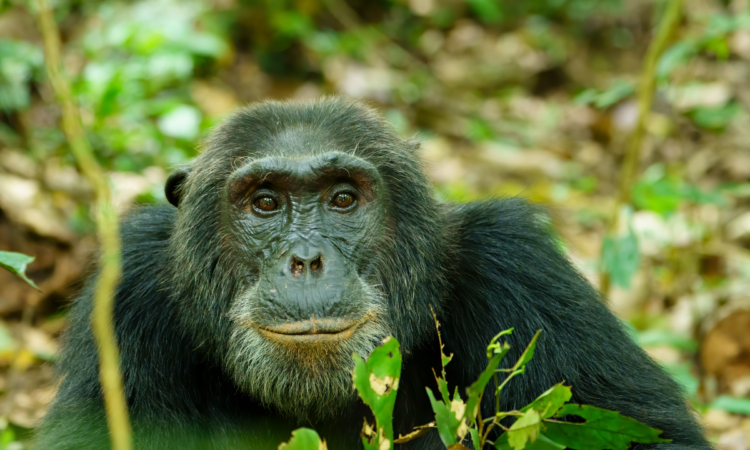
Would you love to know what do chimpanzees eat, including the variety of food that do make up their diet? Firstly, chimpanzees are omnivorous, capable of feeding on both plants and animals. Chimpanzees were widely known as strictly herbivores, until researchers like Dr. Jane Goodall made it clear that they occasionally eat meat. They tend to include a diverse range of foods to meet their nutritional needs. The foods that chimps eat not only offer them energy, but also are for medicinal functions and growth and development.
Now if you are planning to see chimpanzees in the wild, you will find out what do chimpanzees eat. Explained below are the several foods that chimpanzees eat.
Fruits
Almost 65% of chimpanzee’s diet is made up of different types of fruits that they harvest directly from the forest trees. The list of fruits chimpanzees desire in their diet include mangoes, wild berries, figs, papayas, bananas, and apples etc. It is important to know that each fruit is available only during its season and the chimpanzees will eat it accordingly. These fruits are a huge source of sugars, carbohydrates, vitamins and fibres for the chimpanzees to sustain their health.
Meat
Chimpanzees are omnivorous and Dr. Jane Goodall and co. discovered they eat meat by hunting smaller primates like red colobus monkeys. Other primates they eat include baby baboons, bush babies and pattas monkeys etc. Chimpanzees have also been observed to eat meat from banded mongooses, duikers, common warthogs and others. The meat makes up 6% of their diet in the wild. In the meat, the chimpanzees derive mostly proteins, as well as calcium and iron etc.
Insects
Chimpanzees love eating insects like termites and ants, making up 4% of their diet in the wild. They eat insects as snacks and harvesting is by using tools like small twigs to extract them from inside ant hills. Insects like ants have a high protein content that chimpanzees can utilize in their bodies. Calcium, phosphorus and potassium are also offered by the ants. So insects are part of what do chimpanzees eat.
Seeds and nuts
Chimpanzees also do eat a decent quantity of seeds and nuts harvested from various trees scattered across their habitats. The seeds and nuts they access are often protected by very hard shells. The chimps therefore use stones to crack them open for consumption. In the wild, they tend to find kola or panda nuts very satisfying. These offer them a variety of nutrients including healthy fats, proteins, vitamins, and calories etc.
Honey
A small diet of chimpanzees is also made up of honey that is harvested using sophisticated tools like sticks or leaves. They can alternatively break beehives open to access the honey inside. Additionally, chimpanzees extract honey for a sweet energy-rich snack. They need honey when their primary foods are scarce in the forest. This honey contains a variety of minerals especially calories for energy.
Leaves
As much as chimpanzees prefer fruits, they also feed on leaves, flowers, shoots and tree bark, among other vegetation. Around 19% of their diet is dedicated to foraging for leaves thus making it a significant source of their nutrients. The chimpanzees derive proteins and fibres from the various fruits they get in the forest. Surprisingly, chimpanzees eat leaves in cases of fruit shortage, especially in the wet season when the fruits are not yet ripe.
Medicinal plants
Chimpanzees are also highly intelligent and can instinctively select foods that can help heal a disease. Among these food types are the medicinal plants that are eaten by the chimpanzees mainly for their medicinal value. For instance, some plants help chimps get rid of parasites that could harm their digestive system. These include wild sunflower. Unripe figs are eaten by chimpanzees for their de-worming properties.
Milk
In the wild breastmilk is dedicated to baby chimpanzees for up to 5 years before they transition to consuming solid food. Their mothers do the breastfeeding that helps in the rapid development of the infant chimps. This milk also helps in hydration while offering a wide range of nutrients to the baby. Nutrients found in the milk include proteins, fats, calcium, carbohydrates and vitamins among others.
Where to see chimpanzees?
Several chimpanzee destinations are scattered across the East African region where visitors can go and encounter chimpanzees. While there you will witness what do chimpanzees eat in the wild among other things. Some of these destinations include the following.
Kibale National Park
Situated in the pearl of Africa, Uganda, Kibale National Park is one of the leading chimpanzee destinations in East Africa. Kibale National Park is identified as the primate capital of the world since it hosts the largest number of chimpanzees in Uganda. This park hosts 1,500 chimpanzees, making it a perfect place to encounter chimpanzee primates in the wild. Discover what do chimpanzees eat during a chimpanzee trekking tour or chimpanzee habituation experience.
Gombe National Park
Gombe National Park in Tanzania, adjacent to Lake Tanganyika is among the best chimpanzee destinations in the region. This park became popular when it was still a game reserve, when the renowned primatologist Dr. Jane Goodall was hosted. It is in Gombe National Park where Dr. Jane Goodall reported that chimps use tools effectively to eat insects. Gombe National Park is 35 square kilometers in size and shelters 90 chimpanzees that can be tracked and observed every day.
Nyungwe National Park
Nyungwe National Park is also another favorite chimpanzee destination where the primates can be encountered in their natural habitat. Nyungwe National Park lies in the southern region of Rwanda at the border with Burundi. Your question of what do chimpanzees eat will be answered by exploring the 1,019 square kilometer Nyungwe National Park. This forested park has 500 chimpanzees and seeing the chimps is done during a chimp trekking tour.


