
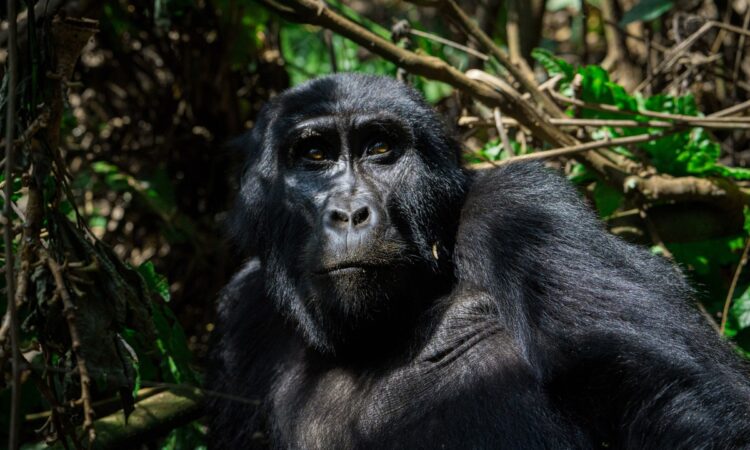
Are there mandatory vaccinations for gorilla trekking in Rwanda? No! However, every visitor from a country affected by Yellow Fever must receive its vaccine. This is also essential if your trip takes place in Rwanda and any country within East Africa. Yellow Fever Vaccine certificate is highly required at border entry points. Nevertheless, it is recommended to vaccinate against some diseases just for your own safety and that of mountain gorillas. These include Covid-19, Hepatitis A and B, Tetanus and Typhoid among others.
Importantly, gorillas share 98% of their DNA with us, humans. Therefore, they are vulnerable to some of the diseases that attack us. If you vaccinate against the mentioned diseases, you directly and indirectly avoid this. This plays a huge role in the conservation of an already endangered species.
Where to do Gorilla Trekking?
Only one destination offers gorilla trekking if you are in Rwanda. It is only in Volcanoes National Park in the northwest of this country. A healthy population of mountain gorillas live in this park of 160 square kilometers in size. The lowest number of families habituated for human presence is 12. This has attracted thousands of visitors to the park for a chance to see these precious apes in the wild. Each of them must pay $1,500 to trek a mountain gorilla family. These include Amahoro, Noheli, Susa, Karisimbi and Agashya and Sabyinyo etc.
How to do Gorilla Trekking?
Fresh from bed, go to the park headquarters in Kinigi. Present your gorilla permit before you meet the park rangers. A briefing ensues where the rules and regulations of proper gorilla trekking are provided. Then, ranger guides will help you track a habituated gorilla family inside the forest. The Volcanoes gorilla trek could take you 2 hours or even up to 6 hours if hiking presents a challenge to you. Another reason for this long duration is that sometimes gorillas tend to move quite far away. Therefore, they will require more time to encounter.
However, once encountered, an hour is enough to stay closer to them while observing them without making noise. In the forest, you get opportunities to see a lot of fauna and flora aside from mountain gorillas. A number of buffaloes, bushbucks, golden monkeys, giant forest hogs and duikers live inside. Sunbirds, Rwenzori turacos, Rwenzori batises and others are some of the bird species that you might find interesting to spot. When you return to where briefing occurred, it automatically marks the end of your gorilla trekking tour.
How to Travel?
In your epic visit to Volcanoes National Park, road or air transport are the only modes of transportation available. By road transportation, you have a distance of 115 kilometers to cover in 2-3 hours from Kigali to Volcanoes National Park. No matter the terrain, a 4X4 safari land cruiser takes you to the park safely and seamlessly. Aside from that car, we at Standard Safaris offer a variety of cars for you. They include sedans, SUVs, safari vans, minibuses, buses and others.
Book air transportation, an option that offers aerial views of the rolling hills and other physical features. The nearest airport to Volcanoes NP is situated in Musanze. A flight that begins from Kigali International Airport takes a half of an hour to arrive there. Volcanoes from here is only 22.6 kilometers away on the road. Akagera Aviation offers helicopters and you can book a chartered flight in advance. Standard Safaris has dedicated staff to help you with this, which takes away your stress in case you get actively involved.
When to Travel?
Your plan to travel to Rwanda for a gorilla trek can be done throughout the year. Take advantage of the dry season, which actually occurs during peak season to get the best treks. Experience this period in June until early September, or from December to February. A dry season comes with favorable weather for this sort of outdoor activity. Rainfall is reduced in terms of quantity and frequency. This allows you to move on the drier gorilla trails without slipping or slowing down.
Also, with low rainfall, the vegetation inside the forest becomes lesser in the dry season. As a result, the gorilla family are more visible in the forest. In the wet season, the second of the 2 seasons experienced here, rain falls a lot more and heavily. This is the cause of the dense vegetation cover and muddy slippery terrain. For hardcore visitors who love to meet challenges in tracking gorillas, this is the best time for you to travel. Come prepared to search for the mountain gorillas that are already hiding away in warmer areas of the forest.


