
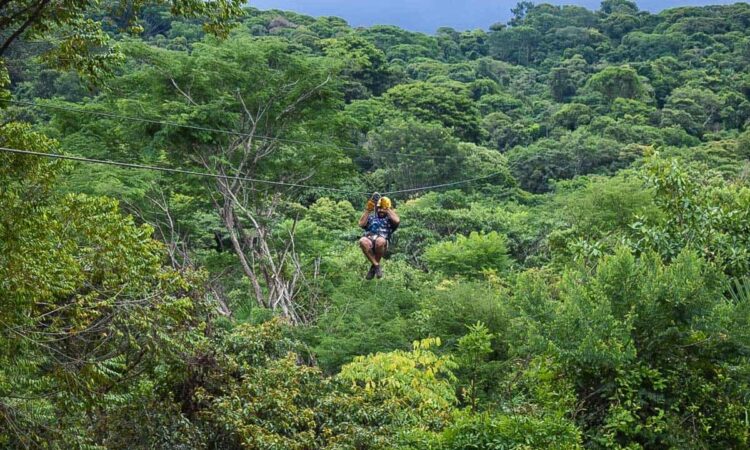
One of the most chilling and thrilling experiences done in Uganda is zip lining over Lake Bunyonyi. What makes this adventure even more exciting is the exact location where it takes place. You see, Lake Bunyonyi is not like any other ordinary lake in the country; it is the deepest lake in Uganda. The daring fact of having such an experience of zip lining over the deepest lake in the land is what fuels the enthusiasm of many adventurists, leaving them yearning for another ride.
Uniqueness of this activity
Uganda is blessed to have a variety of places where zip lining takes place, but none of these places comes close to zip lining over Lake Bunyonyi. Zip lining can have the same equipment, but the feeling is different. Uganda’s zip lining adventures vary with the unique places where they are carried out.
Lake Bunyonyi is usually called the Switzerland of Africa, basically because of its naturally dotted 29 islands. The tranquillity of the lake blends perfectly with the surrounding environment of the Kigezi highlands. Such an environment is made even more exciting when zip lining is done. Gliding across the vast, pristine waters of Africa’s second deepest lake while catching the beautiful views of the terraced hills and the greenery makes this activity more enjoyable.
Where is this zip lining done?
Zip lining is done over Lake Bunyonyi, situated in the terraced hills of Kigezi in the southwestern region of Uganda. Lake Bunyonyi makes the list of Uganda’s iconic scenic sights that give several other sights a run for their money. The dotted 29 islands are not just beautiful and uniquely organized across the lake, but also have historical significance to the people of this region.
Lake Bunyonyi is located in Kabale District, Uganda’s highland capital, and the land that hosts the incredible, endangered mountain gorillas. This lake has a length of about 25 kilometers and a width of approximately 7 kilometers. Lake Bunyonyi stretches out over 60 square kilometers, housing 29 islands.
How is it done?
This adventure of zip lining over Lake Bunyonyi is done using ropes sliding on a cable fastened to solid metal from start to finish. This cable is anchored in an inclined way to allow gravity to act as the accelerating and driving force of this activity. Visitors are strapped or tied using ropes in a seat-like manner to a pulley fixed on the inclined cable.
From the starting platform, the visitor kick-starts their experience by tying ropes connected to harnesses to the pulley on the cable. A carabiner or an eight-figure metal clip is added to allow the visitor to control the speed of the glide. With the help of gravity and a little push, the visitor glides down the inclined cable above the pristine waters of Lake Bunyonyi.
The scenic views of the beautiful surrounding environment and nature entertain the visitor as they slide past the water. With a stretched hand, a visitor can actually touch the waters of Lake Bunyonyi, adding realism to the adventure. This is how close the zip line is to Lake Bunyonyi.
What is the cost of this activity?
Zip lining over Lake Bunyonyi costs between USD 30 and 40, depending on the nationality or origin of the visitor. Since Lake Bunyonyi is a natural water body, not much maintenance is required for it. However, the zip lining equipment used in this adventure requires constant maintenance to repair the damaged ones and replace the worn-out ones. This is where the costs of the zip lining adventure usually go to. It is also a way of responsible tourism, as it supports the livelihood of locals through employment.
What to see during this activity?
Although the focus is entirely on the zip lining over Lake Bunyonyi, there are also a variety of incredible things to see during this activity. Some of these include the following.
- Birdlife: Lake Bunyonyi is a local word that means the place of many birds. This lake hosts a variety of bird species, with most of them nesting on the shores of the lake and the many dotted islands. During this zip lining experience, visitors are guaranteed to spot some of the common ones.
- Islands: This lake is home to over 29 islands scattered across its vast area. However, not all 29 islands can be spotted while on the zip lining adventure. Visitors can spot a few islands that might be close to the zip line.
- Scenic views: While on the zip lining experience, visitors can enjoy the scenic views of the beautiful environment of Kigezi. Lake Bunyonyi is a crater lake situated between the highlands and the beautiful terraced hills, reflected on the pristine waters are magical.
Best time for this activity
The dry season is the best time for this activity since it is done outdoors. The dry conditions during this season are even safer since there is no wind. Lake Bunyonyi is in the highlands and usually becomes windy in the wet season. The dry season also breeds clear skies that add beauty to the scenic views. The dry season is experienced from June to September and from December to February.
What to pack?
A good packing list is not just a lifesaver, but also adds to the success of the zip lining adventure. Visitors need to know what essential items to pack for the good for having an incredible time. Some of these items to pack include the following.
- Insect repellent
- Reusable water bottle
- Rain jacket
- Lightweight clothing like shorts, light pants, and T-shirts
- Sunscreen
- Sunglasses, etc.
How to get there?
Getting to Lake Bunyonyi for a zip lining adventure can be by both air and road transport. Lake Bunyonyi is situated about 448 kilometers from the capital, Kampala, and thus takes about 8 hours and 30 minutes by road to get there. This lake can be accessed using the major Kampala-Mbarara-Kabale highway. This highway is tarmacked to improve accessibility, with great scenic views of the surrounding terraced hills of Kigezi.
Lake Bunyonyi can also be accessed by air transport since the lake is situated close to the Kabale airstrip. Flying from Kampala to Kabale airstrip takes about 90 minutes, thereby connecting to Lake Bunyonyi by road for an hour and 30 minutes.


