
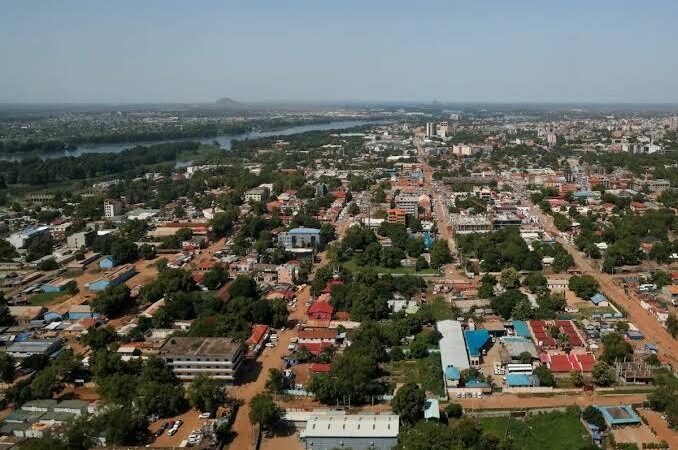
Many passionate travelers, especially those with an interest in the East African region, often wonder what could be the safest city to visit in South Sudan. This is because many believe the country is dominated by civil wars and political instability, and that’s the fact. But without question, Juba City currently stands out as the safest city to visit, even though not entirely.
As for today, there are no cities or regions in the country that guarantee safety. However, if someone must travel to South Sudan for essential purposes like family, research, and humanitarian work, Juba is the only available option with relatively improved infrastructure.
Why is Juba considered the “safest” city to visit in South Sudan?
The strategic location of Juba on the river banks of the West Nile bordering Uganda makes it easily accessible. Juba is also the capital and largest city of the country. It is also South Sudan’s major economic, diplomatic, and humanitarian hotspot. This makes it less risky than other parts of the country.
International presence
In the whole of South Sudan, Juba hosts the largest number of embassies, UN agencies, NGOs, hotels, and international organizations. This in turn contributes to better security, medical support, and evacuation options in times of danger. This simply does not exist elsewhere in South Sudan.
Infrastructure
Juba International Airport is the only international airport in the country. It offers daily commercial flights. This airport has also paved the way for a growing number of hotels that come with reliable security and paved roads in the central areas. Compared to other regions, electricity and mobile networks, along with other basic services, are more reliable in Juba City.
Despite the fact that there are advantages to Juba, it remains a high-risk atmosphere, especially for international visitors. That’s why many embassies often advise their citizens to limit their movements, especially at night.
What travelers should know before their visit to Juba.
As visitors interested in exploring Juba, there are several things to know when embarking on your journey. These include the following.
Accommodation.
All visitors are urged to stay only in well-established, secure hotels, especially those used by diplomats. For example, Boulevard and Juba Grand. These accommodation options are well equipped with high walls and security guards to ensure safety. They also have standby generators in times of power blackout. Smaller guesthouses or small lodges are not recommended. Staying with private individuals who are strangers is also risky unless it’s an organized registered team.
Movements.
Using organized and trusted transport, especially vehicles arranged by licensed tour companies or accommodation, is critical. Experienced drivers ensure comfortable and safe travel. Visitors are also advised to watch their steps and avoid walking. Staying away from public taxis and boda-bodas is also essential while visiting Juba. Night travel is also strongly discouraged as it doesn’t guarantee safety, especially for international visitors.
Services.
It is also important to note that essential services like medical care are limited. Serious health issues can be solved in either Kenya or Uganda. On the communication side, mobile networks and internet connections can be available. However, stable signals are not guaranteed and can be slower. Outside many popular hotels, the safety of drinking water and food is still a concern.
Daily life
There is only one small central area in Juba that offers shops, markets, and restaurants, but exploration is restricted. Many visitors to Juba often spend their time in secure compounds or attending organized meetings, especially on short trips. Juba City is dominated by a heavy security presence, with frequent checkpoints to ensure maximum safety.
Security risks in Juba
Visitors embarking on a tour to Juba must know that security risks are real and should be expected. Among these risks are the following.
Armed crimes and robberies.
Visitors must be aware of armed crimes and robberies. These are common because guns, especially AK-47s, are easily accessible. Such armed crimes and robberies are intentional and target vehicles leaving the airport or those travelling at night.
Political instabilities.
Political instabilities in the form of demonstrations or clashes between different armed groups can erupt at any time. At times leading to lockdowns. On the other hand, ethnic tensions in South Sudan sometimes stretch to urban areas.
Kidnapping and asking for ransoms.
Such cases in Juba are so common, so visitors should take caution. Foreigners, especially those perceived as wealthy or working for international organizations, are always targeted. However, with expert guides and security, safety is guaranteed.
Visitors need to note that the situation in Juba is unpredictable, and things can change quickly. From a calm week to a more violent one due to political tensions and criminal activity.
The People of Juba and their culture.
Juba is like a cultural hotspot. Even though the city is mostly dominated by the Dinka population. There are other ethnic groups like the Nuer, Anyuak, or Bari, and other people from different parts of South Sudan can be encountered. The city is thriving and consists of a young population with a promising number of educated professionals and entrepreneurs.
Even though the residents are hospitable, engaging with the local people demands working with trusted local partners or organizations for a remarkable experience.


