
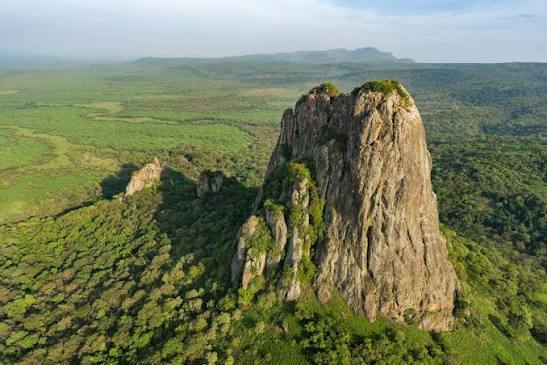
Home to South Sudan’s highest peak, Kinyeti, at 3,187 meters above sea level, the Imatong Mountains are one of the country’s most iconic yet less explored natural endowments in the country. It rises from the plains near the border with Uganda and are one of the most impressive tourist attractions in the country.
Surrounded by mist and covered with greener forests, the Imatong Mountains stand in strong contrast to the dry landscapes. These dominate most parts of South Sudan. For adventurous hikers looking for a remote hiking experience, Imatong offers scenic hiking trails, impressive waterfalls, fresh mountain air, and the other side of the country that is less explored. Imatong Mountain hits a sweet spot.
However, visitors need to understand the country’s situation before planning a visit. Presently, hiking Imatong Mountain is not advisable for general tourism due to security insecurities in this region. The mountains are located in an area that has experienced persistent conflicts, armed groups, and high levels of criminal activity. Most governments advise against non-essential travel to many areas of South Sudan, even those around the Imatong area. Below is a realistic picture for travelers with a serious interest, while also considering the potential risks.
Location of the Imatong
The Imatong Mountains rise in the southeastern part of South Sudan, mainly within the Eastern Equatoria state, and span the Ugandan border. These lesser-known mountains are part of the Albertine Rift extension. This gives these scenic mountains landscapes and environments similar to other elevated areas found across the region.
As hikers climb higher, the scenery of the mountain starts to vary. The higher altitudes reveal lush forests dominated by tall trees and bamboo. And as they continue to ascend beyond 2,500 meters, the atmosphere turns wetter and cooler. There are unique plant species that can survive in the cold conditions can be spotted. Water is one of the defining features of the Imatong; streams and waterfalls flow throughout the whole year. These provide water sources to the neighboring communities that are important for farming activities and daily use.
Biodiversity
Beyond their dramatic landscapes, the Imatong Mountains are home to a variety of plant and wildlife species. The forests here provide shelter for chimpanzees, monkeys, duikers, and small antelopes. For bird lovers, the mountains are rewarding when it comes to birdlife. The area is endowed with a variety of species that are linked to one of Africa’s important areas for unique wildlife. This makes it an outstanding biodiversity hotspot. The mountains of Imatong also serve as a vital water catchment. They hold and release water, supplying communities, natural habitats, neighboring countries of Uganda and South Sudan, along with farmlands around this area.
It is also important to note that over the years, the forests have encountered intense pressure from decades of conflicts, farming activities, and deforestation. However, when peace finally returns to this land, Imatong holds great potential for thriving in the country’s tourism sector.
The hiking experience at Imatong Mountains.
Hiking the Imatong Mountains is a unique experience compared to more established peaks like the Rwenzori Mountains. The spot lacks marked hiking trails or mountain shelters. Hiking routes here are guided by local people who are well-versed in the mountain routes, water points, and safer zones. A typical trek at Imatong kicks off from the lower slopes. As the elevation escalates, hikers move through woodland before they can get into thicker forests.
The hiking journey in this area can bring out eye catching land scape views and distant hills. The air feels cool at higher elevations, and camping is part of the experience, especially for multi-day hikes. Hikers here can carry their own gear and manage their own food and drinking water. This is because the mountains are isolated and in remote areas. Hikers must organize with a trusted local operator or organization with experience in the region. The security risks around this area are unpredictable, and that’s why Independent hiking is not recommended.
Best time to hike the Imatong Mountain
For hikers at Imatong, the drier period often offers better hiking conditions compared to the wetter months. The trails become more stable, visibility improves, and time is saved given that there are no weather interruptions. However, for longer climbs, hikers are advised to kick off early so as to avoid hot conditions later on in the day. June to September and December to February remain the most preferred times for hiking this scenic mountain.
The wet season runs from March to May and October to November. It makes the mountain look green and the waterfalls captivating. The trails turn wet and difficult to navigate, and hiking becomes too demanding. This makes the whole experience a stressful one. Even in the dry season. Hikers should expect sudden weather changes or cooler temperatures, especially as they ascend to higher altitudes.


