
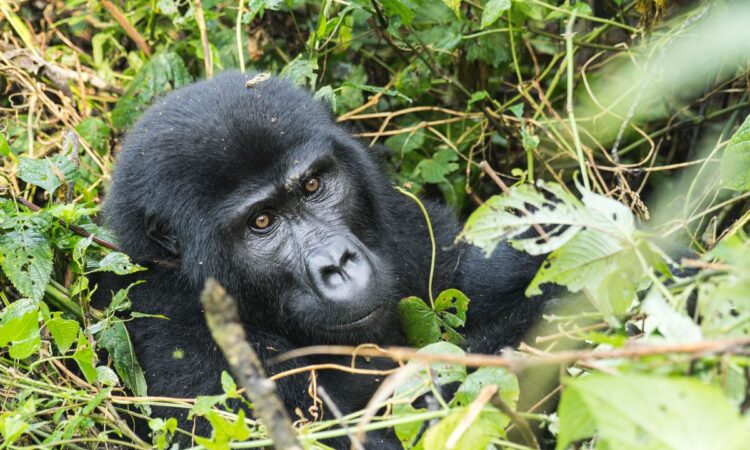
Yes, people have been injured while on gorilla treks before. Though incidents are rarely reported, they have happened to a certain degree. This is through slipping and falling on the ground or even an attack by an aggressive gorilla. Also, to a lesser extent armed men or poachers have led to some attacks on visitors in the forest. Here is what visitors on gorilla trekking tours can do to avoid injuries,
Minimum Age for Trekking
You are not allowed to do a gorilla trek unless you are 15 years old and over. When you are at least that age, it is assumed that you can avoid actions that could result in gorilla attacks. Generally, you can clearly understand and follow gorilla trekking rules at 15 years old. You are also assumed to focus on the gorilla trek when you are quite older. This is unlike a child below the age of 15 who might provoke the gorillas or wander off in the forest.
Trek in the Dry Season
To avoid injuries caused by slipping or sliding during a gorilla trek, you must visit during the dry season. From June to August, and December to February, gorilla destinations experience the dry season. This makes gorilla trails quite dry because it does not rain as frequently or heavily like in the wet season. Stability as you walk during the gorilla trekking tour is guaranteed because you will avoid slipping.
Use Sedan Chairs
This can be utilized if you feel physically incapable of walking on challenging terrain. The elderly or persons with physical handicaps can utilize this to avoid accidents if they were to walk in the forest. A sedan chair is hired along with porters to carry you on it. They are strong enough to lift it and carry you throughout the gorilla trek. With this arrangement, you can trek gorillas comfortably and avoid injury through accidents.
Keep Minimum Distance with the Gorillas
The moment you meet the habituated gorilla family as you trek, stop and watch them for an hour. But, you are not to get as close as less than 7 meters away from them. A space like this is considered enough to allow gorillas feel secure in your presence. At the same time, you get a better look at the gorillas including details about their physical characteristics. This is a win-win for you and the apes, because aggressive reactions from the gorillas that might cause injuries are avoided.
No Flash Photography
Mountain gorillas do not like the flashes when you take photos with your camera or phone. In fact, the silverback or any other aggressive gorilla might charge at you. What might result from this are injuries or even death. So to avoid all this, take photos with the flash turned off. You should also wait for the ranger guide to tell you when to take photos.
Where to do Gorilla Treks?
Gorilla treks are available in Uganda, Democratic Republic of Congo and Rwanda etc. Bwindi Impenetrable National Park and Mgahinga Gorilla National Park offer mountain gorilla trekking in Uganda. In Rwanda, Volcanoes National Park also offers mountain gorilla trekking. In DRC, Virunga National Park offers mountain gorilla trekking while Kahuzi-Biega National Park offers eastern lowland gorilla trekking.
How a Gorilla trek is done?
Starting at 8:00a.m. you must have reached the park headquarters for a briefing. Here, a few things about safe gorilla trekking are spoken to you by the park people. A ranger guide is available and some armed rangers for you to follow. You start walking on gorilla trails inside the forest. This is to search for a family of habituated gorillas. Clues like foot prints, feces, broken shoots and barks etc. are identified for you by the ranger guide.
These will lead you to the gorillas, and you will see them firsthand. Watch them closely for an hour. When you are done after the duration, you will return to the starting point. Notice how a gorilla trek lasts for 2-6 hours. What causes this is the physical fitness, because if you walk slower, you will take a longer duration to reach the gorillas. Also, gorillas usually move from one place to another and do not sleep in the same place. Some terrains are more difficult to walk on than others thus longer treks.
What a Gorilla Trek Costs?
Gorilla trekking permits are charged differently in each of the mentioned countries. Uganda offers each at $800 for foreign non-residents and $700 for foreign residents. From Rest of Africa and East African Community each is $500 and 300,000 shillings respectively. In Rwanda, the cost is much higher for foreign non-residents, each at $1,500. Foreign residents, East African Community and Rest of Africa pay $500, $200 and $200 respectively. In Congo, the permits are the cheapest, each at $400 for foreign visitors and $200 for East African Community. Democratic Republic of Congo citizens pay only $20.
Why Book Gorilla Permits with us?
We are Standard Safaris, a registered local tour operator with deep roots across Rwanda, Uganda and the Democratic Republic of Congo. With this, we have a direct network and regional expertise to secure your permits in time. Coordination during safaris is seamless across the borders. Regarding our reputation, it is stellar, evidenced by top-tier reviews on our TripAdvisor page. These speak volumes about our commitment to flawless and reliable wildlife experiences. You can contact us today to book your gorilla trek and enjoy your wildlife experience.


