
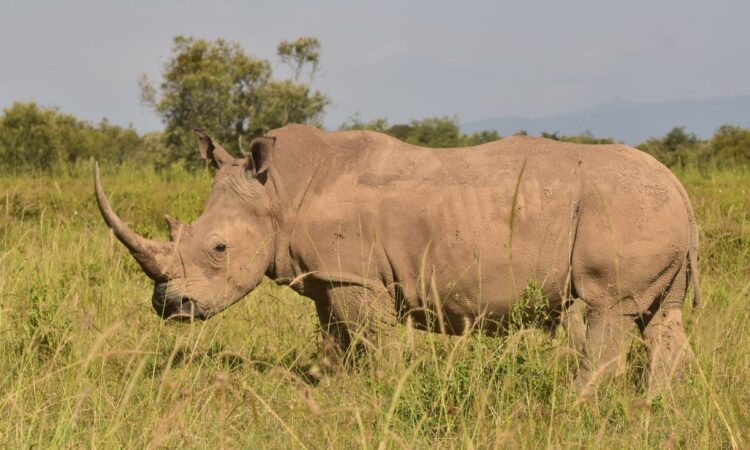
After 43 years, Uganda has reintroduced rhinos back in Kidepo National Park. This is a journey undertaken by the country through the Uganda Wildlife Authority meant to introduce more rhinos here. The southern white rhinos are the subspecies that have been introduced from Ziwa Rhino and Wildlife Ranch. Originally, it was the northern white rhinos that roamed in the wilderness of Kidepo.
Due to large scale uncontrollable poaching the original rhinos became extinct in the park, in particular, and in Uganda in general. The primary reasons for the extinction of the northern white rhinos in 1983 was hunting for meat and rhino horns etc. After the southern white rhinos, Uganda Wildlife Authority will also be in charge of introducing the eastern black rhino in Kidepo National Park.
Why reintroduce rhinos in Kidepo?
Bringing back rhinos to Kidepo National Park expands the number of destinations hosting the species in the wild. Another place in Uganda not mentioned where you can see rhinos in the wild is Ajai Wildlife Reserve. In Ajai, rhinos have also been reintroduced like in Kidepo. In Uganda, visitors will have a variety of wildlife destinations where they can watch this large mammal in the wild.
After successful breeding among the rhinos in their respective homes, their numbers will increase. As a result, Uganda’s aims of increasing key wildlife species will be achieved. Before this, Kidepo was known to shelter only 4 members of the Big Five. These are lion, elephant, buffalo and leopard. With rhinos added, visitors should expect to encounter all the Big Five members in Kidepo. From this move, Uganda expects growth in tourism and revenues.
How Many Rhinos have been introduced in Kidepo?
The first pair out of the proposed 8 rhinos was introduced in March 2026 and have adapted well. They were intelligent enough to discover water sources and feeding areas in the first few hours of their introduction. Monitoring of the rhinos by experts from the Uganda Wildlife Authority is still ongoing. Also, their safety is ensured by armed park rangers and technology including drones to prevent poaching of these vulnerable animals. Six more rhinos will be brought into Kidepo later.
Characteristics of Southern White Rhinos
Southern white rhinos, like the other subspecies, are herbivores. They can live in the wild for 39 to 43 years. These rhinos are among the heaviest land animals on earth, with average weight of 7,900 pounds. According the IUCN red list of threatened species the southern white rhinos are Near Threatened. Though the southern and northern white rhinos are grey in color, they are under the white rhino’s category. Meanwhile, the former is heavier and even much hairier than the northern.
Socially, southern white rhinos love the company of their subspecies in herds, and are very territorial. They claim territoriality by marking strategic points with dung. Territories are heavily defended by the males using their massive size and horns to threaten rivals and predators. Sometimes you will see some rhinos solo, a behavior done by mostly males. Nevertheless, all southern white rhinos often cover their bodies in mud by rolling in it. By this they prevent insect bites and direct sunlight through their skin.
About Kidepo National Park
The destination is known as Kidepo Valley National Park, found in the northeastern side of Uganda. It is actually at the border with South Sudan, yet also close to Kenya. Both Kidepo Valley National park and Kidepo Game Reserve in South Sudan connect to each other. Establishment of Kidepo happened in 1962, and today, it has a size of 1,442 square kilometers. Its habitats are so diverse and composed of forest and savanna bush and woodland etc. In each of these habitats, you can find at least an animal from the 86 mammal species recorded in Kidepo.
Visitors are able to see caracals, cheetahs, hyenas, lions, elephants, leopards, jackals, giraffes, elands, buffaloes, foxes and others. Birds in Kidepo are among the most recorded in a single Ugandan destination—475 bird species. Some of the birds’ visitors can observe are the Karamoja apalis, secretary bird, kori bustard, Abyssinian ground hornbill and ostrich. Narus Valley hosts many wildlife and it is where you can do a memorable game drive.
The Main features of the landscape in Kidepo are the Narus and Kidepo river valleys. A pair of seasonal rivers that flow only after the appearance of heavy rains. They are the primary sources of water for the wildlife. Even in the dry season, the small paddles left behind by them offer water to the wildlife. Activities you should go for in Kidepo include game drive, birdwatching, nature walk, hiking Mount Morungole and Karamojong Manyatta visit.


