
Physical features
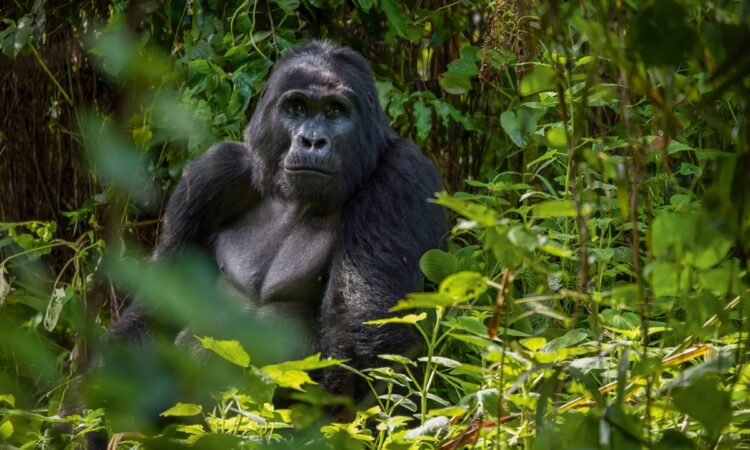
Gorillas have numerous physical traits that distinguish them from other species of primates in particular and mammals in general. Each gorilla is born with a distinct nose print. This is used by researchers to distinguish between the gorilla. Their front and hind limbs contain opposable digits to offer a firm grip and comfortable movement. Their bodies are covered by coarse hair apart from their faces, hands, and feet. The hair color ranges from black to brownish grey. Silverbacks, however, have distinct grey coloration across their backs and upper thighs.
Family setup
On average, gorilla families contain between 10 to 11 members. Yet, a gorilla family in Rwanda’s Volcanoes National Park, known as Pablo, had a record-breaking 65 individual mountain gorillas. A gorilla family typically comprises a dominant adult male, most times a silverback, several adult females, and infants. Nevertheless, some gorilla families tend to have more than one adult male, some reaching up to 8 of them. Typically, there has to be one dominant male with the rest being his subordinates.
Such families will ensure that the hierarchy is clearly established, with each adult male playing different roles in ensuring that the family thrives in the jungle. The dominant male is responsible for the overall protection and guidance of the family. He is responsible for determining where the family will forage or nest. Other adult males actively resolve conflicts within the family, while others offer protection from threats. Meanwhile, adult females also establish a hierarchy of their own. Age, time spent in the family, interest from the dominant male, and the latest mother sometimes determine rank among adult females.
Communication
Gorillas communicate through various ways, including body postures, vocalizations, and facial expressions, among other behaviors. Adult males can communicate dominance through kicking, hitting, throwing vegetation, chest beating, and others. The low-ranking member will have to respond by clearing the path as the dominant male approaches. They can also respond by expressing a submissive posture or appeasement vocalizations. However, chest beats are also helpful during conflicts or playing in younger males.
Gorillas also do vocalizations to convey different messages. For example, they might do that as a distress or alarm call, contentment, aggression, or as a group coordination strategy, etc. Satisfaction or contentment among mountain gorillas is usually expressed through belching. Meanwhile, most times, gorillas will start singing or humming. This is especially true after they have found a favorite meal. On some occasions, gorillas yawn or even smile, exposing their teeth. Males can do this when stressed or under anxiety.
Lifespan size and strength
Male gorillas have a relatively shorter lifespan compared to humans. In the wild, they can live up to approximately 40 years. Under captivity, some have reached up to their 60s. Silverback gorillas can weigh up to 400 pounds, standing at around 5 feet and 5 inches to around 6 feet. This implies that they are the heaviest primates known. Despite this immense power, they use the strength not for aggression but to defend their families and compete for mates.
Diet and eating habits
Gorillas are largely vegetarians, with adult male gorillas able to consume up to 60 pounds of vegetation daily. They consume a variety of plant material, and are known to select specific plant parts, though. Gorillas tend to forage only during the day, with nighttime strictly used for sleeping. The bamboo shoots are among the most favorite foods in their diet.
Sleeping habits
Gorillas sleep or rest in new nests that they construct each day on the forest ground. Infant gorillas must sleep in their mother’s nest until they are around the age of 3-4 years. This is when they can also start constructing their own nests. During the day, they can relax or rest in the nests, especially after foraging or when they are tired.
Relationships with humans
Humans and gorillas share at least 98% of DNA, implying that they are close relatives, regardless of humans being intellectually superior. Gorillas and chimpanzees are among humans’ closest relatives. This implies that we have a moral and scientific duty to protect them from extinction.
Conservation status
According to the IUCN Red List, mountain gorillas are considered endangered. They were previously critically endangered. However, some subspecies, such as the Grauer’s gorillas in Congo, are critically endangered as per the IUCN Red List. Therefore, we as humans should ensure their survival by preserving their habitats and stopping the poaching of these apes.
Where are mountain gorillas found?
Mountain gorillas in the wild are found in the Virunga Conservation Area and Bwindi Impenetrable National Park. These conservation areas are in 3 different countries, Rwanda, Uganda, and the Democratic Republic of Congo. In Rwanda, mountain gorillas shelter in Volcanoes National Park, in Uganda, they live in Bwindi and Mgahinga National Parks. In the Democratic Republic of Congo, they live in Virunga National Park. Meanwhile, Congo’s Kahuzi-Biega National Park is the only place that shelters the Grauer’s gorilla.
Can 100 men fight a gorilla?
For context, this is a hypothetical situation since there has never been a witness to such an incident before. But it is likely that 100 men fighting a gorilla will be in favor of the former because even a silverback gorilla can get exhausted during a genuine fight. Regardless of his size and strength, the men will eventually wear him down. Injuries to some men might occur, though. It is also important to know that humans are good at strategizing or coordinating to win a fight.


