
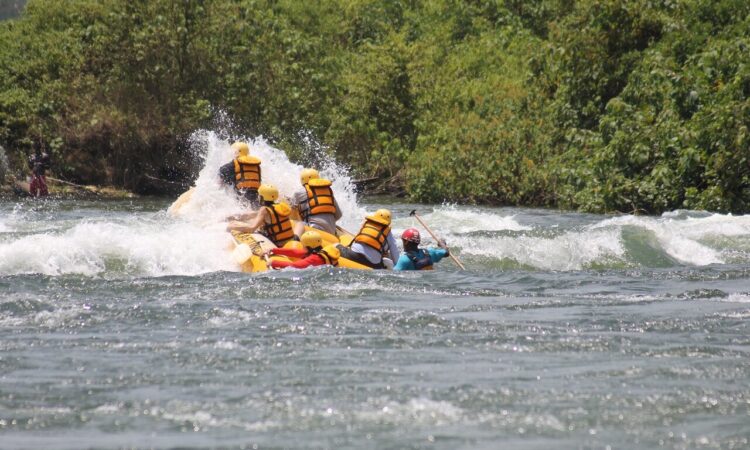
Uganda is a diverse and naturally gifted nation on the African continent, and there are few tourist activities that this beautiful country does not have. This is with no exception to white water rafting. This guide to white water rafting in Uganda is intended to fully exhaust the white rafting experience in the country and the important facts that guide the visitors who are interested in this adventure.
What is white water rafting?
White water rafting refers to a tourist activity where visitors use inflatable boats called rafts to sail through fast-moving water or rapids. This adventure is done in small groups with experienced guides. As the river flows downstream fast, it gains momentum, and as it meets rocks, it forms rapids.
The roughness of the water on the rapids as it hits the rocks becomes white, thus the name white water. Some people regard this adventurous white water rafting experience as an extreme sport, as it involves battling with the rapids of the river at high speed. Although it may sound a bit extreme, white water rafting is a safe adventure experience done by even inexperienced rafters.
Where does white water rafting in Uganda take place?
Uganda has a variety of rivers that flow across the country in many regions, but white water rafting takes place on the River Nile in Jinja. The River Nile is the longest river in the world and begins to flow from Jinja in the eastern region of the country until it enters the Mediterranean Sea in Egypt.
The Nile meets many obstacles as it flows flowing different rapids at specific points on the river. These are the rapids that the adventurers on a white water rafting experience on the Nile utilize for a great and adventurous experience. The rapids are, however, internationally classified depending on their force and magnitude. The River Nile has different rapids from the standard intense grade V rapids that offer a thrilling adventure due to their high and fast-flowing water to grade IV rapids that have relatively fast waters.
Experienced and professional rafters can take on these rapids, as they offer an adrenaline rush experience. The river also has milder rapids of grade III, which are perfect for families, amateurs, and rafters rafting for the first time. However, some of the rapids were submerged following the construction of the Bujagali and Isimba dams on the River Nile.
How much does white water rafting in Uganda cost?
The costs for embarking on a white water rafting experience in Uganda depend on the duration of the time of the rafting. The rates include full-day rafting costing USD 135, half-day at USD 120, full-day and half-day extreme rafting costing USD 170 and USD 155 respectively. The rates for white water rafting further go into a two-day rate costing over USD 250.
How a white water rafting experience in Uganda is done?
As visitors seeking to embark on a white water rafting adventure experience in Uganda, it is better to get in touch with a tour operator like Standard Safari for a seamless experience. As a tourist activity, white water rafting requires a bit of planning, from transport to getting the gear to use, and also where to stay. Therefore, a qualified tour operator can help to ease your way and make your white water adventure in Uganda a successful one.
Like most of the other tourist activities, white water rafting begins with a short briefing done by the rafting guides. This briefing highlights important guidelines, such as how to paddle across the rapids, holding the ropes on the inflatable boat when you hit the rapids, and what to do when the boat flips over, among others. The briefing also includes the safety guidelines that are a lifesaver in cases of emergencies. The rafting guides also introduce the rescue teams that are stationed across the different sections of the rapids for cases of emergencies or for rescue if a visitor falls out of the boat.
What are the minimum age and health conditions for white water rafting?
A quick screen is conducted before the activity during the briefing, where forms are signed to identify if one has specific illnesses that can prevent them from embarking on this adventure. These specific conditions include hypertension or anemia, as they can be life-threatening cases where the visitor is faced with extreme conditions.
The required minimum age for visitors to take on a white water rafting experience in Uganda depends on the particular grade or level of the rapid or raft. From less dangerous grade III, which are milder for families, 8 years is the minimum age. Grade IV and V increase to 12 and 15, respectively, as the rapids also gain force and momentum.
What are the dos and don’ts of this activity?
The dos and don’ts of white water rafting can also mean the rules and regulations as recited by the experienced rafting guides during a briefing. The dos can include the following.
- Always listen to the guides
- Stay in the inflatable boat
- Hold tightly to the ropes on the boat once in the rapids
- Always wear protective gear before embarking on this activity
- Hold your breath in case you fall in the water
- Always remain calm
The don’ts, on the other hand, include the following.
- Don’t enter the water without authorization from the rafting guides
- Don’t wear cotton clothing while white water rafting
- Don’t carry valuable items like mobile phones that can fall in the water
- Don’t embark on this activity when sick
- Don’t take on this activity alone, etc.
What is the best time for white water rafting in Uganda?
The dry season is the best time for white water rafting in Uganda, and this is highly attributed to the conditions this season provides. White water rafting requires calm and dry weather conditions, facilitated by humid temperatures. With these conditions, the Nile, where the rafting takes place, remains calm, thus enabling visitors to raft with ease.
This is unlike how it would be in the wet season, where the prolonged rains cause the volumes of water to rise, reducing the flow of the rapids. This comes with fast blowing winds that cause waves on the river, making rafting or even sailing unstable and very dangerous. The dry season, which runs from June to September and from December to February, comes in as the best time for this rafting adventure.
What to pack?
For visitors to take on this white water rafting experience, they must pack good gear that will help them during this experience. Some of these items to pack for white water rafting include the following.
- Waterproof clothing, like a swimsuit
- Swimming gaggles
- Waterproof sunscreen
- Insect repellent
- Towel
- Extra clothes


