
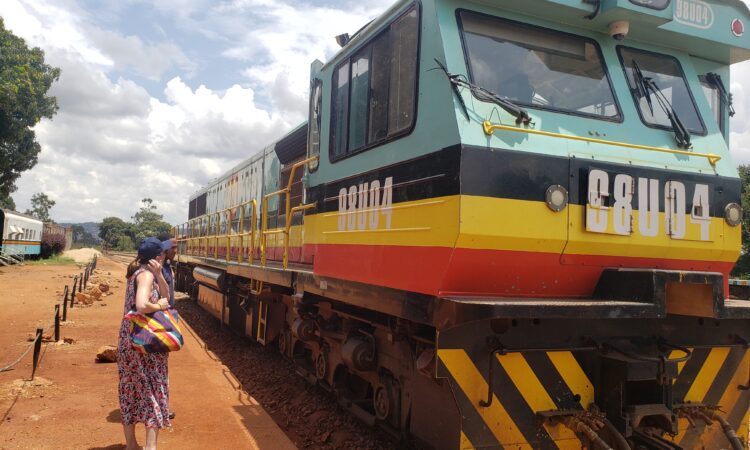
A tour to the Uganda Railway Museum is a trip down memory lane, when the railway transport first featured in the country. This museum was opened on the 6th of March in 2022 and managed by the Uganda Railway Corporation and collaboration with the Cross-cultural foundation.
What is the Uganda Railway Museum?
The Uganda Railway Museum is a national museum that holds the historical artefacts and heritage of the railway transport system in Uganda. This museum bears the historical artefacts that saw the early beginnings of railway construction and operation in the country. The museum aims to protect and preserve the historical artefacts of the railway.
This is why the station is still operated in a 97-year-old building, which was the first building constructed in 1928 as the first administration block to handle all the railway operations. The Uganda Railway Museum is a place of memory, reflection, and appreciation of how far the country has come to modernity. The museum brings out the former stations and ports where the trains used to park for loading and offloading, such as the Jinja port that was destroyed by floods.
What is the location of the museum and how to get there?
The Uganda Railway Museum is situated along the Jinja-Iganga highway at the railway station of Jinja. It is situated deep in the heart of the eastern region of the country after crossing the Nile. The museum is located about 102 kilometers from the capital, Kampala.
Visitors can get to the Uganda Railway Museum by road and air, although there are no scheduled flights to Jinja. However, the flight can be arranged privately with the carrier, thus giving visitors a seamless travel experience. Driving from the capital to the museum takes about 2 hours, whereas flying can take less time.
How much does visiting the museum cost?
The rates for visiting the Uganda Railway Museum are determined by the variations in the age of the visitors and their place of origin. Foreign or international adult visitors pay USD 5 for access and explore the museum, whereas children pay USD 3. For nationals or Ugandan citizens, adults pay UGX 5,000 and children UGX 2,000.
What to see at the Uganda Railway Museum?
The museum has a collection of artefacts that dates back to the time when railway transport was first introduced in the country. It also showcases some of the first records that were used at the start of the railway in Uganda. This also includes some of the first train carriages that were purchased in the 1880s from the West German and East German.
The museum also contains a rail metal that was manufactured in 1901 and imported into Uganda in the 1880s at the start of the railway construction in Uganda. There are also lamp heads and signal lights, and kerosene lights that were placed on trains as they travelled in the night. Some of these lights also helped in cases of emergencies like accidents and carriage breakdowns.
The stored records showcase some of the tickets that were issued to passengers as they travelled across the region. A levelling meter that was used during the straightening of the rails during the construction of the railway in Uganda in the late 1880s is also still visible. Another interesting artefact at the Museum is a metallic container with metallic pins that were used to show the particular train on the railway.
This prevented many accidents by notifying the other trains that there was already a train on the railway. There are also racket-shaped objects made from bamboo with a leather bag that were used to pass a communication from the locomotive to the station officials as the train moved.
History of railway transport in Uganda
The introduction of railway transport in Uganda was basically for selfish reasons by the colonial masters. After identifying that Uganda was a good raw material producer, the British, who were the colonial masters, found a way to link Uganda, a landlocked country, to the coast. This led to the construction of the East African Railway that stretched from the coast of Mombasa into Uganda’s interior.
The East African Railway was started in 1896, and by 1901, it was completed in Uganda and was managed by the East African Railway and Harbours Corporation. It faced a lot of challenges, such as diseases, harsh weather, and lions of Tsavo, which killed many Asian workers. With these challenges and high costs it had, the East African Railway was known as the Lunatic Express. The railway stretched to Bombo in Uganda to harvest cotton and passed through the present-day Kalerwe, but later collapsed.
With the discovery of copper in Kasese, the railway was extended to Kasese and later to the north in Soroti and Lira for tobacco. As the colonial rule came to an end in Uganda in 1962, the East African Railway continued to operate until 1971. This followed the overthrow of President Milton Obote by Idi Amin, who chased the Asians who operated this railway. With less skilled manpower and the collapse of the East African Community, the railway transport crumbled and collapsed.
As the Uganda railway was later revived, the Uganda Railway Corporation took over its management from 1977-2005. A private company called Rift Valley Railway then bid for the railway and was granted in 2005 until the end of 2017. It was handed over to the management back to the Uganda Railway Corporation. There have been plans to repair the railway from Jinja and Kampala to Soroti and Lira that had been destroyed and wasted. This will ease the transportation of cargo and people across these areas.
What other activities can be done in Jinja?
Visitors on a day tour to the Uganda Railway museum in Jinja have a lot of interesting activities to combine with this tour. These activities are done in the city and include some of the following.
Boat cruise to the source of the Nile
Far from the history of the museum, visitors can venture across the calm, pristine waters of the Nile to walk in the footsteps of John Hanning Speke as he discovered the source of the Nile. This boat cruise takes the visitors around Lake Victoria, slowly crossing into the moving waters of the world’s longest river, the River Nile. While on this boat cruise, witness several bird species like cormorants, African crowned eagles, and pied kingfishers on the vegetation on the shoreline.
Bungee jumping
Still in Jinja, visitors can also enjoy an extreme time by embarking on a bungee jumping adventure. This adrenaline rush adventure features elastic ropes tied to your feet as you jump headfirst, facing the Nile. This incredible experience is much like any extreme sport and offers an amazing time.
Quad biking
Jinja is never short of adventures and tourist activities, as it also offers quad biking experiences. This activity involves venturing through the different villages on the banks of the River Nile as you ride quad bikes. This experience offers an unlimited time of enjoyment and adventure through the communities.


