
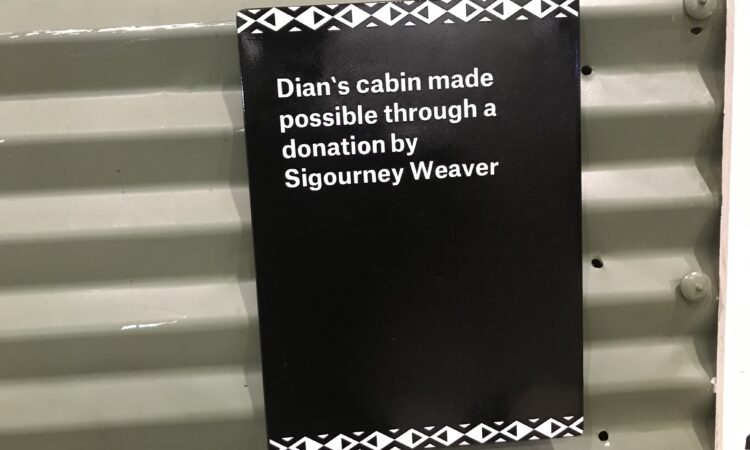
Visiting the Dian Fossey Museum just on the outskirts of Volcanoes National Park is an experience that with take you down memory lane of the great Dr. Dian Fossey. Dian Fossey is a renowned naturalist, conservationist, and primatologist who specializes in mountain gorilla conservation. She came to the world stage after her strong campaigns across the world for mountain gorilla conservation. Her efforts earned her the title of the gorilla mother who put her life on the line for the well-being of these primates. Mountain gorillas are endangered primate species only located in one region in the whole world. These primates occupy the eastern region of the African continent in the Virunga conservation area. This Virunga conservation area stretches from the Virunga National Park of Democratic Republic of Congo through Bwindi Impenetrable and Mgahinga Gorilla National Parks in Uganda and Volcanoes National Park.
 Dian Fossey started her work in Virunga National Park of Democratic Republic of Congo before leaving in 1967 because of a civil war outbreak in Rwanda’s Volcanoes National Park. When she arrived she set up her headquarters at the Karisoke Research Center in the park. Although she faced a lot of huddles from the local poachers, she worked through it all to glory. It is because of her efforts that the mountain gorillas in Volcanoes National Park received recognition and funding hence their protection and conservation.
Dian Fossey engaged in many works while at her Karisoke Research Center like studying primate behaviors, their breeding and interaction with humans, habituation, and more. This paved the way for gorilla trekking in the Volcanoes National Park. It is very unfortunate that during her works of conservation, she faced a lot of resistance from the poachers. It is on this account that she met her unfortunate end in 1985 when she was murdered. She was buried at the Karisoke Research Center inside the Volcanoes National Park. Although she died, her legacy lives on for many generations.
A visit to the Dian Fossey Museum will take you through Dian’s research center at Karisoke where you will observe some of her final works. This visit is also a great chance to pay your last respects to a great conservationist and primatologist Dian Fossey for her great works that still live on even after her death. The Karisoke Research Center is now used as a training center for conservationists and scientists. A funding program called the Fossey Fund helps to bring funding to the center that has helped to educate students on field courses of tourism, primatology, environment and conservation.
What else to do around Dian Fossey Museum?
A visit to the Dian Fossey museum does not stop at the Ellen Degeneres campus but also one can explore nearby attractions, mainly the Volcanoes National Park;
Gorilla trekking
Gorilla trekking is the major activity in the Volcanoes National Park. This activity involves navigating through the dense vegetation zones of the park for a chance to spot the endangered mountain gorillas and spend an hour with them. Volcanoes National Park is the only park in Rwanda that harbors the endangered mountain gorillas. The park harbors about 13 gorilla families among these about 10 families are habituated and ready for trekking on a daily.
Guide nature walks and hikes.
Volcanoes National Park is a hub of adventurous experiences that fit the bucket list of any nature lover and enthusiast. Such include the different hikes that take place in 5 of the 8 volcanic mountains in the park. These hikes are adventurous taking the hiker through the different ecological systems with breathtaking scenes. On top of being adventurous and fun, these guided nature walks and hikes are healthy activities that help burn the extra calories in the hiker’s body.
Golden monkey trekking
Golden monkey trekking is partly similar to gorilla trekking however golden monkey trekking involves spending an hour with the golden monkeys upon their location through the vast area of the park. Golden monkeys are rare primates with golden fur on their cheeks and backs. There are approximately 80 golden monkeys in Volcanoes National Park and are available for trekking.
Bird watching
The ecological systems of Volcanoes National Park from the highland volcanic mountains to the rainforest mixed with bamboo favor the breeding of birds. There are over 200 bird species in the park. Among these, there are 17 of the 25 Albertine Rift Valley endemics that harbor the park. These birds include the Archer’s ground robin, Rwenzori double-collared sunbird, Rwenzori turaco, dusky crimson-wing, Rwenzori batis, red-faced woodland warbler, strange weaver, francolins, and collared apalis among others.
Best time to visit Dian Fossey museum
When planning to embark on a visit to the Dian Fossey Museum, be sure to keep track of the best and most favorable time to visit. There are two seasons received by the Volcanoes National Park annually, the dry and wet seasons. The dry season is characterized by humid temperatures and little or no rainfall. This is the best time to visit the Dian Fossey Museum. This is during June to September and December to February.
However, the wet season also presents a good time to visit the museum. Unlike trekking and other outdoor activities in the park, the Karisoke Research Center is enclosed and may not be affected by the heavy rainfall in this season.


