
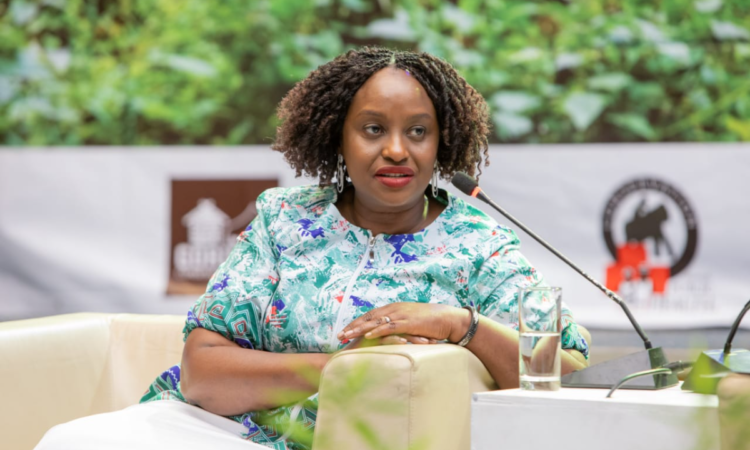
In a field dominated by male veterinarian, Doctor Kalema Gladys Zikusoka has risen through the ranks to earn the title “Gorilla doctor.” With a tragic history that almost ended her dream of becoming a wildlife veterinary doctor, Doctor Gladys never saw giving up as an option. She has reached remarkable height in the field, playing significant roles in increasing the mountain gorilla population in Uganda. Kalema Gladys Zikusoka was born on January 8, 1970 in Kampala, the capital city of Uganda.
Doctor Kalema Gladys was born during a turbulent phase in Uganda’s history, characterized by intense political unrest. A year after her birth, the political scene in Uganda saw a shift in governance following a coup d’état that saw the fall of the then-President Milton Obote’s government. This coup was orchestrated by his former army commander Major General Idi Amin. As the politics of the time were, President Idi Amin targeted the former government officials who worked with President Milton Obote’s government.
Unfortunately, Doctor Kalema Gladys’s father, William Wilberforce was a government official in the fallen government of President Milton Obote. A year after President Amin had taken power, many former government officials were killed, and among these was Doctor Kalema’s dad. Doctor Kalema Gladys was only 2 years old and survived with her mother and 5 siblings. These unfortunate events shaped her to make meaningful contributions for her country, Uganda.
Dr. Gladys Kalema Zikusoka completed her Ordinary level in Kings College Budo and Advanced Level in Kibuli Secondary School. In the 90s, Dr. Gladys Kalema finished her studies at the Royal Veterinary College in London, England. Between 2000 and 2003, Dr. Gladys sent to North Carolina State University to do a Master’s degree in specialized Veterinary Medicine. Throughout her studies she worked with national parks and zoos such as Twycoss and Asheboro. These places introduced Dr. Gladys to work with wildlife, especially primates. Also during this time, the Doctor’s passion to focus on mountain gorillas was fueled by talks by Dr. Barkley Hastings and Dr. Ian Redmond.
Why is Doctor Gladys called the “Gorilla doctor”?
The Gorilla Doctor’s focus has been mainly on the mountain gorillas of Bwindi Impenetrable National Park. Like many other wildlife veterinary doctors, Gladys has a wider scope to operate, however she chose the mountain gorillas. This, therefore, earned her the fitting name of the gorilla doctor. Doctor Gladys Kalema is not just a gorilla doctor, she also doubles as a conservationist and primatologist. This is seen in her line of work and her efforts to conserve and protect these endangered mountain gorillas in the wild.
Doctor Gladys came to Bwindi National Park as a practicing veterinary student at a time when mountain gorillas were critically endangered. She came a year when gorilla trekking was introduced in the park and found Bwindi with only two habituated gorilla families that were available for tracking. She took more interest in her work in 1996 when she diagnosed the first outbreak of scabies in the Katendegyere Gorilla family. The affected gorilla was an infant that was a few weeks old. Doctor Gladys had not seen anything quite like it before, which thus prompted her to research.
This led her to determine that this disease is also common in humans, thus likely spread from humans. These conclusions were solidified by the fact that the gorilla family would often roam in the adjacent villages. The communities had the problem of limited knowledge on proper hygiene because they were very poor. It is believed that the gorillas had come into contact with infected clothes that were hanged on the wire. Dr. Gladys and her team treated the gorilla family with antibiotics and ivermectin. Unfortunately, the infant gorilla did not survive, but the rest did.
Conservation through Public Health
Conservation through Public Health (CTPH) is an organization founded by Doctor Gladys Kalema, the gorilla doctor. CTPH focuses on improving the public health of the communities that neighbor Bwindi Impenetrable National Park. The mountain gorillas are related to humans by sharing over 98.4% of their DNA. This means many diseases that affect humans can be spread to the more vulnerable mountain gorillas. Bwindi Impenetrable National Park is a forest where mountain gorillas and humans coexist. This, therefore, means mountain gorilla and human interaction is inevitable, as the primate sometimes wanders through the plantations of the communities. Such interaction has posed a threat to the health of the mountain gorillas and also to humans.
It is through this vision that Conservation through Public Health was set up. Doctor Gladys Kalema and her team of public health officials traverse the communities neighboring Bwindi Impenetrable National Park. They raise awareness about hygiene and improving the health of the communities by treating their illnesses. Through improving the public health of the surrounding communities, the health of the mountain gorillas is also indirectly improved.
It is through conservation efforts of people like Doctor Gladys that the gorilla population in Bwindi has increased from 300 to 459. Thus, raising the global numbers from 670 to over 1,000, shifting these primates from critically endangered to endangered primate species. CTPH also works with volunteers including the Gorilla Guardians. These are important especially in relocating the gorillas back into the forest when they have wondered in people’s gardens. In total Conservation through Public Health has 430 volunteers who are vital in educating the local people around the forest. They educate them about hygiene, family planning and many other things.


