
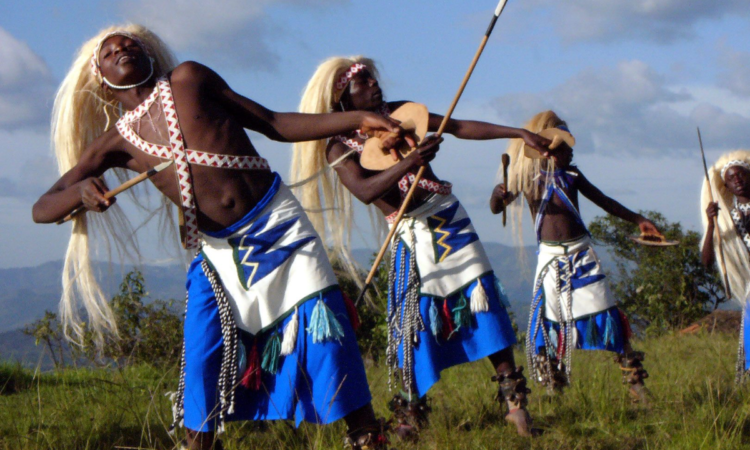
Akagera National Park, on top of offering a variety of adventure experiences, also offers community cultural experiences. These experiences take visitors on a series of cultural discoveries, that showcase authentic Rwandan heritage and deepening understanding of their cultures. You will also have the finest opportunity of witnessing Rwandan traditional artefacts. The community cultural experiences in Akagera National Park offer an insight into Rwanda’s traditional heritage. Venturing through the communities that neighbor Akagera National Park, visitors can have a one-on-one experience through interactions with the locals to have a better understanding of their culture.
Unlike several African countries that have several tribes and ethnic groups, Rwanda is home to only 3 tribes. These tribes comprise the Tutsi, the minority who are renowned cattle keepers of the Ankole long-horned cattle, locally known as Inyambo. The second tribe is Hutu, who make up the largest population in Rwanda and unlike the Tutsi, Hutus are largely cultivators. The Twa or Batwa people also form a minority tribe in Rwanda and are traditionally gatherers and hunters. However, the Twa have now ventured into cultivation due to being forced out of their original home in the dense forest.
Community cultural experiences in Akagera National Park are the best way to have an understanding of the different tribes of Rwanda. Although there are 3 different tribes in Rwanda, they all have a similar dialect. This makes communication among the tribes easier, thus helping to overcome the issue of language barrier when interacting with these communities. During these community cultural experiences in Akagera National Park, visitors can choose to explore the following.
Cultural heritage of Rwandans
The cultural heritage of the Rwandans is basically showcased by their love for the long-horned cattle, known as the Inyambo cattle. These cattle are locally known as the royal breed of cattle that was commonly owned by the royals. This is because the Inyambo cattle represent prestige, prosperity, and wealth. The Tutsi people were traditionally known for keeping and rearing these Inyambo cattle as they were part of the royal lineage.
To date, the Inyambo cattle are treasured as a sign of wealth and used in traditional ceremonies like Gusaba. This involves the family of the groom offering an agreed number of Inyambo cattle to the family of the bride. Now, during a community cultural experience in Akagera National Park visitors have a chance to participate in the different cattle-keeping practices. You will participate in milking with guidance from the locals. You might as well explore the process that involves milk turned into ghee, which is used like butter.
Traditional artefacts and cultural crafts
The neighboring communities of Akagera National Park are dotted with different art and crafts shops that showcase traditional pieces. These shops not only bring out the tradition and heritage of Rwanda in lively artefacts, but also offer visitors a chance to connect with local craftsmanship. Some of the shops in these communities include the Imigongo Art and Craft Centre. The art and craft shops bring a much-needed insight into the heritage and culture of Rwandans, right from the structural design. For instance, the Imigongo Art and Craft Centre was built using cow dung mixed with plants and clay soil. Such a building style was common among the ancient cattle keepers of Rwanda. This center portrays art and craft products produced by the community members, from crafted sitting mats to paintings.
Community production
While on community cultural experiences in Akagera National Park, visitors can engage in community local productions of different products. These local communities around Akagera National Park are farmers, engaging in beekeeping and banana farming. There are different farming cooperatives, like the honey cooperative, where visitors can learn the basics of beekeeping and honey production. Visitors can also observe the production of locally brewed beer, known locally as Urwagwa. This involves the extraction of banana juice from ripe yellow bananas and then fermented in a traditional brewing house. This results in the production of the Urwagwa. Visitors at the end of the learning and observation of the local production in the communities have a chance to taste the products.
Local culinary tours
The community cultural experiences in Akagera National Park push you further to the Humure Refugee Village. This is where you can visit a local homestead to learn how to prepare traditional cuisine. With an experienced local cook, visitors are taken through the different steps of food preparation. Later, when the dish is ready, visitors have a chance of tasting this dish within the homestead.


