
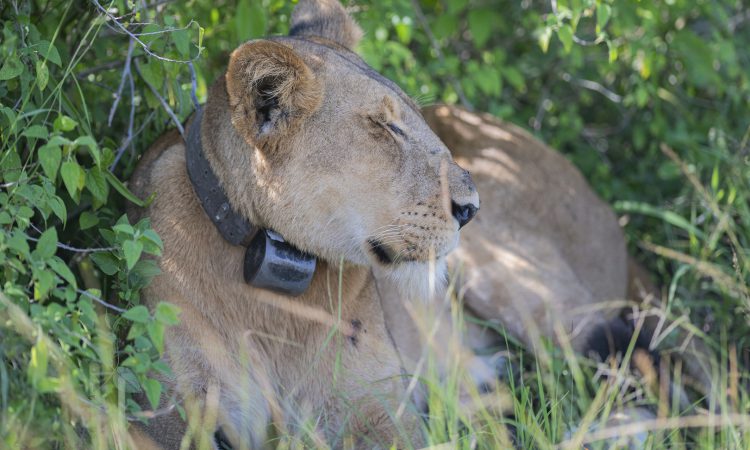
Experiential lion tracking in Queen Elizabeth National Park is carried out in the Kasenyi dry plains areas. The activity is conducted by a team of researchers and conservationists from the park. A team of researchers drive around the tourists with radiation trackers which help them to find the lions with radio collars placed within their necks.
The activity of putting radio collars around the necks of the lions started majorly as a research activity carried out by the conservationists who had various studies they carried out on the lions and later the individuals with touristic brains saw an opportunity.
Experiential lion tracking is usually carried out in the morning and evening hours since these are the active times for carnivores.
Uniqueness of experiential lion tracking.
Experiential lion tracking is unique in a way that the visitors to the National Park are assured of viewing lions every time they visit the National Park. It is important to note that the activity was introduced to the park due to the increasing numbers of complaining visitors who had visited the park several times without setting their eyes on even a lion cub.
How experiential lion tracking is conducted in Queen Elizabeth National Park.
Battery-powered collars are put in the necks of the lions after carefully making them fall asleep. The collars are loosely put around the neck in such an uninconveniencing manner. This therefore helps the team of researchers to achieve their goals without inconveniencing the animal itself. The collars are read by a GPS tracking system which helps to pinpoint the exact location where the lions’ frequency is dialed. The lion tracking device makes a beeping noise which intensifies when the lion is close to the device. This therefore helps the researcher to locate the animal and have the tourists observe it for some time.
Researchers also use this GPS to collect data from the animals and they usually share this information with the visitors while in the tracking processes.
Experiential lion tracking is a research activity and so, a few members are allowed to go along with the researcher to enjoy this activity in order not to make the animal feel threatened or uncomfortable in its habitat. The research is provided by the Uganda Carnivores Project – A team responsible for ensuring that the numbers of lions in the park continue multiplying and also giving attention to their health.
The technique of having less numbers of tourists going along with the researcher for the lion tracking activity also helps the tourists to have a heightened experience with the lions in the National Park since crowds usually interfere with the quality of the experience.
Cost of experiential tracking in Queen Elizabeth National Park.
For one to engage in the experiential lion tracking activity, they need to purchase a lion trucking permit which can be obtained through the tour operators and it usually goes for a non-negotiable fee of $110 for the foreign non-residents and the foreign residents per person and Uganda shillings 140,000 per person for the East African citizens.
Best time to go for lion tracking.
The very best time to go for experiential lion tracking in Queen Elizabeth National Park has been identified as the peak season which is usually in the dry months that is to say, the long dry season of the period from June to September and the short dry season accounting for December, January and February. These dry seasons are characterized by less rainfall therefore the vegetation will be thin hence the tourists will have clear views of the animals.
These dry months are also characterised by steady roads which are not slippery and muddy as compared to the rainy seasons. Therefore the visitor has the opportunity to drive through the savanna grasslands with no interruption and therefore enjoy the experiential lion tracking activities to the maximum.


