
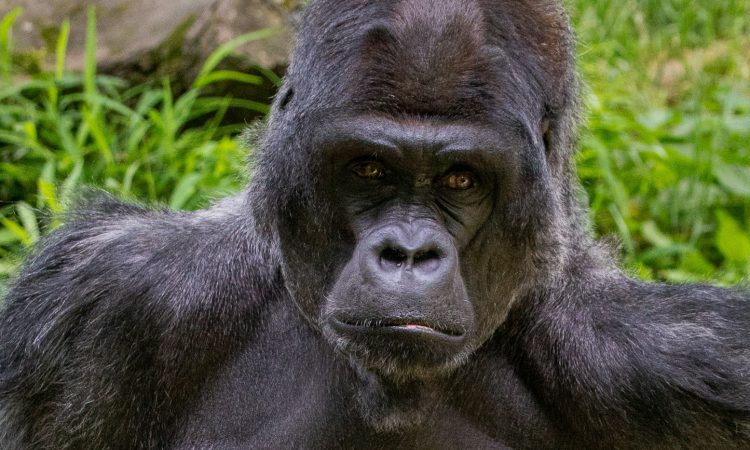
Uganda gorilla trekking safaris are possible throughout the year therefore, the month of August is no exception. While Uganda experiences a dry season in August, there are chances of rainfall, particularly in the mountainous regions of Bwindi Impenetrable and Mgahinga Gorilla National Parks where gorilla trekking safaris are conducted. However, these rains are relatively lighter compared to the wetter months of the year.
In August, the rainfall in Bwindi is approximately 88 millimeters, with a 41% chance of showers which is a relatively wetter period compared to June and July. In Mgahinga, the average total rainfall received in August is around 64 millimeters, a relative increase from July.
Though the chances of rainfall are slightly higher, August still falls under the dry season thus ensuring that the gorilla trails in both national parks are drier and less muddy. This ensures that trekkers can easily traverse through while on gorilla trekking safaris. Additionally, drier weather prompts gorillas to descend to lower altitudes as they seek warmer surroundings hence making it less difficult to be accessed by the trekkers.
Despite both parks having varying levels of humidity, it is lower in August compared to the wetter months. Since both Bwindi and Mgahinga are positioned in the rainforest areas, the humidity levels can still seem relatively high and in August they experience an average relative humidity of about 73%, which could be described as humid but cool.
Temperature conditions at Bwindi and Mgahinga Gorilla National Parks in August
In August, Bwindi experiences temperatures ranging from highs of approximately 23oC (73oF) to lows of 11oC (58oF). The temperatures get cooler as you move to higher altitudes of the park. This subsequently causes the gorillas to move to lower altitudes thus be easily witnessed on a gorilla trekking safari. The forests are pleasantly warm while having clearer skies to enhance your visibility while on gorilla trekking safaris.
In August, Mgahinga Gorilla National Park experiences moderate warm temperatures typically ranging from 20oC (68oF) during the day and an average of 8oC (68oF) during the night. These conditions are pleasantly warm and humid but cool hence presenting some of the perfect surroundings for gorilla trekking adventures as the mountain gorillas are usually out in the open.
Accessing gorilla trekking safaris in August
Bwindi Impenetrable National Park in Kabale, Kisoro, and Kanungu districts in the southwestern region of Uganda. Bwindi is about 331 square kilometers in size located near the border with the Democratic Republic of the Congo and is one of the best places to spot mountain gorillas in Africa. At Bwindi, there are at least 459 mountain gorillas with over 50 gorilla families of these only 24 gorilla families are habituated.
Accessing Bwindi Impenetrable National Park by road takes about 9-10 hours since the park is about 501.3 kilometers from Kampala, the capital city of Uganda. Bwindi from Kigali, the capital city of Rwanda takes about 4-5 hours since it is about 164.4 kilometers north. Bwindi stands at an altitude of approximately 1,160-2,607 meters above sea level.
Mgahinga Gorilla National Park in Kisoro district in the southwestern region of Uganda is about 33.7 square kilometers in size. It is bordered by Rwanda and the Democratic Republic of the Congo.
Mgahinga Gorilla National Park is part of the wider Virunga massif, consisting of national parks of Mgahinga and Bwindi of Uganda, Volcanoes of Rwanda, and Virunga of the Democratic Republic of Congo. The road trip from Mgahinga is about 498 kilometers southwest of Kampala, and from Kigali, it is at least 135.3 kilometers.
Vegetation at Bwindi and Mgahinga National Parks in August
In August, the weather influences the vegetation within Bwindi Impenetrable National Park making it less dense and more favorable to spot mountain gorillas. Due to the diverse altitudes at Bwindi, it consists of dense tropical jungles characterized by various vegetation types. Bwindi is largely composed of a montane forest characterized by tall trees, dense undergrowth, and a lush canopy.
Some parts of Bwindi are composed of bamboo forests, especially at higher altitudes. This is essential for providing food and habitat for various wildlife species, including the mountain gorillas. Though the grasslands are not as clear as the previous two months, they still provide important habitats for elephants and various antelope species. These clearings make the park relatively visible to these animals and you who are on a gorilla trekking safari. Therefore, you could locate the mountain gorillas with less difficulty compared to the approaching wetter seasons.
Mgahinga Gorilla National Park in August also experiences its dry season that influences the vegetation composition much like in Bwindi. During this time, Mgahinga is dominated by montane forest and the vegetation varies with altitude. Bamboo forests at higher altitudes and grasslands in the lower altitude regions. The montane forest is characterized by tall trees and dense undergrowth however, the underground is still less dense compared to that of the wetter months.
How gorilla trekking safaris are done in Bwindi and Mgahinga
It is mandatory for gorilla trekking safaris in Bwindi to initiate by 8 am, with the trekkers gathering at a briefing point by 7: 30 am for pre-briefing. Here, an experienced park guide will brief you on the proper code of conduct while hiking on the forest trails. After the briefing, you will be put in a group of other trekkers consisting of 8 individuals. All the groups including yours, will be led by a park guide and an armed guard ranger to seek a designated gorilla family. The duration of your gorilla trekking safari varies and is reliant on the location of the particular gorilla family and also your level of physical fitness. This hiking safari may take either an hour or a full day.
Much like at Bwindi, Mgahinga gorilla trekking safaris follow similar actions with an early morning briefing session conducted at the park headquarters, before the hike begins. But due to the relatively smaller park size and having only 1 habituated mountain gorilla family, your gorilla trekking safari will be a more intimate and quiet experience. Once the gorilla family is located, you are allowed to be in their presence for a maximum of 1 hour since prolonged exposure can cause them stress and disturbance. This is also enough time to observe their behaviors and capture these by taking enough photos with them
Due to the combination of higher temperatures and the lower chances of rain compared to the wetter months, consider packing lightweight outfits for your gorilla trekking safaris. These include lightweight clothing, brimming hut, and others. However, do not forget a raincoat, or poncho since the chances of rainfall are more than the previous two months.


