
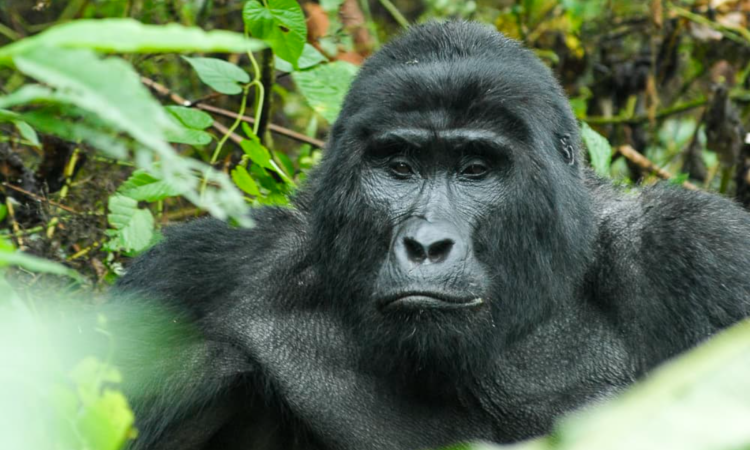
Gorilla watching in Rwanda and Uganda in 2026 is one of the highly sought-after tourist activities in both countries. Gorilla watching, also known as gorilla trekking, involves traversing the dense forest in the gorilla habitats searching for the mountain gorillas. Upon encountering these gentle primates in their natural habitats, visitors are entitled to an hour in their presence. This is subject to the rules and regulations of this activity.
History of gorilla watching in Rwanda
The history of gorilla watching in Rwanda is a story of resilience and revival all the way from turbulent times. The renaissance of gorilla trekking in Rwanda has steadily become a globally sought-after tourist activity. The establishment of a model gorilla destination in Rwanda started in 1925 by the Belgian government. These primates faced an imaginable threat from human poachers who killed them for bush meat and the illegal pet trade. While other local people destroyed the gorilla habitats for agriculture.
The political instability that followed in the country further discouraged conservation efforts, leaving these primates vulnerable to poachers. The light of hope came with an American primatologist and conservationist, Dr. Dian Fossey, who settled in the country in 1966. She set up the Karisoke Research Center, in the gorilla habitat. She began her work of conservation by habituating the first gorilla group, which she named the Susa gorilla family. Following her conservation efforts, in 1978, Rwanda became the first country to start commercial gorilla trekking.
Dr. Dian Fossey was murdered in 1985 at a time when Rwanda was about to leap into the gorilla trekking industry. Nevertheless, her death sparked a wave of conservation efforts in the surrounding gorilla trekking areas. In 1994, gorilla trekking or watching stopped as the gorilla habitats of Rwanda became a war zone during the genocide of 1994. In 1999, gorilla watching in Rwanda was re-established and developed, with gorilla habitats managed and overseen by the Rwandan Development Board. Since then, Rwanda has been one of the most visited gorilla watching destinations in the world.
History of gorilla watching in Uganda
The early years of gorilla watching in Uganda are not as tragic and dramatic as those in Rwanda. Following the sighting of gorillas, Bwindi Impenetrable National Park was established in 1991. Then, for 2 years the first gorilla family was habituated. In 1993, gorilla watching or trekking kicked off in Uganda. The demand for visitors to watch gorillas increased in Uganda, leading to the habituation of more mountain gorillas. Since the gorilla groups were situated in different areas within the park, gorilla sectors were created.
Later, gorilla watching spread to the neighboring park of Mgahinga Gorilla National Park after mountain gorillas were also discovered there. The first and only gorilla family in this park was trekked or watched in 1994. Uganda is now a top gorilla destination in the world, attracting visitors from far and wide every year.
Where is gorilla watching in Rwanda and Uganda done?
In Rwanda, gorilla watching can only be done in Volcanoes National Park, strategically situated in the northern region of Rwanda. Volcanoes National Park is one of the best gorilla destinations in the region. It was established in 1925, making it one of the oldest parks on the African continent. Volcanoes National Park covers an area of about 160 square kilometers, stretching to the Musanze district. As its name suggests, Volcanoes National Park hosts 5 of the 8 volcanic mountains stretching from Virunga National Park in DRC.
Volcanoes National Park has over 12 habituated gorilla families that can be encountered on a gorilla watching or trekking experience. Approximately 300 mountain gorillas call Volcanoes National Park their home, equating to over a quarter of the world’s mountain gorilla population.
Uganda has two gorilla destinations where gorilla watching or trekking is done, Bwindi Impenetrable National Park and Mgahinga Gorilla National Park. Both Bwindi and Mgahinga were established as national parks in 1991. However, two years later, in 1993, Bwindi Impenetrable National Park opened gorilla watching to the public. A year later, in 1994, Mgahinga Gorilla National Park started gorilla trekking or watching. Bwindi Impenetrable National Park stretches across the districts of Kabale, Kisoro, and Kanungu. It spans over 331 square kilometers of lush tropical and montane forests with swamp.
Bwindi hosts the largest population of mountain gorillas in the world, with over 459 mountain gorillas. The park hosts over 50 gorilla families, with 25 habituated and available to be encountered on a gorilla watching experience. Mgahinga Gorilla National Park, on the other hand, is situated in Kisoro district. It spans across 33.9 square kilometers of land mass, making it the smallest national park in Uganda. Mgahinga Gorilla National Park hosts over 100 mountain gorillas with only one habituated gorilla family.
How is gorilla watching in Rwanda and Uganda done?
Gorilla watching involves traveling to gorilla destinations in Rwanda and Uganda, navigating through the tough terrain until you encounter the gorillas. Every visitor embarking on this activity goes through a pre-trekking briefing at the destination headquarters. Here, rangers take visitors through the rules and regulations of gorilla watching, after the gorilla permits are checked and verified. Only eight visitors can trek or watch a single gorilla family per day; visitors are then categorized in groups of eight people.
Each group is allocated a ranger guide who leads the visitors on a searching adventure to find the assigned gorilla family. When the gorilla family is encountered, visitors are given an hour to spend in the presence of the mountain gorillas. Visitors can take pictures and record unflashy videos. The duration of a gorilla watching experience in Rwanda and Uganda in 2026 lasts between 30 minutes and 7 hours. This depends on how far the gorilla family is in the forest. One hour is offered to visitors to spend in the presence of the primates after finding the assigned gorilla family.
What is the best time to do gorilla watching in Rwanda and Uganda?
Gorilla watching in Rwanda and Uganda are done year-round, the best time is during the dry season. The gorilla destinations in Uganda and Rwanda are located close to the equator, thus experience an equatorial type of climate. This climate type is characterized by two wet and dry seasons every year. The dry season, which is the best time, is experienced from June to September and December to February. The dry season is a time of limited or no rainfall or humid temperatures. Such conditions are ideal for gorilla watching since there is clear visibility and the trails are dry and easily navigable.
The wet season from March to May and September to November experiences an increase in rainfall levels. This is known to result in the growth of dense vegetation in the gorilla destinations. This hinders visibility, and also, the trails are muddy, presenting a problem of navigation. Visitors who seek a challenging gorilla watching experience can visit the gorilla destinations during the wet season.
Other animals to see in Rwanda and Uganda in 2026
Other than the mountain gorillas, Rwanda and Uganda are top tourist destinations sheltering the Big 5 and other savannah animals. Such animals include cheetahs, hyenas, warthogs, Uganda kobs, impalas, elands, zebras, waterbucks, reedbucks, oribis, hippos, Nile crocodiles, and giraffes. These countries also host primates like golden monkeys, chimpanzees, black and white colobus monkeys, red monkeys, vervet monkeys, and baboons etc. Over 1,500 bird species are hosted by both Uganda and Rwanda in different destinations. This makes these countries the top birding nations.
Where to stay for gorilla watching in Rwanda and Uganda?
For those planning to go gorilla watching in Rwanda and Uganda, Rwanda has some of the best high-end accommodations for luxury gorilla watching experiences. These facilities are scattered around Volcanoes National Park to give visitors a comfortable stay close to the gorillas. Some of these facilities include One&Only Gorilla’s Nest, Singita Kwitonda, and Wilderness Bisate Lodge. Visitors embarking on a gorilla watching adventure in Uganda have a variety of accommodation options to choose from. These include luxury, midrange, and budget. These facilities are located in different sectors around the gorilla parks. These include Mahogany Springs Safari Lodge, Four Gorillas Lodge, Silverback Lodge, Nkuringo Gorilla Lodge, Mount Gahinga Lodge, Mucha Lodge, and Mountain Gorilla Triangle Lodge, among others.


