
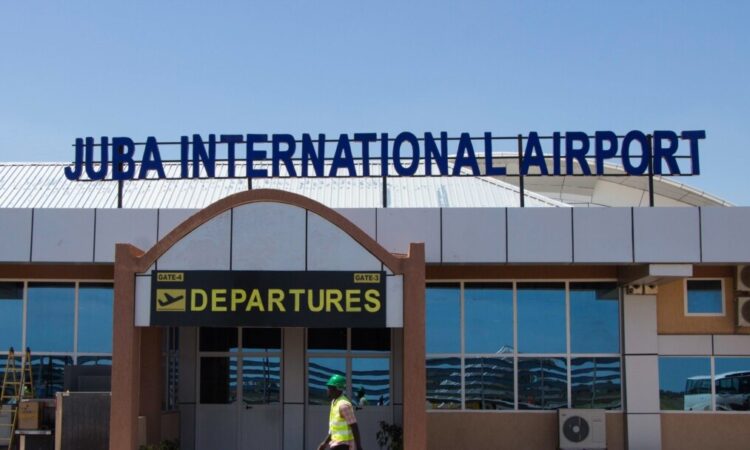
Juba International Airport (IATA code: JUB) is the country’s key link and the country’s main airport. The airport is situated in convenient proximity to Juba city. It welcomes all types of tourists, from diplomats to business travelers and humanitarian workers, and official journalists into South Sudan.
As South Sudan’s major airport, it plays a vital role in supporting trade, travel, and humanitarian activities. However, passing through this airport can also bring out the long-term challenges faced by the country. These may include improper infrastructure, security instabilities, and the difficulties of operating in a young developing nation.
Location and strategic importance
There are about 5 kilometers from Juba International Airport to the capital, Juba, near the White Nile. Its strategic location makes it a vital entry point for travelers entering and exiting South Sudan, especially those involved in business, humanitarian work, and other official operations.
Thriving urban neighborhoods and security properties dominate the surrounding environments. Its strategic location also allows it to connect the capital city with major regional cities like Nairobi, Entebbe, and Addis Ababa. It also acts as a major transit point for most international visitors coming to South Sudan.
Given that the air means of transport remain regulated between South Sudan’s cities, Juba International Airport is largely responsible for passengers and travelers leaving and entering the country. For many South Sudanese visitors, especially diplomats, aid workers and business travelers, this entry point is the first gateway before continuing to other parts of the country.
History and Development of Juba International Airport
For many decades, Juba International Airport has been an access point in the region. It started as a small airfield before the country split from Sudan. It still handled a few domestic flights for smaller aircraft. In 2011, when South Sudan gained its independence, it was declared an international airport. Since then, Juba International Airport has been the main gateway into South Sudan for tourists, diplomats, aid workers, business travelers, and journalists.
As the airport drew in more travelers, combined efforts were made to improve its infrastructure. Modern lighting systems were upgraded, terminals expanded, and a spacious environment was established. These developments helped the airport handle the growing number of domestic and international flights coming into Juba.
Years of political instability and persistent conflicts suppressed several developments and also made regular maintenance challenging to run. Like many public facilities in South Sudan, the airport has encountered difficulties in handling demand under limited and dysfunctional resources.
Juba International Airport now prides itself as the country’s main aviation hub. Although it cannot be compared to developed and well-established larger airports in East Africa, Juba International Airport continues to operate and support travelers’ transportation, government operations, and business across the country.
While progress has been slower, as a result of inadequate funds, a politically insecure environment, and the continuous civil conflicts that occurred in 2013, there’s potential in its growth once the situation stabilizes. Periods of fighting have not left this property the same; maintenance remains stalled. As of today, supported by international partners and private entities, the airport operates, and there’s hope for its recovery.
Airlines and Connectivity
Juba International Airport links Juba City with various regional hubs. This makes the neighboring countries the basic access points for most international visitors. Daily flights are available between Juba and other nearby cities. For example, Nairobi in Kenya, Entebbe in Uganda, and Ethiopia’s Addis Ababa through Kenya Airways, EgyptAir, Uganda Airlines, and Ethiopian Airlines, among others.
Basic regional ports like Nairobi, Entebbe, and Addis Ababa can be used by travelers from the West, North America, or other far-away destinations before proceeding to Juba. It is vital to note that there are few long flights to South Sudan from Europe and other distant locations. Domestic flights within the war-dominated country remain absolutely limited. Travelers should anticipate a change in schedules sometimes without notice as a result of unpredictable weather conditions in South Sudan or operational issues. It is also necessary that tourists confirm their flights within 2 to 3 days prior.
Safety at the airport
Security is non-negotiable at Juba International Airport. There are both South Sudanese security forces and UN peacekeepers in the surrounding areas to ensure maximum safety. Passengers are urged to arrive at the airport at least 1 to 3 hours before their international flights for a seamless travel experience. Security instructions must also be observed more cooperatively, and travelers are highly advised to use official taxis and hotel transfers without carrying unnecessary valuables and a huge amount of cash.
In recent years, the airport has experienced security instabilities, especially political insecurity. Visitors to South Sudan must also consider travel measures given to them by their governments or embassies.


