
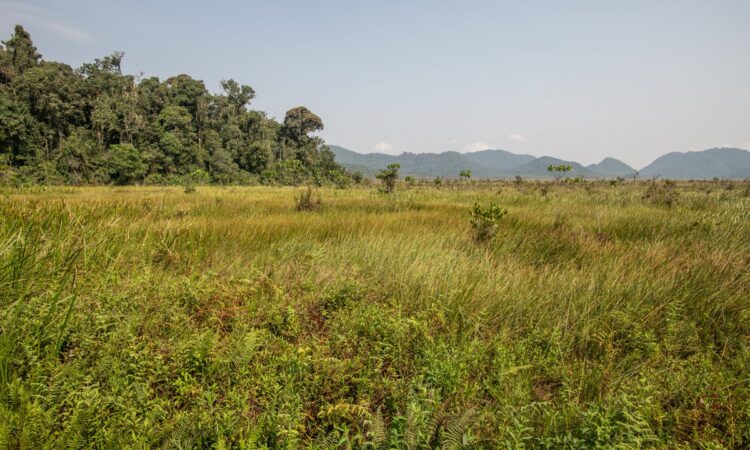
Since Nyungwe Forest is famous for hosting chimpanzee primates, the Kamiranzovu Marsh trail is often overlooked and shadowed by these primates. However, under the tropical canopies of Nyungwe Forest Kamiranzovu Marsh trail stands tall to write its name among some of the incredible places and things to do in Nyungwe Forest. The Kamiranzovu Marsh trail is deeply rooted in the heart and misty tropical clouds of Nyungwe Forest. Kamiranzovu is a word in the local Kinyarwanda language that comes from two words: Kamira, which means to swallow, and nzovu, which means an elephant. The Kamiranzovu Marsh trail got this name years back when forest elephants were still present in Nyungwe Forest.
The marsh or swamp on this Kamiranzovu trail vast landscape, would trap elephants whenever they entered this trail. The Kamiranzovu Marsh trail is the largest swamp in Nyungwe Forest, and it bears the Kamiranzovu waterfall. The Kamiranzovu Marsh trail is one of the best hiking trails in the forest, which has incredible scenes that can interest visitors on an exploration quest in the forest. The Kamiranzovu Marsh trail rotates around the swamp, catching the best views of wildlife species, especially the birds and primates, and also the views of the entire swamp at a high elevation. Kamiranzovu Marsh trails are also the last place where the last elephant in Nyungwe Forest was killed in 1999, and its skull was retrieved to the Uwinka visitors’ center. This marked the end of an error of the giants of this forest.
The Kamiranzovu Marsh trail is approximately 5.9 kilometers in length, with the trailhead taking the hikers and nature lovers over 3 hours to complete while passing through the Orchid loop. This trial is rugged with many highs and lows that make the Kamiranzovu Marsh trail more adventurous due to its challenges. The beginner hikers and weak hikers prefer taking the shorter route from the Uwinka visitors’ center to the Kamiranzovu waterfall, which takes about an hour. The Kamiranzovu Marsh trail passes through vast ecological systems that can be interesting to explore with various wildlife species. Bearing in mind that Rwanda is a land of a thousand hills, the Kamiranzovu Marsh trail has rugged hilly and valley areas with an altitude of about 2,140 meters above sea level, with the lowest height being 1,940 meters. It is this same elevation that shoots the Kamiranzovu waterfall to a height of 258 meters.
When to visit the Kamiranzovu Marsh trail in Nyungwe Forest?
The best time to explore the Kamiranzovu Marsh trail in Nyungwe Forest is the dry season. This is because of characterises of the dry season that align well with good conditions for outdoor activities like nature walks and hiking. The dry season in Nyungwe Forest is both dry and humid, with very low records of regular rainfall patterns. These conditions assure that the Kamiranzovu Marsh trail remains dry and navigable by visitors. There is also little growth of the forest vegetation due to the little rainfall received. The dry season is experienced from June to August and from December to February.
What to pack for a nature walk on the Kamiranzovu trail in Nyungwe Forest?
The packing list is vital for the success of a nature walk adventure in Nyungwe Forest. This packing list bears items that are essential to use while hiking or when on a nature walk. These items include the following.
- Hiking shoes
- Insect repellent
- Rain jacket or sweater
- Reusable water bottle
- Energy-giving snacks
- Light clothes
- Waterproof trousers
- First aid box
- Long-sleeved shirt
- Accessories like a hat, sunscreen, and sunglasses etc.
What to do in Nyungwe Forest?
Nyungwe Forest adventures are not limited to nature walks and hiking because other incredible experiences can be of interest to the visitors. Some of these tourist activities are listed below.
Chimpanzee trekking
Talking about Nyungwe Forest usually depicts chimpanzee trekking in most people’s minds. This is because Nyungwe Forest is popular for chimpanzee trekking safaris the see a large number of visitors flock to the forest to embark on this experience. Chimpanzee trekking involves traversing through the dense canopies of the forest searching for the chimpanzee primates and, upon locating them, spending an hour in their presence.
Colobus monkey trekking
Trekking colobus monkeys is also a major tourist activity in Nyungwe Forest. Colobus monkeys are among the various primates in the forest and are unique because of their black and white coats. Visitors can also spend an hour in their presence as they watch them play, feed, and go by with their chores after navigating through the dense forest trails.
Birding
Nyungwe Forest hosts an average of about 320 bird species that are scattered across the different ecological systems. These birds can be spotted on a birding adventure where experienced and professional birding guides with ample knowledge of most of the birds in the forest lead you. The forest hosts both endemic birds, which are the common residents of the forest, and migratory birds that are occasional and seen in specific seasons.


