
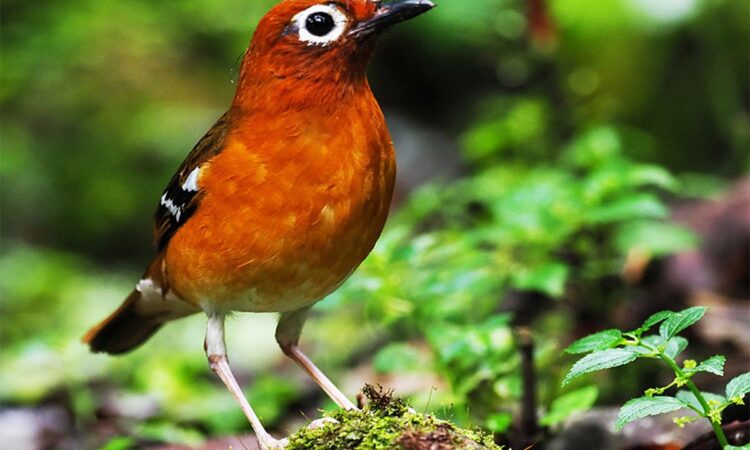
Regarded as probably one of the best birding trails in Nyungwe Forest, the Karamba birding trail crafts the best sights for bird encounters. Nyungwe Forest’s absolute beauty is better exhibited through the Karamba birding trail. With over 300 bird species inhabiting Nyungwe Forest, the Karamba trail takes up a huge portion of this number to extend these species closer to you for discovery. Birding in Nyungwe Forest is an interesting adventure, especially for birders, nature lovers, and enthusiastic adventurers. This is attributed deeply to the beauty of various bird species that have sought refuge in the forest and made themselves available for sighting. The forest also has some of the rare and unique species, and the Karamba birding trail has outdone itself to bring these birds up for exploration.
History has it that the Karamba birding trail in Nyungwe Forest in the early colonial years was a mining area where gold was extracted. As years moved on, the former gold mine was turned into a stone quarry where road construction materials were obtained. This is largely because of the rocky terrain and texture of the Karamba birding trail. All these human activities really took a huge toll on the trail and also the forest, as they led to the cutting down of many trees and destroying the vegetation. The stone quarry activity also later ceased, and the Karamba trail was turned into an army camp. However, later these works were stopped, and slowly, at a steady pace, the forest managed to rebuild itself to its former glory as trees and vegetation naturally grow.
The Karamba birding trail is regarded as one of the best birding trails in Nyungwe Forest, given its relatively flat terrain that eases the birding experience. This trail also ranks as one of the oldest birding trails in the forest since its existence stretches to the colonial era. The trail’s flat terrain, open vegetation, and young, relatively tall trees attract many bird species to nest there. This makes the Karamba birding trail interesting and the best trail since this open vegetation offers a clear view of the bird species by aiding visibility. At an average altitude of 1,935-2,030 meters above sea level, the Karamba birding trail is relatively flat, thus easing this experience even for amateur birders. Although this birding trail was first disturbed by intensive human activities that left part of it degraded, the Karamba trail still thrives, covering an average area of 4 kilometers. With its large space, birders have a wide scope to sight several bird species and also enjoy the natural forest. Even for the most experienced birders, covering this entire Karamba birding trail takes about 3 hours.
Birding along this Karamba trail kicks off from the former army camp or base, where a short briefing from the rangers and birding guide takes charge to highlight the specifics of this activity. Straight up head through the trail, keeping your eyes peeled on the trees and surrounding vegetation to capture every slight change in motion as a bird can be that quick, and every second counts. Deep in the forest, at the sight of the fragrant orchids that breathe a refreshing scent, the crowning of the trail adds to the beautiful blossom of the flowering plants. The margin of the forest as the Karamba trail comes to an end relieves the massive tall trees and the large rock outcrop, which also offers incredible sights.
This Karamba trail has been made very popular by the various bird species around, and some of these species include the blue-headed sunbird, yellow-eyed black flycatcher, bush shrikes, African broadbill, turacos, mountain-masked Apalis, and red-collared babbler, among others.
What is the best birding time in the Karamba trail of Nyungwe Forest?
The best birding time in the Karamba trail of Nyungwe Forest is the dry season, which begins from June to September and December to February. This is because the terrain of this trail is relatively flat and rocky, hence the dry conditions of this season favor birding in this trail. The dry season presents a heightened dry weather of humidity, fuelled by the absence of rainfall throughout this season. These conditions favor navigation through this trail, and also, the clear sky offers good visibility of the bird species.
The wet season, which runs from March to May and October to November, also offers a good time for sighting bird species along this trail. This is because the wet conditions of heavy rains create plenty of food for the birds in the forest and also present a time of breeding for the birds. Therefore, birders are assured of spotting many birds, including the migratory bird species that usually fly in during this season. However, these conditions of the wet season may hinder birding in the Karamba trail since it is watered into a small stream due to its lower altitude and heavy, prolonged rains of the wet season. Concludingly, the dry season is the ideal time for birding in the Karamba birding trail of Nyungwe Forest.


