
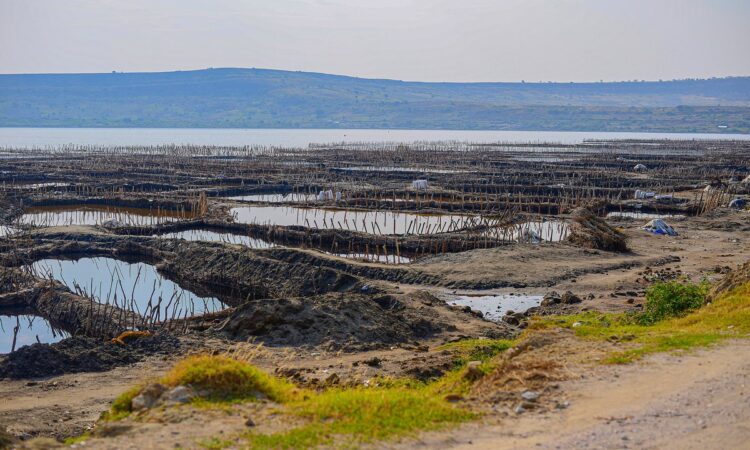
Lake Katwe is probably the most unique waterbody in the country. Situated in the western region of the country, Uganda, Lake Katwe is part of the many crater lakes that are found in this area. This is the only known salt lake with high concentrations of sodium chloride and other minerals, such as sodium carbonate and sodium sulphate, with small deposits of potassium chloride. This highly crystalline lake is a significant site in the area, attracting numerous visitors. Lake Katwe is located in Queen Elizabeth National Park, and a visit to this lake is often combined with other adventures in the park.
Lake Katwe is on the northern side of the park in the Mweya peninsula. The lake’s uniqueness is not just in its ability as a salt lake, but also in its status as a hypersaline lake, which has no outlets. This explains why this lake is largely affected by the strong and harsh dry seasons, which usually hit it close to dryness. With a lot that Lake Katwe has to offer, some challenges affect the miners of this salt in the park. The most important challenge is that of health, since the minerals in the lake are very concentrated and cause harm. When the reproductive parts of the miners are exposed to these minerals, it can cause infertility in women and impotence in men.
How was Lake Katwe formed?
The formation of Lake Katwe dates back thousands of years, when the area of the present lake experienced volcanic activity. Lake Katwe, just like any other crater lake in the world, was formed through the process of volcanism. Volcanism is a process that sees intense heat in the Earth’s crust caused by magma or molten lava produces gases and, with few vents to escape, they cause a violent eruption that shoots up the Earth’s surface and volcanic debris on the sides. This leaves a large opening or depression that is called a crater. As the years pass, a huge toll is taken on the area, and climate conditions frequently change; this depression or crater is filled up by rainwater, forming a crater lake. This is how Lake Katwe came into existence over 8,000 years ago. As many other crater lakes in the region that have outlets that drive out the mineral concentrations caused by the violent volcanic eruptions during their formation, Lake Katwe lacks outlets, thus, all the minerals concentrate in the lake. This is the major reason why Lake Katwe produces salt, or why it is a salt lake.
How is salt mined in Lake Katwe?
Salt mining in Lake Katwe is a very complex process taught and passed out from generations of the forefathers who began the mining. Experience teaches it best as both men and women are involved in this tight procedure of extracting the salt. Small plots or ponds are made by the miners on the swallow end of the lake or shores of the lake as it rises in the wet season, it fills them up. These ponds are individually owned and partitioned by dry wood. At the peak of the dry season, the water levels of the lake drop, and the water in the ponds evaporates, leaving behind a high concentration of the rock salt that is usually extracted by the women. This rock salt is then parted, revealing the fine crystal salt that is washed to create the edible table salt. The remaining rock salt is washed, and it is the one given to cattle to lick.
This rock salt is also used domestically to tender food, such as meat and beans. Since there is no constant flow of water in the lake due to no outlets, the lake is harshly hit by the strong sun of the peak dry season, causing it to evaporate and leave the minerals concentrated and ready to be extracted. Mining of salt in Lake Katwe is only done during the dry season, since the prolonged sun is the main catalyst for harvesting this salt. The dry season in this area is experienced from June to September and from December to February. Lake Katwe has only one benefit, and that is salt mining, unlike other lakes that provide water for domestic use and irrigation. However, the lake is dangerous to human and animal consumption, and also for the plant life. This is, of course, attributed to its high levels of mineral deposits that hinder fresh life for flora and fauna.
Lake Katwe is of great importance to the local people and the country in general due to the large economic benefits it brings. The salt exports have dropped in recent years compared to the previous centuries at the start of mining in Lake Katwe. This is attributed to the discovery of other salt mining areas in the East African region. However, there is still a constant market for salt in the country, and this is why the mining is still ongoing.
Exploration of Lake Katwe and the entire salt mining procedures can be combined with other tourist activities in Queen Elizabeth National Park. Some of these activities include game drives, birding, chimpanzee trekking, boat cruises, and nature walks, among others.


