
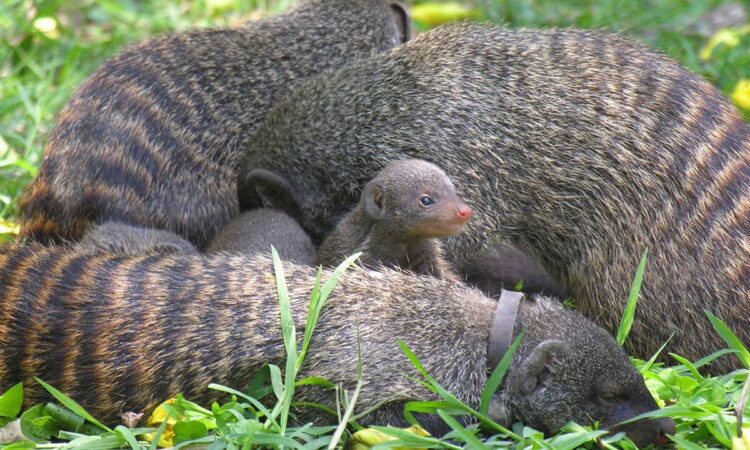
Mongoose tracking experience in Queen Elizabeth National Park is more like other tracking experiences, but generally focuses on the mongoose. The mongooses are among the smallest mammals in this park, offering quite a fascinating experience. The best thing about having a safari in Uganda is that encountering even the smallest of animals can become a memorable adventure. This is the case with the mongoose tracking experience in Queen Elizabeth National Park.
The mongoose tracking experience is better understood by citing, defining, and identifying the mongoose, since they are the architect of this experience. The mongooses are small mammals that inhabit the savannah grassland plains. They are agile with an incredible speed for their bodies and have short legs with a long body measuring about 2 feet.
Do not be deceived by the small size of the mongoose, as they are very skilled hunters, renown by hunting and killing venomous snakes. They are omnivores and can feed on insects, rodents, birds, eggs, and even reptiles. The mongooses are known social animals that live in groups called colonies, and their social bonds are as strong as their appetite. Mongooses traded off size for social networks, and their strength lies in numbers. This is why they can take on dangerous prey like the king cobra.
Mongooses situated in Uganda, particularly Queen Elizabeth National Park, have brown fur on their bodies. The country hosts about 8-9 different species of mongoose scattered across vast ecological systems. Queen Elizabeth National Park specifically hosts the banded mongoose species. This park alone hosts over 400 banded mongoose individuals that are different in 12 different groups.
How unique is mongoose tracking in Queen Elizabeth National Park?
What makes mongoose tracking in Queen Elizabeth National Park unique is that it offers a more intimate experience. By intimate experience, we mean that this experience is an outdoor adventure done on foot in the savannah plains of the medley of wonders, Queen Elizabeth. Most of the activities in this park, such as game drives, are done in the comfort of a safari vehicle.
Mongoose tracking gives visitors a hands-on adventure by leaving the safari vehicles and tracking these agile mammals on foot along their vast territories. Mongoose tracking is a research-based activity and is usually done for research purposes. This is why only a handful of visitors are allowed to take part in this experience.
Where is mongoose tracking done from?
Mongoose tracking is done in Queen Elizabeth National Park, specifically in the Mweya Peninsula area. This area is situated on the northern side of the Kazinga Channel, one of the major sources of water in the park. The Mweya Peninsula is an open savannah with various anthills. This is among the many reasons why this area is perfect for the mongoose.
On top of having insects like termites on the mongooses’ menu, they use the anthills to construct tunnels where they stay. Much as snakes may not be a direct threat to them given their numbers, jackals, hyenas, foxes, and leopards are a different case. The anthills are an important fort and hideout from predators.
How is mongoose tracking done?
Like most other tracking adventures, mongoose tracking begins with a quick insight into the experience and a recitation of the expected code of conduct. This short briefing is vital for the success of this experience. Since the mongooses live in the park with other wildlife species like elephants, buffaloes, leopards, lions, hyenas, etc, safety is always a priority.
The park is very exciting and offers interesting encounters, but it can also be very dangerous. This is why visitors must at all times follow the instructions of the rangers during this mongoose tracking experience. Using radio antennas, researchers can locate the mongooses via the collars tied around some mongooses’ necks.
Only 4 visitors are allowed to track mongooses per session in the company of scientists, researchers, and rangers. This activity is done under a research project called the Banded Mongoose Research Project. This project focuses on studying the social behaviours of mongooses and collecting data. The mongoose tracking experience lasts for approximately 1-3 hours daily from the time the park opens at 7 am to 5 pm.
How much does mongoose tracking cost?
Like all the activities done in Queen Elizabeth National Park, mongoose tracking is done at a cost. This cost is categorized by the origin and nationality of the visitors for proper and fair pricing for the activity. Foreign non-residents or international visitors pay USD 30, foreign residents pay USD 25, and East Africans, as well as Ugandan pay UGX 30,000.
The above-mentioned costs for mongoose tracking in Queen Elizabeth National Park exclude the park entrance and vehicle entrance fees. The park entrance goes for USD 40 for international clients, USD 30 for foreign residents, and UGX 20,000 for East Africans. The vehicle entrance goes for USD 10. These payments must be made before entering Queen Elizabeth National Park.
The payment for mongoose tracking in Queen Elizabeth National Park is made at the Mweya Visitors Center. Visitors can contact a local tour operator like Standard Safaris for details on all payments for the mongoose tracking permits, entrance fees, and also for extensive planning for the whole tour.
What is the best time for mongoose tracking?
The nature of mongoose tracking as an outdoor activity categorically puts its best time in the dry season. The dry season offers the most favourable conditions for visitors to have a seamless mongoose tracking experience. Queen Elizabeth National Park is crossed by the equator; therefore receives an equatorial type of climate.
This type of climate is characterized by two dry and wet seasons per year. Our focus is drawn to the dry season as the best time for this activity. During this season, the weather is very dry due to the hot temperatures, as the sun is overhead at the equator. The tracking trails are dry, making navigation in the park easy. The vegetation cover is also sparse, thus leaving little room for mongooses to hide. This increases the chances of encountering these species more clearly.
What to pack?
As visitors are set to embark on this exciting adventure of mongoose tracking in Queen Elizabeth National Park, a set of items needs to be packed. These items to pack include all the essentials that can ordinarily contribute to the success of the mongoose tracking experience. Below is what to pack for this experience.
- Light clothing like T-shirts and safari pants
- Jungle boots
- Cameras and extra batteries
- First aid box
- Reusable water bottle with enough drinking water
- Energy-giving snacks
- Rain jacket for unexpected rain
- Accessories like sunscreen, sunglasses, a cap, etc.
How to get to Queen Elizabeth for mongoose tracking?
Visitors embarking on Queen Elizabeth National Park for mongoose tracking can get there by either road or air. Queen Elizabeth National Park is situated approximately 374 kilometers from the capital, Kampala. Getting to this park by road is the commonly used means of transport and also the cheapest.
It takes approximately 7 hours to get to Queen Elizabeth using either the Kampala-Masaka-Mbarara-Kasese highway or the Mubende-Mityana-Kasese highway. Both routes are tarmacked, making the journey surreal with scenic views of the surrounding environments and local communities.
There is also an option to travel to the park by air, which is the quickest and most expensive. Visitors can board a charter domestic flight from Entebbe International Airport or Kajjansi Airfield to Kasese Airstrip or Mweya Airfield for an hour and a half.


