
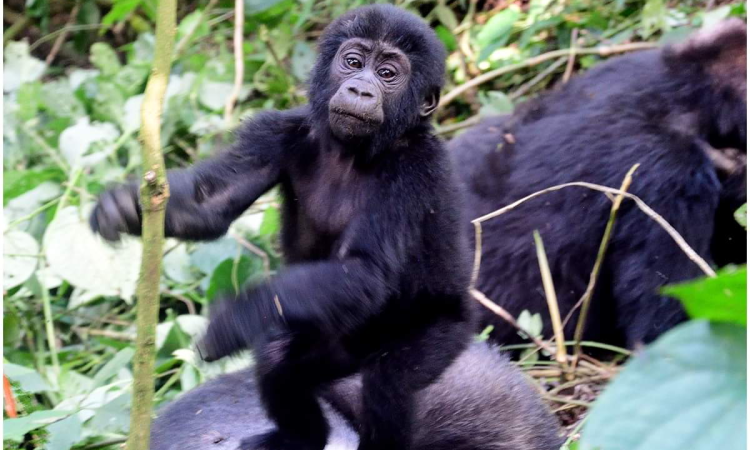
One of the most wonderful experiences worth undertaking is capturing a picture of a mountain gorilla. Take part in a gorilla family’s interactions with one another and get to photograph the natural world, wide-open valleys, deluges of rain, and the lovely sunrays filtering through the leaves of impenetrable forests. Only located in the high-altitude regions of the enormous Virunga Conservation Area as well as Bwindi Impenetrable National Park in southern Uganda on the continent of Africa, mountain gorillas are a critically endangered species of mammals.
These primates are close relatives of humans since they have 95% of the same genes. They are outgoing but reserved, and the silverback who commands the entire group is a strong alpha male. At the time of photography, the silverback draws the most attention.
Where does Mountain Gorilla photography take place?
According to the most recent census, there are around 1063 mountain gorillas on the planet, with half of them living in the Republic of Uganda’s Mgahinga Gorilla National Park and the exceptionally dense Bwindi Impenetrable National Park.
The other population of gorillas can be found in Rwanda’s Volcanoes National Park, where renowned primatologist Dian Fossey conducted her primate studies, which helped the gorillas survive and become so well-known. A quarter of the mountain gorilla population is found in the Democratic Republic of Congo’s Virunga National Park. Thanks to excellent conservation efforts, a decent number of gorillas has been steadily growing.
Time for photography.
The four hours of habituation experience or one hour trekking experience all can allow photography of mountain gorillas to happen, so even if there is a short window of opportunity for shooting images, it may be made to be as memorable and impactful as possible. Both the camera and binoculars start to work as you follow the apes. A variety of forest environments, including birds, unusual plant species, and more, will be visible and adorable.
The communication and intelligence of the gorillas will astonish you as you approach closer to these wonderful apes. Gorillas produce about 25 different vocalizations, each expressing a different message and range of emotions.
They frequently don’t focus on people. Since they are wild animals, they expect to be treated with respect. A briefing on the dos and don’ts of trekking is given before entering the forest. This is being done to protect the primates, the ecosystem, and trekkers. Stay 7 meters away from the gorillas, remain with your fellow trekkers, heed the guide’s instructions, and avoid using flashlights when shooting pictures are just a few of the things to remember.
Photographic equipment to use.
The camera you use matters a lot because this is a once-in-a-lifetime experience. It is a good idea to bring two cameras with you when you go into the forest since this eliminates any chance of becoming stuck if the battery dies, getting bad pictures, or running into any unforeseen circumstances. If you can’t afford two, one should have a 70-200mm lens and the other should have a 24-70mm lens. Don’t rely on your phone’s camera or cheap lenses. The mountain gorillas in their area are well-covered by the two. A 200mm lens can catch up close. In the forest, avoid changing lenses because it can lead to condensation on the camera.
Find answers to the following queries before choosing a camera; Which camera’s aperture is the best? What pictures would you like? which camera has the best auto-focus and which is the most famous of the glorious ones?
Photographs that stand out.
There are times when taking photos will allow you to showcase your photography at its best. They seem to be an inconvenience, yet when they’re taken care of, they produce interesting photographs;
- Rainy times.
Even though it frequently occurs, no one would wish for it to rain in the middle of a gorilla trek or a photo opportunity. Rain is expected, so you don’t need to pose or put the camera down. Rather, use the opportunity to photograph the mountain gorillas’ reactions while it is raining.
Moving with a rain cover or rain-proof equipment is advised when traveling to the forest to take pictures. You can focus on the background, have a gorilla in focus with raindrops, and more. Under rain, the gorilla’s fur texture comes through clearly.
Gorillas masked into the vegetation.
Finding gorillas hidden in lush vegetation at a distance of 7 meters away from them is absolutely upsetting. Utilize the dense foliage cover by choosing the ideal picture location. A location where you may see them play, feed, and take care of themselves.
- Bright sunlight.
Most of the time, people believe gorillas live mostly in dense forests, where there is less exposure to sunlight. Due to its equatorial location, the forest is accustomed to some sunlight. Gorillas enjoy relocating to wide valleys and high peaks. The photo quality is impacted by the sun’s effect on gorilla faces. You can either shoot in manual mode or open your aperture while shooting the shots to focus clearly on gorillas that tend to hide in tree shades.
- Under darkness.
It might be pitch black and only have a few light beams when you are deep in the forest. What makes this special is that you may use the opportunity to capture the eyes rather than the back, which might not be as clear.
Interference from other trekkers.
Even though you will be the center of attention, some of your fellow trekkers might be more motivated to continue forward because they are curious about the particular characteristics of the gorillas. Since they can be photographed among the primates, this can still be considered a part of the experience.
Mountain Gorilla Photography Tips.
Capture every gorilla you see. Since most gorilla members tend to disperse, don’t concentrate on just one. If you turn around, you might be able to spot a budding star ascending a tree. There is time for snapshots, so don’t rush; take a moment to breathe and search for the ideal location and backdrop. Observe your camera settings. Continue to be on the same level as the gorillas. Finally, be sure to record every detail of the encounter, including the jungle, gorilla food, nests, fur, movements, and more.
The opportunity to photograph and interact with mountain gorillas is a once-in-lifetime experience. Getting a beautiful photo of your encounter with these mountain gorillas in their natural environment is priceless.


