
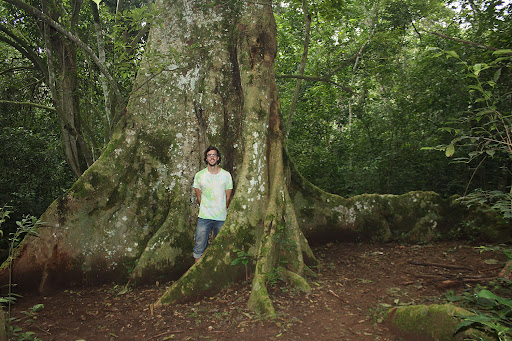
Mabira forest is the largest forest by land mass in Uganda. It is located in Buikwe district on the Kampala-Jinja highway. Mabira forest was established as an ecological protection forest in the 1900s. The forest is largely nature however there is some part of it planted. The forest spans over 306 square Kilometers. Mabira forest harbors several flora species such as mahogany tree species that grow as tall as 80 meters and with a circumference of about 20 meters. Some of these trees and plant species have been in Mabira forest for generations. The Mabira forest does not stop at hosting flora species alone however it harbors fauna species also. There are several species such as primates, birds, mammals, and amphibians. The planted part of the forest came about as the government’s conservation efforts to revive the forest after it had been given away. In the 1970s during the reign of President Idd Amin. The then government gave part of the forest to the local people to cultivate and grow their crops. When the current government came into power, the people who were in the forest were evacuated from the forest and trees were planted in the areas where they were cut down. The forest has now gone back to its former glory.
Nature walks in the Mabira forest is one of the major tourist activities in the forest. These walks are organized into different types. There are long walks that can last for over 2 hours, medium walks that last for an hour, and short walks for 30-45 minutes. Each nature walk size is done along different designated trails. Although these routes take you through different sides of the forest, they all offer equally beautiful views and sights. During the nature walks in the Mabira forest, you will encounter different wildlife species such as birds, primates, and amphibians. The nature walks start at the Mabira Eco Tourism Center the forest headquarters at Najjembe.
Attractions in the Mabira Forest
The Mabira forest is huge accommodating several flora and fauna species. Some of these species can be spotted why on a nature walk experience in the forest. These attractions include the following.
Bird species
The Mabira forest harbors several bird species including the migratory and endemic birds. The migratory bird species inhabit the park in different seasons. The endemic birds are the residents of the park. Some of the bird species in the forest include the reed cormorant, black-headed heron, Marabou stork, Hadada ibis, yellow-billed kite, black-shouldered kite, hooded vulture, and European honey-buzzard to mention but a few.
Primates
Mabira being a large natural forest, hosts several primates. There are various primates in the forest and can be spotted roaming from tree to tree while on nature walks in Mabira. The primates are mostly active in the morning hours and can be best tracked. Some of the primate species in the Mabira forest include red-tailed monkeys, black and white colobus monkeys, and grey-cheeked mangabey to mention but a few.
Mammals
Mammals are also present in the forest, especially in the southern sector of the forest. This area is mainly used for research and sometimes long nature walks. This sector of the Mabira forest is entirely natural and very dense. This makes it the mammal’s favorite side of the forest to harbor since there is little human activity and presence. Some of these mammals in the Mabira forest include bushbucks, duikers, squirrels, bush pigs, and fruit bats among others.
Vegetation
Mabira forest is a natural rainforest that has stood the test of time since its establishment as a protected forest. The vegetation in the forest has different types from tall trees to dense undergrowth. Some of the vegetation in the forest has been in existence for centuries dating back to the 1900s and beyond. The vegetation in this forest has a lot of advantages including medicine such as Warbhugia Ugandenesis and air cleansing. The Warbhugia Ugandenesis is a popular tree in the forest used in the manufacturing of medicine.
Other activities to do in the Mabira forest
The Mabira forest offers several activities to embark on other than nature walks. Some of these activities include the following.
Zip lining
Zip lining is an exclusive adventure experience that involves visitors riding on suspended cables above the tree canopies. This thrill adventure experience is fun and offers incredible breathtaking views of the vegetation in the forest from an aerial view.
Camping
The Mabira forest offers camping activities for adventure enthusiasts and holiday-makers. There is a designated camping area for campers to bond with nature off the busy loud city life. Camping gear can be hired on the ground or a visitor can carry theirs. Camping exposes the nightlife in the forest and a chance to spot the different nocturnal animals that are active at night.
Picnics
Mabira forest is the best place for picnics as there are well-designated places for picnics. Embrace nature with a meal where the aroma mingles with the sounds of birds and every bite is a taste of adventure under the vast tree canopies.
What to pack for a nature walk in Mabira forest?
Below is a list of items to pack when preparing for a nature walk in the vast Mabira forest.
- Hiking boots, the ground in the Mabira forest can be very slippery thus good hiking boots are necessary
- Drinking water, pack enough drinking water for regular hydration during the nature walk
- First aid box, is important in rare cases of injuries
- Long-sleeved shirt, to protect you from the thorny vegetation and insect bites.
- Insect repellent, protects you from insect bites that tend to be irritating
- Rain jacket, the weather in Uganda is unpredictable and can rain at any time thus a rain jacket is important
- Waterproof trousers, to keep you dry in cases of rain and dew in the forest.


