
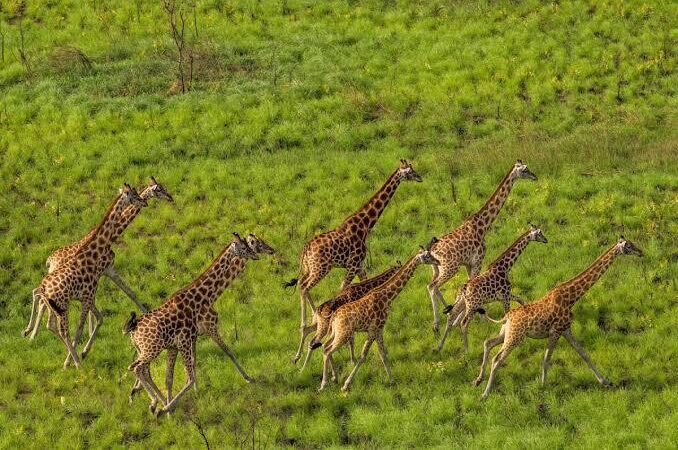
Currently, even though there are several protected areas and reserved national parks, none of them is considered safe for tourism or visits. South Sudan remains one of the riskiest countries and most unstable destinations in Africa as a result of ongoing armed conflicts, civil wars, intercommunal violence, awful infrastructure, and high levels of criminal activity. Major governments, especially those in Europe like the US, UK, Canada, Australia, EU nations, and many others. These continue to advise travelers against visiting the country unless it’s about essential travel like NGO programs, business, or research purposes.
Below is the current reality, including lists of the main national parks, along with honest context so travelers can make informed decisions before visiting South Sudan. Even though the country is very rich and endowed with wildlife, the security situation today makes leisure visits to its national parks not recommended.
What does security in South Sudan look like?
Even when the country achieved its independence in 2011, South Sudan has always experienced a cycle of political insecurity. These include civil wars and localized violence in almost every part of the country. The 5-year civil war that lasted from 2013 to 2018 dealt a heavy blow to the country. This left a big network of infrastructure destroyed, displaced millions of local people, and heavily affected wildlife populations through poaching activities and natural shelter destruction.
Potential risks for visitors in South Sudan include. Armed robbery and carjacking, Kidnapping for ransom, including foreigners, ethnic wars and violence that can erupt at any time, inadequate medical support, along with inaccessible roads and unreliable communication means.
Below are South Sudan’s major National parks.
These national parks host some of the unique wildlife and bird species. They have some of the largest concentrations of wildlife in the world.
Boma National Park
Nestled in the eastern part of South Sudan near the Ethiopian border, Boma National Park stands out as one of the largest protected areas. This park has always faced multiple conflicts from armed groups to cattle raiding. These conflicts have left Boma extremely risky. Even worse is that the area is not practical for civilians. There are no safe transport means or reliable tour guides, and the infrastructure is in a terrible state.
Regardless of it being so rich in wildlife, especially the white-eared kob migration, also called the Nile migration, and the large concentrations of antelopes, many parts of this park are unexplored by outsiders.
Southern National Park
Situated in the western part of the Equatoria, the scenic spot was once popular for its large numbers of elephants, buffalo, and many other large animals; however, persistent conflicts, along with continuous poaching activities and lack of proper management, have heavily deteriorated the rich wildlife. To date, the region remains volatile with reports of armed groups and criminal activities, and no tourism system or infrastructure is in place.
Bandingilo National Park
Historically, Bandingilo National Park made a name for itself as home to large animal populations, along with a variety of migratory bird species from the West, tucked in the Central Equatoria. The park faced a lot of difficulties, from poaching activities to political instabilities. The area is still not considered safe to visit given the improper infrastructure and absence of a well-functioning tourism system.
Nimule National Park
Nimule National Park spans the Ugandan border near the mighty White Nile and is known for its beautiful river scenery. Whereas it used to be a comfortable shelter for elephants and hippos, cross-border tensions and other criminal activities have made it hard to access and risky for tourism.
Why is there no National Park in South Sudan safe for visiting?
Lack of proper management is one of the leading factors that affect most national parks in South Sudan. There are minimal or no functioning park rangers for safety. These parks also have no reliable tour guides and standard infrastructure. The rampant poaching of wildlife in most of these parks is also a big factor.
Armed groups with access to guns in many parts of South Sudan are another challenge for tourism development in South Sudan; they have escalated the insecurity with high levels of criminality and poaching, which in turn affects the tourism sector.
Persistent internal conflicts have also led to a reduction in the animal populations in many national parks, and indirectly contributed to logistical challenges like inadequate fuel, poor infrastructure, and unreliable communications.
What to consider if you must travel to South Sudan.
Travelers are advised to travel to South Sudan only if they have genuine professional or humanitarian reasons. They should also be accompanied by an organization with extra security measures.
Traveling with a trusted tour operating company that has built local networks and can follow security protocols is non-negotiable.
Chartered and humanitarian flights are a better way of transport than just road travel. Obtaining all the necessary permits and clearances as early as possible is critical.


