
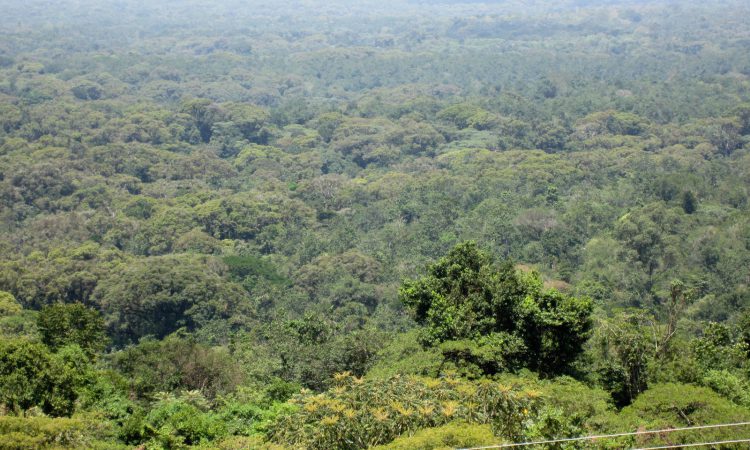
Maramagambo is one of the oldest forests in Uganda and is renowned for the bat cave that it is associated with. The bat cave in the forest is found in the volcanic tubes within the forest. The bat caves cannot be accessed currently due to their association with the Marburg virus. A viewpoint was constructed in the forest with the support from the US Center for Disease to allow the prevention and control of the disease without interfering with the tourist activities in the area of viewing the beauty of the forest without reaching the caves.
The forest has an interesting folklore associated with it dating back centuries ago. A legend has it that two boys once sought firewood in the forest and got lost never to be seen again. This left the masses dumb hence the name Maramagambo which translates to being left “speechless” as it was the state of the masses back then after the incident.
Location of Maramagambo forest.
The magnificent Maramagambo forest is located in the southwest of Uganda in Bushenyi district. It borders Queen Elizabeth National Park in the north from the Kichwamba escarpment stretching to Lake Edward.
The uniqueness of Maramagambo forest.
Maramagambo forest is bordered by two crater lakes that is to say Kyasandika and Nyamasigiri. These beautiful crater lakes contribute to the beauty of the forest as one views from the viewpoints available in the forest.
The forest is also home to two nocturnal primates that is to say pottos and Bush babies which further contributes to its uniqueness since these two nocturnal primates are so uncommon in the rest of the forests within.
Famous attractions in the Maramagambo forest.
There are various attractions within the Maramagambo forests which tourists have the opportunity to view and they encompass;
Crater lakes. The forest is bordered by two crater lakes which are quite picturesque and provide beautiful views, especially for photography enthusiasts. The lakes of Kyasindika and Nyamasigiri provide beautiful scenery that is good for sightseeing and photography.
Primates. It is important to note that the forest is home to various species of primates including red-tailed monkeys, chimpanzees, blue monkeys, baboons and l’hoests. These inhabit the various tree species within the forests from where they can be observed by visitors.
Bird species. Maramagambo forest is home to about 200 bird species that inhabit the canopies of the trees within and can be viewed by tourists from the birding sites within the forest. The bird species inhabiting the forest encompass African fish eagles, turacos, Abyssinian ground hornbill, black bee eaters, cinnamons, egrets, hammerkops, yellow-billed oxpeckers and Rwenzori batis.
Tourist activities carried out in the Maramagambo forest.
Maramagambo forest being a home to a large scale of biodiversity offers room for various tourist activities and they encompass;
Hiking. This is usually conducted by the game Rangers and professional tourist guides who have vast knowledge about the trails in the area. Hike launches are usually made to the hills within the area, especially at the other sides of the escarpment.
Nature walks. These are also conducted under the guidance of the game Rangers to ensure safety. Various trails can be undertaken by tourists ranging from forest trails, river trails, palm trails, Valley trails, and waterfall trails to mention but a few, with every one of them giving different sensational experiences unique to its own.
Bird watching. This interesting activity cannot miss mention since it is one of the most highlighted activities that tourists engage in while in the Maramagambo forest. This is supported by the various bird species that are endemic to this forest which visitors get the opportunity to observe. The bird species that are usually viewed in this forest include; handsome francolin, African fin foot, African jacanas, eastern plantain eater, saddle billed stock, Abyssinian ground hornbill, black bee eaters, cinnamons, egrets, hammerkops, marabou stocks, piapiacs, Doherty’s bush shrikes and bartailed frogons. Visitors enjoy taking pictures of these birds and most of them can be viewed on the birding sites within the forest that have state-of-the-art binoculars fitted with them to help visitors observe birds that are both far and near.
Forest research. This activity is usually carried out by zoologists and other conservationists who have various information they are looking for, especially about the primates within the forests or the tree species themselves.
Conservation education from the visitor Information Center in the vicinity of the forest. This is a base from which conservationists help educate the masses about the importance of the forests in the ecosystem which helps in preventing the forest cover from extinction.


