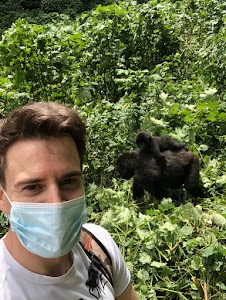
Gorillas are some of the most sought after primates in the world and gorilla trekking is a thrilling lifetime wildlife adventure that involves going in for guided nature walks, hiking steep and hilly areas, maneuvering through dense thick rain forests and tracking the rare mountain gorillas where you get to spend quality time with a specific gorilla family for at least one hour.
Gorilla trekking is a thrilling adventure, quite costly but worth every penny spent. There are only about one thousand mountain gorillas globally remaining in the wild and only three countries are lucky enough to shelter these human-like primate species in the Virunga ranges. All gorilla trekking activities can be done in Rwanda, Uganda and Democratic Republic of Congo.
While going in for this exciting and unforgettable safari adventure, trekkers are guided by guides and park rangers on where to track gorillas from, what to do and not to do and how they can get the best out of this experience. Trekkers are then divided into groups, each group of trekkers is limited to eight members and each group is assigned to track one particular gorilla family in its natural environment.
Countries and National Parks where Gorillas Live.
Uganda.
Among the only a thousand mountain gorillas remaining in the wild, Uganda is endowed enough and at least hosts almost half of the mountain gorillas in the entire world. This has made the country popular on both domestic and continent levels hence making gorilla trekking a popular activity in Uganda.
The country is one of the best places to sight the endangered mountain gorillas and has registered nothing but success in the tourism sector. There are only two gorilla trekking destinations in Uganda and they include the vast Bwindi impenetrable forest national park and the smallest national park in Uganda, Mgahinga national park.
Bwindi impenetrable national park is the largest home for the primate species of mountain gorillas in the Virunga region with about 400 gorilla individuals. This gorilla trekking destination is almost impenetrable as its name sounds and it is characterized by dense rain forests and hilly areas.
Gorilla trekking in Bwindi can actually take up to five hours depending on the location of the assigned gorilla family group to track. Often the less fit visitors are assigned to track nearby gorillas though this is not guaranteed as they sometimes move deeper to the dense forests in search for food.
RWANDA AND CONGO.
The rest of the two gorilla trekking destinations are Rwanda and Democratic Republic of Congo. Rwanda’s Volcanoes national park is one of the most visited tourism destinations in the country and the best place to encounter and spend time with the endangered mountain gorillas. There are about 12 habituated family groups that visitors can choose from in Volcanoes national park.
There are also two gorilla trekking spots in Congo including Virunga national park for mountain gorillas and Kahuzi-Biega national park for Eastern lowland gorillas. D.R. Congo is uniquely endowed as the only gorilla trekking destination for Eastern lowland gorillas. There are about eight habituated gorilla family groups in Virunga national park including Humba, Lulengo, Munyanga, Rugendo, Bageni and Nyakamwe.
HOW MUCH DOES GORILLA TREKKING COST?
The price of gorilla trekking differs for all the three different gorilla trekking destinations. Rwanda has the most expensive gorilla trekking permits compared to the rest. There have been efforts in the country to boost luxury tourism hence it offers high end services for most of its visitors.
Gorilla trekking permits in Rwanda cost about $1,500 per person per day while Uganda charges moderately at about $700 per person per day. Democratic Republic of Congo has the cheapest gorilla trekking permits at $400.
WHEN TO DO GORILLA TREKKING.
The fact that gorilla trekking involves hiking, long nature walks and maneuvering through thick dense forests, the best time to do this thrilling tourism activity and have the best out of it is the dry season of the month.
The dry period of June to September and December up to February is the best time for all gorilla trekking activities. The weather is mild, and the trekking routes are not muddy or slippery hence easy to trek through, while hiking is also easier compared to when it’s a wet rainy season.
Traveling during the dry season enables visitors to have unforgettable views of the wildlife and plant life in the gorilla trekking destinations since the lush vegetation is dried short.