
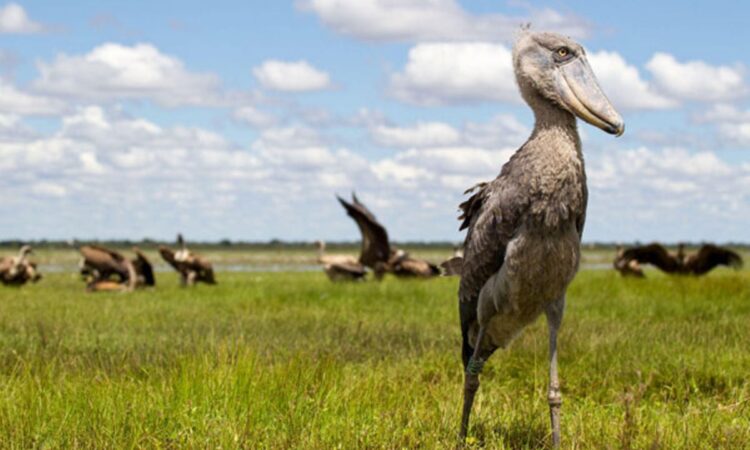
The shoebill stork is one of the most sought-after birds in the world and is found in specific areas of the country’s wetlands. These birds are distinguished by their shoe-like beaks, large feet, and feathers. They spend time in the swamp feeding on the fish they trap in the water. They are land birds that are rare to find yet present at the park all year round. Murchison Falls National Park is the largest and oldest national park in the northwestern part of Uganda, a part of Masindi district. It is situated about 305 kilometers northwest of Kampala.
Uganda is a beautiful landlocked country in the eastern region of Africa, with a variety of flora and fauna. It is a safe destination with amazing infrastructure and good security across the country. The land is adorned with rolling landscapes, lush vegetation, mountains, and large water bodies. Countries on Uganda’s border include the Republic of Kenya to the east, in the north are South Sudan, Rwanda to the southwest, the Democratic Republic of Congo to the west, and Tanzania to the south. There are 10 national parks in the country, with the best of the shoebill experience in Murchison Falls National Park.
Shoebill lovers track the bird in the marsh-filled delta stream downstream in the Victoria Nile, where Lake Albert starts its journey. The tracking session lasts for several hours on a canoe walk while watching other birds inhabiting the area. The ranger guide will take you to their habitat, explain some characteristics, and give a distinction between the female and male shoebill stock. Questions are welcome as you take photos and notes of all that isn’t known about the birds. The birds often get out of the marshes for a clear citing.
Other activities at Murchison Falls National Park
Besides tracking the shoebill stock at Murchison Falls National Park, there are other activities to add to your safari experience, including a boat cruise to the bottom of the falls, a game drive at the northern part of the park, chimpanzee trekking at Budongo forest, sport fishing, and hike to the top of the fall. There are over 451 bird species, including those endemic to the Albertine Rift, 4 of the big 5, notably the lions, leopards, elephants, and buffaloes, unique plant species, and primates. More to look for include, the oribis, waterbuck, duikers, Uganda Kobs, Jackson hartebeest, giraffes, warthogs, and more.
The best time to visit the shoebill stock
Shoebill stock can be found in Murchison Falls National Park all year round. The best time for tracking them is in the morning hours as they do move out of the nests to find, among others, the fish in the water. The tracking is done on a canoe boat, with an expert ranger guide who will accompany you to find birds and uncover their character. The best month to visit them is from January to March and June to August.
How to Access Murchison Falls National Park
Murchison Falls National Park is accessible on the road through a 5-6 hour drive to Masindi town and the park with a view of busy towns and the lush plantations by the roadside. The park’s gates open for visitors at 7 am and close at 7 pm. The park can also be accessed by air as charted domestic flights can be arranged from Kajjansi or Entebbe International Airport to one of the close airstrips in Murchison Falls National Park. These include Pakuba Airstrip, Bugungu Airstrip, and Chobe Airstrip.
What to Carry for Murchison Falls NP
Ready for the trip, one needs to carry the following essential items for a successful shoebill stock adventure in Murchison Falls National Park.
- A birder book for clarity
- Binoculars to watch the distant birds
- A hut to protect the head against the sun
- A birders book for identifying more birds in the area
- Warm clothes
- A camera for photography
- Long stockings
- Sunglasses
- Waterproof hiking boats, etc.
In conclusion, shoe bill stock is found in Murchison Falls National Park in the delta area all year round. Book your trip at least one month in advance to get all things sorted for the track. Other activities to blend with a shoebill stock include game drives, boat cruises, nature walks, and photography in the country’s largest national park.


