Unlike tropical diseases like Malaria which is curable, Yellow Fever is a deadly disease transmitted by mosquitoes just like the Zika virus; it’s subdivided into three different categories, sylvatic yellow fever by those who live in rainforests and in the wild, intermediate yellow fever got from home and urban yellow fever contracted when an infected person spreads the virus to another person.
Just like the coronavirus, it takes about 5 days before an infected body starts to show the signs and symptoms which include fever, vomiting, muscle pains, loss of appetite, and in more severe cases, bleeding from all the body’s openings like the eyes, ears, mouth and abdominal pain.
These symptoms are similar to those of Ebola virus which is another common disease outbreak in Africa. An infected person might face kidney failure after about 10-15 days after infection and eventually die, unlike the Ebola virus which doesn’t have a vaccine, yellow fever has a vaccine that is 100% approved to prevent the disease and it is a required travel document in most countries, the vaccine is effective when taken a week before travel.
Acquire the yellow fever shot from a recognized health facility approved by the World Health Organization and the CDC Center for Disease Control as such facilities are recognized for granting genuine shots and vaccination cards that are accepted worldwide. Even after receiving the vaccine, please sleep under a mosquito net especially if you are in Africa. When traveling to any African country, it is essential to have a genuine yellow fever vaccination card because some countries learned from experience when they faced a breakout of Urban yellow fever where a mosquito that bit an infected person can transfer the virus onto the next person it bites, the warm temperatures in Africa also support the breeding of these mosquitoes.
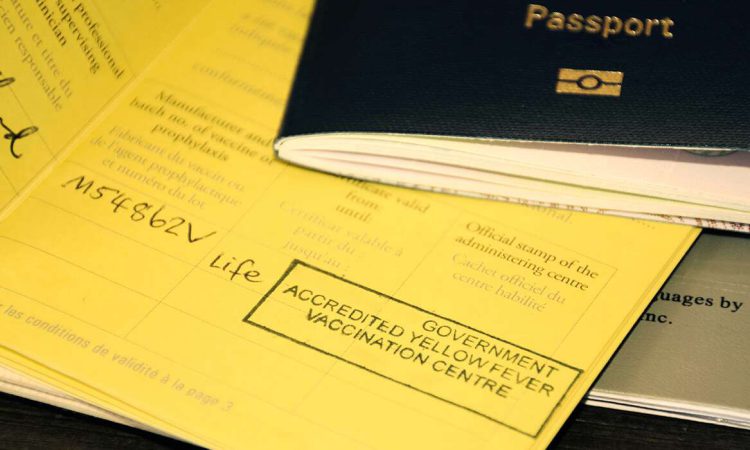
When entering Uganda, Rwanda or the Democratic Republic of Uganda and any other East African country, all travelers are expected to present a yellow fever vaccination card whether at a land border or airport. The card is always requested by the immigration officers alongside your other travel documents like a passport, therefore always have one such that you don’t face the law and get bounced back when you fail to present one. At some entry points in some countries, there are readily available medical staff that enable you to acquire a shot and card before proceeding to enter the country. However, always be ready with your card to avoid disappointment.
Just like any vaccinations, be sure to experience minor side effects like headache, body pain and fatigue. Pregnant women and very young children, people who are already infected with HIV/AIDS, those battling chronic illnesses like sickle cell, cancer, and people allergic to egg protein are some of the people who are exempted from acquiring the vaccine. However, before going for the shot, you are advised to first consult your doctor on whether you are eligible for the vaccine or not.
Most of the African countries like Ethiopia, Congo, Uganda, Trinidad, Central African Republic, Burundi, South Sudan, Nigeria and lots more have been declared Yellow Fever free as they haven’t had cases for quite long time now, however Angola is still the only country struggling with yellow fever outbreaks.
If you are going to spend most of your time in areas near forests or you are planning on visiting forests and any other areas that harbor mosquitoes, it’s advisable to get the vaccine. The vaccine is only got once and whenever it’s a requirement you will only need to present the vaccination card to prove you were vaccinated against yellow fever.