
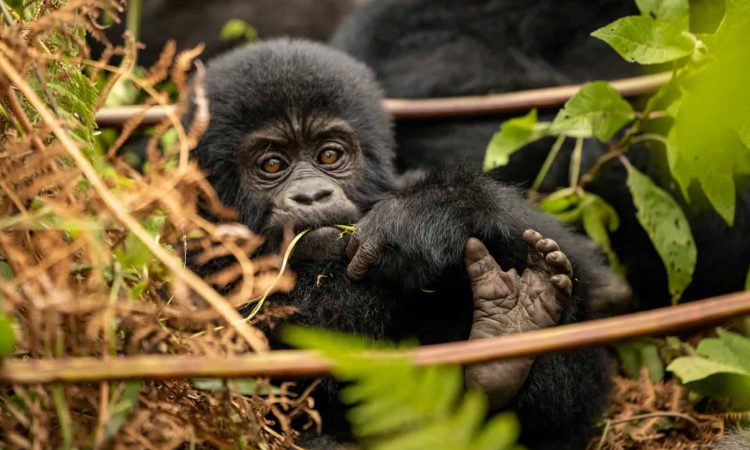
Get to know the gorilla trekking tips in Uganda to enjoy the experience. Just like any other actively engaging activity, gorilla trekking has to be prepared for. It is to make it a piece of cake to the participants. This is especially because it could take a couple of hours from 30 minutes to 8 hours to complete. As such, one has to be ready for whichever eventuality in that time. The following are good preparation endeavors before setting off for a trek.
- A gorilla trekking permit is a must have for any participant. This permit grants access to the trek and therefore one should remember to get a permit before arriving on safari.
- Being comfortable for an activity is key, in order that it is carried out as expected. There will be no inconveniences of excruciating feelings or occurrences. An example of a measure to achieve this is wearing comfortable hiking shoes.
- A walking stick is essential as well. This is for trekking the rain forests’ uneven terrain and will keep you walking upright.
- Any weather on the gorilla trekking safari should be well prepared for. Rain gear can be carried in case it rains. A hat and sunscreen lotion for protection from the sun rays, etc.
- Carry a water bottle and food as there’s usually a break taken during the trek to have something to eat.
- Waterproofing your camera and absolutely turning off any flashlights. These flashlights can raise curiosity in the gorillas leading to them charging and hence being harmful to the people trekking.
- Do some exercises before setting off in order to physically set the body for the demands of the trail.
In addition to that, certain rules and regulations ought to be followed in order for the gorilla trekking to be a success. These are categorized as general park rules. Examples of these rules are categorized as follows.
- Do not drive off the tracks in the park since you might run into dangerous animals. This could also cause accidents by knocking some animals. Also, keep the car windows and doors locked while driving at the park since you may not know what could be encountered. About driving still, do not drive in the park beyond 7:00 pm.
- Do not litter in the park as this leads to an untidy and unpleasant sight. Even unknown and uncalled-for diseases to the animals might be spread.
- Respect the gorilla limit imposed on the time visitors are allowed to be around the gorillas each day(maximum of one hour, in order to limit their disturbance)
- One should be 15 years and above to participate in gorilla trekking. Anyone who is below the age of 15 cannot be permitted to go gorilla trekking.
- Do not visit the park if sick. This will tend to disorganize the rest of the crew in case there’s care that ought to be given to the sick person. It could also lead to the animals contracting your diseases.
- Ensure strict hygiene and safety standards while in the park. The staff at the parks make sure that the hands and feet of tourists are sanitized in order to maintain this hygiene.
While gorilla trekking,
- Flash photography is not allowed as mentioned earlier on.
- Keep a low voice at all times since gorillas tend to respond to abnormal sounds that are not contrary to their normal activity.
- Do not touch the gorillas as they might think you’re an attacker.
- You must stay in a tight close group when around the gorillas. Park rangers guide small groups of a maximum of eight people per gorilla family visit and all these people should stick together for safety.
- Do not eat or drink when around the gorillas.
- Gorillas are assumed close relatives to humans and hence it is important to keep a distance of 7 meters(21 feet) from them to keep both parties safe.
How to prepare for your gorilla trekking safari in Uganda?
Uganda is home to an outstanding variety of wildlife which consists of a variety of animal species that are fascinating and eye-catching when seen up close, and that need our protection as humans, an example being gorillas.
The riveting activity of hiking through forests to see these gorillas in their natural habitat is known as gorilla trekking. It is treasured as Uganda’s top tourist attraction. Fortunately, Uganda has the rare mountain gorilla species.
Gorillas used to be critically endangered animals but with the efforts of conservation enforced, they have crossed to being less endangered animals. They are the largest primates on earth and are extremely intelligent, they are most active during the day, they build a nest of leaves at dusk to sleep, and mainly feed on leaves, mushrooms and plant matter.
Uganda’s climate has two dry seasons, December to February and June to September, and these are the best times to carry out gorilla trekking. However there is no guarantee as rain could still be received.
The diverse landscape of Uganda encompasses the Bwindi impenetrable national park, which is one of the two parks in which gorilla trekking is done in Uganda. This park is located across three districts, namely Rubanda, Kanungu and Kisoro, with four sectors in which the gorillas can be accessed i.e. Rushaga, Ruhija, Buhoma and Nkuringo.
This mountain gorilla sanctuary harbors around 50% of the worldwide population of these primates, with a total number of 21 gorilla families from all four sectors of the park, and as such it is the most popular destination for visitors that want to carry out gorilla trekking.
Secondly is Mgahinga National Park which is located in the south-western corner of Uganda in Kisoro district. This is the smallest national park in Uganda. Approximately 100 gorillas reside here, although they used to freely cross borders between Uganda, Rwanda, and the Democratic Republic of Congo. They are now permanently residing in Uganda.
Costs
For gorilla trekking, foreigners who are non-residents pay $800, foreign residents pay $700. Now, Ugandans and East Africans pay 300,000 UGX per person for gorilla trekking permits. This fee includes the park entrance fee and the guide fee. However, transport costs are not catered for on this. Part of the money is also used to support the park’s neighboring communities and gorilla conservation.


