
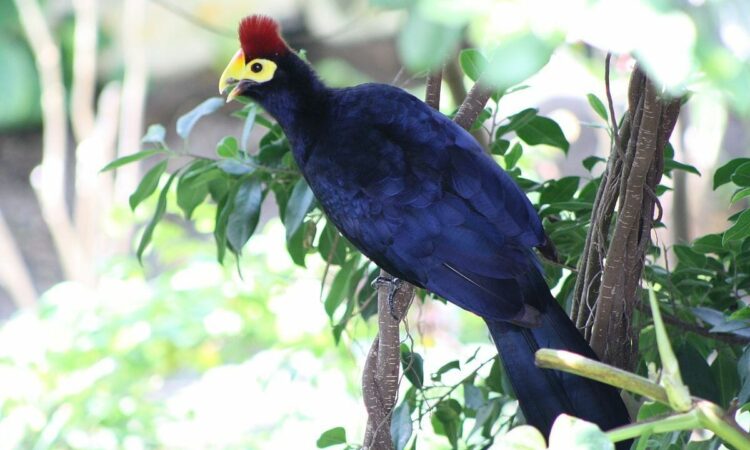
Birding in Mubwindi Swamp in the Ruhija sector in the south of Bwindi Impenetrable National Park promises a captivating guided adventure to spot plenty of colorful bird species. Mubwindi Swamp is found in the Rukiga highlands with a maximum height of approximately 2,450 meters above sea level. Pass through various trails, including the Mubwindi trail which takes 4 to 5 hours to complete. Mubwindi Swamp has over 100 recorded bird species out of the over 350 species that find shelter and food in the Bwindi Impenetrable National Park.
About Bwindi Impenetrable National Park
Bwindi Impenetrable National Park covers over 331 square kilometers in the Albertine Rift region in the southwest of Uganda. The climate experienced here is tropical with marked rain and dry seasons. In terms of rainfall, there are 2 rainfall peaks from March to May and also from September to November. The dry season runs from June to August and from December to January. The park is primarily known for gorilla trekking tours and has around half of the global total population of these critically endangered primates. Regardless, birding is also a sought-after tour activity here and Mubwindi Swamp is the best destination to enjoy it.
Bird species to see while birding in Mubwindi Swamp in Ruhija, Bwindi.
With at least 100 species of birds in Mubwindi Swamp alone, you will have a tremendous opportunity to spot a variety of them. Among them are, the handsome francolin, black-faced apalis, Grauer’s warbler, Rwenzori batis, Shelley’s crimson wing, yellow-eyed black flycatcher, western crested guinea fowl, Rwenzori double-collared sunbird, African green pigeon, dwarf honeyguide, handsome spurfowl, Rwenzori turaco, regal sunbird, white-starred robin, Albertine sooty boubou, African harrier hawk, crowned hornbill, African broadbill, Neumann’s warbler and mountain-masked apalis.
Other wildlife species to see in Mubwindi Swamp in Ruhija, Bwindi.
Mubwindi swamp has mixed forest as a major habitat in the site yet is dominated by moist lower montane forest. The constituent plant species that make up the flora are categorized into trees, herbs, and shrubs among others. These include Neoboutonia, macrocalyx, Alchornea hirtella, Macaranga capensis, Myrica kandtiana, Cyperus denudatus, Cyperus latifolius and Chrysophyllum albidum. Wild animals you could encounter in the Mubwindi swamp include blue monkeys, bush pigs, black and white colobus monkeys, mountain gorillas, bushbucks, forest elephants, forest buffaloes, and duikers.
Brief folklore of the Mubwindi Swamp in Bwindi
Mubwindi Swamp is known by the nearby communities as a place with a haunting past, especially from it being dubbed the ‘Dark Swamp.’ Its enigmatic folklore dates back to the early twentieth century, focusing on the Kigezi clan who were journeying from the southwest of Kigezi to the northern side. As they moved through the forest, they reached the Mubwindi Swamp, and discovered that they were trapped, and considered it too large and more challenging to cross. Unable to turn back, their desperation increased, and they resorted to wandering around the swamp for days.
Afterward, a voice, believed to be supernatural, demanded them to make a human sacrifice if they were to cross safely. Like most of us, the clan elders were hesitant, to say the least. But when they became more exhausted, they submitted to the ghost’s request. The most beautiful girl was the choice they went with as a sacrifice, and reluctantly cast her into the dark waters. Then, there was a path that appeared in front of them, providing them a way to the other side. After crossing, they looked back only to realize that the path had disappeared. Still sad about the loss of their girl, they named the swamp Mubwindi bwa Nyinamukari to symbolize the darkness that claimed her.
Best time to go for birding in Mubwindi Swamp
Ruhija sector in Bwindi Impenetrable National Park is open for birding tours throughout the year. Though the dry season is the best time to go to Mubwindi Swamp for birding tours, migratory bird species are typically present from November to April. The main nesting season for birds is usually between May and June. The advantage of visiting in the dry season is having an uninterrupted birding adventure, with little possibility of rainfall. The birding trail is also drier to offer a less challenging birding tour. The temperatures are also relatively warmer and offer more comfortable conditions for outdoor activities like birding.
How to travel to Mubwindi Swamp in Ruhija, Bwindi
You can reach the Ruhija Sector in Bwindi Impenetrable National Park using any road or air transportation means. From Kampala city, you can drive for over 503 kilometers to the site southwestwards in a scenic trip that takes 10-11 hours. Standard Safaris is your trusted tour operator for all car hire services. We have an impressive fleet of 4×4 wheel drive safari land cruisers, drones or minivans, and others. In addition, your transfers have guaranteed safety and comfort thanks to our knowledgeable driver guides who are fluent in English.
Air transportation can also be used if you want a faster transfer to go for a birding tour in Mubwindi Swamp in Ruhija. AeroLink provides domestic flights from Entebbe to Kisoro airstrip near the southern part of Bwindi Impenetrable National Park. You will enjoy a flight that offers aerial views of Uganda for 1½ hours. From the airstrip, you will be transported by our representative using road transport to either Mubwindi Swamp or your booked lodge. We also make flight bookings with AeroLink on your behalf to ensure that you have a seamless transfer to the destination.
Packing list for birding in Mubwindi Swamp in Ruhija Sector, Bwindi
Make your guided birding tour in Mubwindi swamp in the Ruhija sector of Bwindi Impenetrable National Park even more captivating by traveling with essential items such as.
- A pair of binoculars
- Camera/smartphone
- Birding checklist and notebook
- Lightweight colored long-sleeved shirt and long trousers
- Wide-brimmed hat
- Sunglasses
- Strong hiking shoes or boots
- Gaiters and socks
- Light rain jacket or a poncho
- Insect repellent
- Light snacks
- Refillable water bottle
- Extra cash
- GPS or map
- Backpack
- Trekking poles
- Sunscreen
- Trekking gloves


