
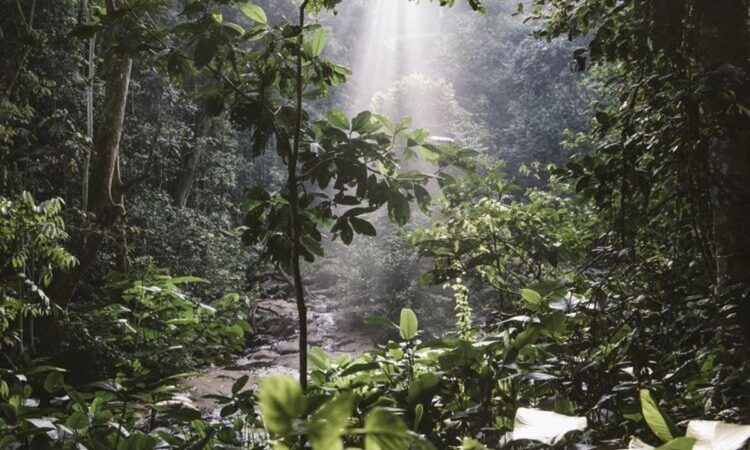
Mabira Forest is a secondary forest situated in the eastern region of Uganda on the Kampala-Jinja highway. The forest sits on a land mass area of over 300 square kilometers, located in the Buikwe district. Mabira Forest was once the biggest natural forest in the country, but it later lost that title after it became a secondary forest. By secondary forest, it means that the forest lost its natural part as part of it was replanted.
This was caused by the cutting down of trees after part of the forest was cleared. Mabira Forest, as a natural resource, has been protected ever since the colonial years and which led to be elevated to a forest reserve. The post-colonial era, however, was not good for the forest, as evident during the regime of President Idi Amin. The president, during his reign he gave part of the Mabira Forest to the local community for clearing and cultivation.
This led to the cutting down of some part of the forest by the community member for land to cultivate. However, with the fall of the Amin government in 1979 by the Uganda-Tanzanian back forces, the locals were forced out of the forest. The forest was replanted on the part that was initially cut down, and new and fast-growing trees, exotic to the forest, were introduced to hasten the reforestation process.
The forest has, thereafter, seen an impressive transformation in the recent past, growing into a marvelous forest like it was before. As they say, history repeats itself. Mabira Forest faced a later threat by the current government when a proposal came up to give part of the forest to a private company to clear and plant sugarcane for sugar processing. Unfortunately, this was later dropped after receiving a lot of backlash from the public. Mabira Forest harbors a variety of flora and fauna species as well as beautiful features, as unveiled below.
Griffin Falls
Griffin Falls is located inside Mabira Forest on the western side of the forest, hidden uncover the forest canopies. The Griffin Falls get their name from the European contractor who was employed by the government to work in this forest called Griffin. These falls offer an ultimate adventure experience that allows visitors to enjoy beautiful views of the ever-flowing falls. These falls are an important addition to the incredible sights in the forest, thus attracting a variety of visitors from across the country and the region.
Birdlife
Mabira Forest is a hotspot for birdlife, given its nature as a tropical forest that hosts over 300 bird species. These bird species are nestled across the entire ecological system of the forest. The forest contains different ecological systems, such as swamps, grasslands, and tropical rainforests, and all these systems help to support the birdlife in Mabira.
Some of the bird species in Mabira Forest include African cuckoo, swamp nightjar, western crested guineafowl, rock pigeon, great blue turaco, red-chested cuckoo, blue-headed coucal, grey-hooded gull, African wattled lapwing, African darter, African openbill, African wolly-necked stork, striated heron, hooded vulture, Cassin’s hawk eagle, hamerkop, African grey parrot, striking Nahan’s francolin, common swift, dusky long-tailed cuckoo, red-eyed dove, Sabine’s spinetail, great white pelican, African wood owl, and blue-throated roller, among many others.
Day and night mammals
The fauna species in Mabira Forest are not limited to the birdlife only, but also other mammals that are active both day and night. The mammal species active during the day are called diurnal animals, and Mabira Forest has numerous species, such as primates like the olive baboons, red-tailed monkeys, sitatungas, warthogs, and Ugandan mangabeys, among others. These mammals can be spotted on a nature walk during the day as they go about their day’s activities.
The night activity is equally fun as some mammals prefer the cover of darkness for their motion and activity. Some of the nocturnal mammal species that are active at night in Mabira Forest include galagos, often known as bushbabies, leopards, African golden cats, etc. However, other mammal species are active both periods in the day and at night and can also be encountered in the forest. These mammal species include African bush pigs and duikers, and these are the common species in this category to spot.
Lush vegetation
Mabira Forest is made up of a lush vegetation system that is characterized by tall hardwood trees, dense forest canopies, and shrubs. This vegetation contains over 312 tree species that date back over 20,000 years back as some trees have been recorded as being 500 years old. The common hardwood trees in Mabira Forest include mahogany and mvule. The floor of the forest is covered by ferns, mosses, and a variety of wild flowers that brighten the forest floor.
Primates
Mabira Forest is very much known for harboring a large percentage of primate species. These primates have been spotted by visitors as they embark on a nature walk across the forest. These primates rule the trees and nest across the vast forest. Some of these primates include the red-tailed monkeys, Ugandan mangabeys, olive baboons, vervet monkeys, and black and white colobus monkeys, among others.


