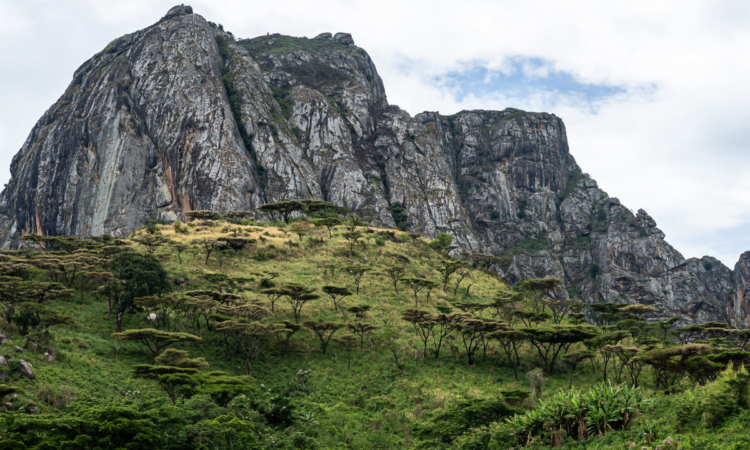
Among South Sudan’s abundant natural wonders, mountains create towering and lovely scenes wherever they exist in the country. Mountain climbers and travelers in general will be drawn to the beauty of these highlands that make South Sudan a special destination. The rich cultural diversity and deep history at any of these mountains tell unique stories that have shaped life in the region. The adjacent communities’ languages, traditions and customs reflect millennia of heritage passed down from generation to generation. Below are some of the mountains in South Sudan,
Imatong Mountain
This is situated in the Eastern Equatoria state of South Sudan, at the border with Uganda. The Imatong mountain is the biggest but second highest in the region, reaching 2,500 meters above sea level. Most of the vegetation found on the Imatong mountains in South Sudan are forest. The rest of the vegetation comprise savannah and shrubland among others. Such varied vegetation types serve as important homes to numerous fauna. Animals recorded at Imatong mountain include mountain reedbuck, blue duiker, greater kudu, cape buffalo, roan antelope, African wolf and African civet.
Birdlife found at Imatong Mountain includes sun lark, scares swift, yellow-billed barbet, mountain buzzard, Oriole finch and Sharpe’s starling. Other bird species at Imatong Mountain that captivate birders are brown warbler, dusky tit, piapiac, spotted ground thrush and Jackson’s hornbill. More attractions at the Imatong Mountain include the Kinyeti valley, granite rocks and other highland scenery.
The communities living around the Imatong Mountain are largely composed of Langi, Acholi and Lotuko among others. Meeting these distinctively unique tribes offers insight into rich history, traditions and modern lifestyles. They participate in a variety of activities at the Imatong Mountain. Among them is crop farming. Imatong Mountain also presents so many activities that can be done by visitors. These include hiking, climbing to the summit, birdwatching excursions and sightseeing etc.
Lotukei Mountain
Found in Eastern Equatoria, Lotukei Mountain is the second biggest mountain in the region after the Imotong Mountain. Lotukei stands at 2,795 meters above sea level right at the South Sudan/Uganda border, adjacent to Kidepo Valley National Park. Aditionally, the dominant tribe at the Lotukei Mountain is the Didinga. Visitors have a long list of activities that they can do while at the scenic Lotukei Mountain. Among them are hiking, cultural encounters with the Didinga, birdwatching, sightseeing and photography.
Kinyeti Mountain
The Kinyeti mountain is situated on Mount Imatong in the Eastern Equatoria state of South Sudan. In fact, the Kinyeti Mountain is the highest peak in South Sudan, rising up to 3,187 meters above sea level. The rocky summit of the Kinyeti Mountain is surrounded by dense forest and some bamboo thickets making it beautifully remote. Moreover, the Kinyeti Mountain is part of the Lomariti or Lolobai mountain group. An exploration of the Kinyeti Mountain guarantees everyone green river valleys, streams and lakes etc.
The Lotuko and Boya people living at the Kinyeti Mountain have continued revering the site and visit it for divine intervention. Among the diversity of wild animals to see on Kinyeti Mountain are leopards, colobus monkeys, blue monkeys, Mountain Kinyeti chameleons and mountain reedbucks are common. Next are the bird species counted in Kinyeti Mountain, which reach 88 including Stuhlmann’s starling. Other birds are green-throated sunbird and spotted ground thrush etc. Activities to do on Kinyeti mountain include climbing the rugged slopes to the summit, hiking, birdwatching and cultural encounters.
Mount Lomohidang
In the Eastern Equatoria state of South Sudan, Mount Lomohidang is a rocky or rugged mountain situated at the border of South Sudan and Uganda. This is surrounded by lush greenery that attract plenty of birds and insects. Bird species that fly around Mount Lomohidang include western banded snake eagle, dusky turtle dove, Diederik cuckoo and Abyssinian thrush. Over a dozen tribes live in the communities around Mount Lomohidang. These are Dongotono, Lango, Koko, Ogike, Sofia, Lokwa, Ketebo, Okorohore and Logir among others.
A visit to any of these tribes offers a chance to bear witness to unique cultures and lifestyles. Moreover the people will teach you some words in their respective local languages. Also, they will show you how they prepare their meals. Music and dancing is offered as a form of entertainment to make a visit to Mount Lomohidang memorable. Hiking and climbing tours can be done on Mount Lomohidang. Bird enthusiasts can explore Mount Lomohidang to see the plenty of bird species flying all over the destination.