
Apart from being prominent and rich in culture, the Nuer people are one of the largest ethnic groups in South Sudan. They are renowned for their deep ties to their cattle. Cattle here are a vital part of the Nuer Identity. They are not only used for food and commercial purposes but also for marriage arrangements and social relationships. Aside from cattle keeping, fishing and farming are other popular activities that Nuer people engage in for survival. Traditionally, cattle of the Nuer are far more than just livestock, and their lives revolve around cattle keeping. Without doubt, a man’s wealth and status in the Nuer community are measured by how many cows he has.
The Nuer people contribute a significant number to the country’s population, which plays a vital role as far as cultural, political, and social life is concerned. Many visitors to the Nuer societies often notice their preserved culture that has survived generations in the form of traditional dances and songs, beadwork, and their resilient spirit in the face of multiple hardships.
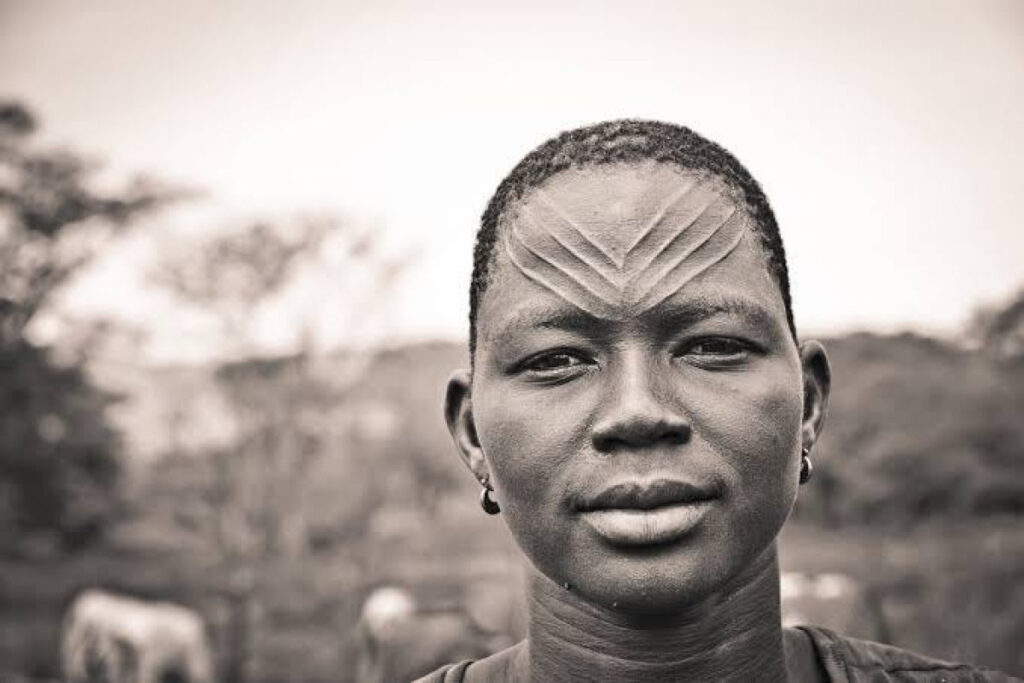
The older males often bear visible scarification and marks on their forehead and different body parts to mark initiation to adulthood. Spiritually, blessings, prayers, and sacrifices for the ancestors remain a cultural norm. The Nuers are popularly known for their height and lean build, which has attracted the interest of researchers and historians.
The ever-changing terrain of the Sudd wetland, one of the largest wetlands and ecosystems in the world. It has largely affected how Nuers live and care for their cattle. The Nuers have got a rooted culture, and you know you’ve reached the Nuer land when you start to spot Nuer youths grazing cattle, women preparing meals for their families, and elders taking shade under trees discussing community matters.
Social structure of the Nuer people.
Life of the Nuer follows the varying annual seasons, where families that settle in the village engage in farming. They cultivate millet, sorghum, maize, and other crops during the rainy or wet season. When the dry season kicks in, herders guide their cattle to the river banks and grazing fields in search of fresh pastures and drinking water.
The Nuer people highly place value on kinship ties and mutual support within clans and age sets. Extended families help each other, and marriage is exceedingly respected, involving the exchange of cattle that strengthens bonds between families. Leadership is traditionally held by spiritual leaders and respected elders rather than centralized political authority. However, modern realities have introduced new forms of governance which the Nuer people have embraced.
Religion among the community centers on a supreme deity locally known as Kwoth, with spirits of the air and ancestors playing important intermediary roles. Rituals, sacrifices, and divination remain central to daily life, even though the religion of Christianity has drawn in many followers in recent years.
Historical journey of the Nuer people.
For so long, the Nuer people have had a long history of resilience and have always fought against external domination, which contributes to their rooted culture. Even during colonial times, the Nuer were renowned for their endless conflicts with the British authorities, resisting external domination and always advocating for their independence.
In the 20th century, just like many other ethnic groups in South Sudan, the Nuer community never survived the continuous civil wars. They were largely affected, leading to the loss of many lives and the destruction of villages. A large population of them later joined the Sudan People’s Liberation Army, especially during the second Sudanese civil war. This war lasted for over 20 years between 1983 and 2005 and later led to the independence of South Sudan in 2011.
However, Independence could not guarantee stable peace, and the country has since been trapped in endless conflicts that involve ethnic disputes, especially between the Dinkas, from around 2013. This widespread violence has led to intense displacements where thousands of Nuer people have fled to take refuge in Uganda, Kenya, and Ethiopia.
Current challenges faced by the Nuer people.
The Nuer community still faces continuous hardships even today, and a large number of them are displaced within or live in refugee camps. Given that there’s easy access to firearms for many local groups in South Sudan, cattle raiding operates without rules and has become highly violent and strongly commercialized. Armed groups have now lured the Nuer youth into committing various crimes, while women and children encounter loss of their families and displacement from their homes.
Despite these difficulties, Nuer people continue to show outstanding endurance and advocate for the well-being of local livelihoods. In many refugee settlements, especially in Uganda, the Nuer communities have worked with extra effort to maintain their deep cultural practices, ancestral language, and social organizations. Children have started to engage in education initiatives while the women continue to assist so as to establish new opportunities for the younger generation.


