
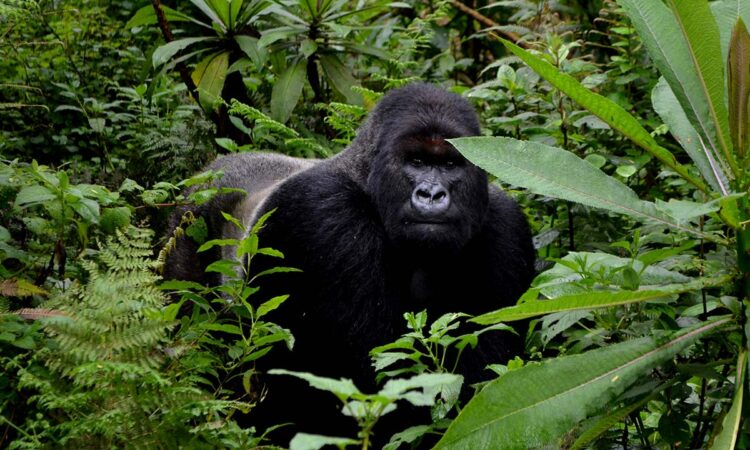
Gorilla trekking and wildlife safaris in Uganda dive you into northeastern Uganda and southwestern Uganda for an exclusive journey like no other. A safari that will forever run memorable in your mind. Most tourists visit Uganda to view man’s closest cousins the mountain gorillas and the other wildlife like Africa’s big 5. Bwindi Impenetrable National Park and Mgahinga Gorilla National Park in southwestern Uganda are the only places available for gorilla trekking in Uganda.
Queen Elizabeth National Park, Murchison Falls National Park, and Lake Mburo National Park to mention but a few are the available parks for wildlife viewing. Combining gorilla trekking and wildlife safari offers the best opportunity to encounter both mountain gorillas and other game species like buffaloes, elephants, and lions in their natural habitats. However, it is better to visit both the gorilla trekking and savannah parks near each other to experience both adventures. The gorilla trekking and wildlife safaris introduce travelers to wildlife such as the savannah elephants, lions, zebras, giraffes, buffalos, antelopes, bushbucks, hyenas, and waterbucks, among other preeminent beauty of Africa.
Where to go for gorilla trekking in Uganda?
Gorilla trekking and wildlife safaris in Uganda are possible with gorilla trekking being done in Bwindi Impenetrable and Mgahinga Gorilla National Parks. However, Bwindi Impenetrable is the best place for gorilla trekking, located in southwestern Uganda. It is a 540-kilometer driving distance from Kampala, the capital city. Bwindi harbors over 459 gorilla individuals, gladly half of the world’s remaining endangered mountain gorillas burgeoning in the rainforests. The mountain gorillas are shared over the 4 sectors of Bwindi in groups of families and Bwindi has 24 habituated gorilla families open for trekking.
One may ask “What is gorilla trekking?” well, gorilla trekking is an activity that involves walking through the thick forests with an experienced and trained guide and ranger in search of the wild habituated mountain gorillas. Gorilla trekking starts with a briefing at the park headquarters by the park officials where the tourists are grouped into groups of 8 people and allocated a gorilla family to trek. They are then handed over to the park ranger to take them through the trekking process.
Gorilla trekking is very impressive yet demanding as you trek for about 30 minutes to over 5 hours in search of the mountain gorillas through the dense forests. Upon locating the gorilla family, trekkers are presented with a chance to spend and interact with the family for over an hour. Trekkers can take non-flashy pictures as they watch the mountain gorillas go by with their daily chores. The ranger will guide the trekkers back to the park headquarters where they will be awarded gorilla trekking certificates as they proceed with their safari.
Where to go for wildlife?
The combined gorilla trekking and wildlife safari can be done in Queen Elizabeth National Park as it is the closest to Bwindi Impenetrable National Park. Queen Elizabeth National Park was established in 1952, making it one of the oldest national parks. It is the most commonly visited national park in Uganda. The park is a habiting place to over 95 mammal species. These include the Ishasha tree-climbing lions, savannah elephants, cape buffaloes, crocodiles, hippos among others, and about 600 bird species. Queen Elizabeth National Park has plenty of activities including chimpanzee trekking in Kyambura Gorge, a Boat cruise on the Kazinga channel that joins Lake Edward and Lake Gorge, birding, Batwa cultural encounters, hiking, and guided nature walks.
When is the best time for gorilla trekking and wildlife safari in Uganda?
Uganda is open for tours throughout the year, however best to visit in the dry seasons that run from June to September and December to February when all the grass is short. The southwestern and western regions of Uganda are usually wet, making the ground muddy in the wet season but the dry season eases the safari. This is because there is little or no rain in the dry season leaving the parks humid and the trails very dry and passable.
The wet season could be considered the best as well for its off-peak time, lowering prices of most activities and accommodation. This is the best time for travelers wishing to spend more time with the animals in the wild.


