
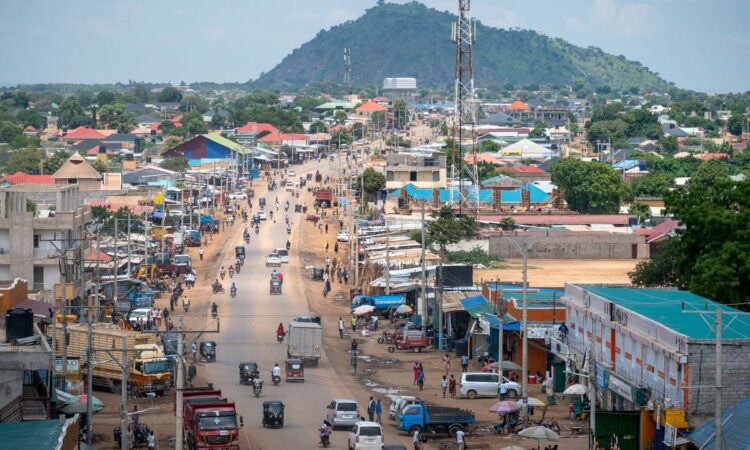
Use air transportation because it is currently the best way how to get into South Sudan. International flights mostly land at Juba International Airport before you can travel to other destinations of your choice. There are other international flight hubs for South Sudan for visitors to consider. These include Entebbe International Airport in Uganda. Travelers can also use the Jomo Kenyatta International Airport in Nairobi, Kenya. Through Ethiopia, Addis Ababa Bole International Airport is an important flight hub to South Sudan.
Where to go in South Sudan?
Southern National Park
This is a very large national park established located in the western part of South Sudan. Established in 1939, Sothern National Park sits on a total land area of 23,000 square kilometers and houses plenty of wildlife. These largely inhabit the swampy habitats, while some biodiversity can be found in the pristine savannahs and forest. To name but a few, are zebras, elephants, cape buffaloes, rhinos and Kordofan giraffes. For people interested in Southern’s bird species, you can see yellow-billed shrike, white crested turaco and Sahel bush sparrow etc.
Nimule National Park
This is only 410 square kilometers but with lots of biodiversity living inside it. Nimule National Park is found in the Eastern Equatoria state at the South Sudan-Uganda border. Along its eastern border, there is the popular White Nile, running for 48 kilometers. Its establishment happened in 1954 to protect wildlife and their habitat. The latter includes savannah woodland, riverine forest and others. On its hilly landscape, a wide range of wildlife can be seen. They include elephants, baboons, hippos, vervet monkeys, Uganda kobs and warthogs.
Boma National Park
Situated in the eastern region of South Sudan and so close to the Ethiopian border. Boma National Park is larger than Southern, seated on 22,800 square kilometers of land. However, it was formed much later than Southern National Park, in 1986. The diversity of natural wonders in the park constitute large areas of floodplains and also grassland. Its growing reputation as a must-visit destination lies in the healthy population of white-eared kob. These along with the tiang, Mongalla gazelle and Bohor reedbuck species move in millions to form earth’s largest mammal migration. It is referred to as the Great Nile Migration. The other animal species to see in the park include waterbuck, African leopard, Sudan cheetah, lion, oryx, and Bongo antelope.
Bandingilo National Park
Located in Equatoria, Bandingilo occupies a total land area of 10,000 square kilometers. It was established in 1992 in the upper reaches of the White Nile. This is part of the broader reasons why the park is covered by large areas of marshland. The Great Nile migration is perfectly witnessed in this park. A part from the participants of the migration, find zebra, warthog, giraffe and lesser kudu species etc. in Bandingilo. A lot of animal species prey on these animals, and they include lion spotted hyena, African wild dog, leopard and caracal. Since the roads are not well established, how to get into South Sudan’s Bandingilo is in a helicopter.
Shambe National Park
This is strategically situated within the central region of South Sudan, though it extends northwards. With a 620 square kilometer size, Shambe National Park is at least bigger than the more known Nimule. Its establishment is also recent, which was in 1985. Some of its major attractions include several oxbow lakes. This is partly because Shambe National Park lies within the White Nile River ecosystem. Many herds of elephants live in this genuinely pristine national park. You can also see lions, hippos and others in the destination.
Latonto National Park
The park is found in southwestern South Sudan on the border with the Democratic Republic of Congo. Latonto National Park covers 760 square kilometers of land that consist of forest and open glades. Like Shambe National Park, Latonto was also established in 1985.
Juba city
This is the capital of South Sudan with a population of 525,000 people as per the 2017 estimates. The capital alone covers 52 square kilometers while the entire metropolitan area is 336 square kilometers in size. Juba is situated on the banks of the White Nile. Climate experienced in Juba is tropical savannah, with a marked dry and wet season. Heavy rains are experienced from April to October, while November to March is a dry season. Total annual rainfall received is 1000 mm.
What to do in South Sudan?
South Sudan has 64 tribes including Jie, Mundari, Dinka, Lango, Acholi, Larim, Anuak, Azande, Shiluk and others. They are found across all the various regions of the country. A diversity of cultures is there to experience in South Sudan. Interact with pastoralists, crop farmers and more. Get to know them better as they offer their rich history and current experiences. Explore the Mundari cattle camps to see how this unique traditional settlement is done north of Juba.
Other activities to do in South Sudan include game viewing in the Boma-Bandigilo landscape. This is done on a helicopter since neither of the national park has well established game tracks. The beauty of this is you get to cover a wide area of the wildlife destination. White water rafting is enjoyed on the free flowing waters of the White Nile. In Juba visit the John Garang Mausoleum and also attend the entertaining inter-state wrestling matches. In western Bahr el Ghazal, visit the Wau Cathedral for the Roman Catholic Church.
Best time to Visit South Sudan?
The dry season offers ideal conditions for visitors inside South Sudan. It is all about the low precipitation experienced in this period that offers the optimal atmosphere. Roads to some easily accessible destinations are dry, not muddy, and therefore not slippery, to ease navigation. Also, when chances of showers are significantly low, exploration happens uninterrupted for maximum experiences. Flights are also perfect in the dry season because of no thunderstorms or lightening.


