
Historic landmarks and monuments to visit in Uganda come in several forms spread throughout the nation. These landmarks attest to the country’s unwavering past, shaped by ups and downs. They also showcase the people’s important milestones or achievements while also hinting at the setbacks. Not so long ago, such points of interest were not considered tourist attractions, but just important sites that represent the past.
Currently, many visitors from far and wide visit Uganda for a taste of its vastly superior heritage. It is important to note that every historic landmarks and monuments to visit in Uganda tells a unique story. Yet, you can fully understand the full tale once you visit each of them yourself. Many perceive such landmarks and monuments as mere status symbols. Our perspective is rather different, for instance these instruments of a shared history gave birth to the present. Almost every corner of Uganda has a historic landmark and monument to explore, and a few include.
The Equator Monuments
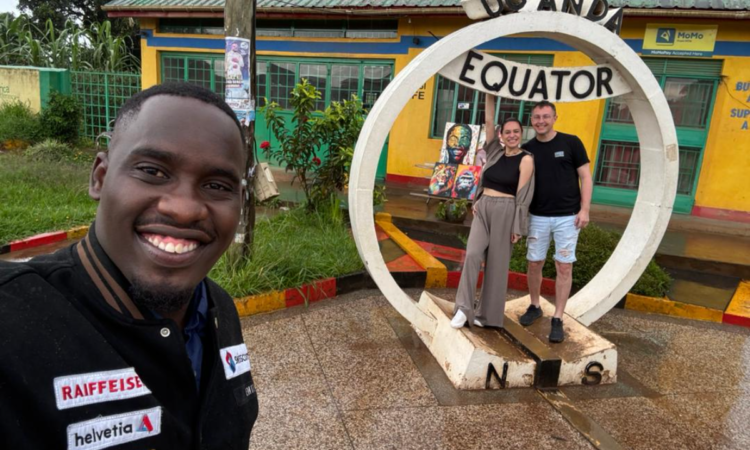
The equator is an imaginary line that divides the Earth into two hemispheres, north and south. Uganda is among the few blessed countries in the world where this imaginary line passes. Kayabwe, a small town about 72 kilometers from the capital, Kampala, is among the areas where an equator monument was built. Among the most visited of all the equator monuments across the country. This is because of its location along the Kampala-Masaka-Mbarara highway.
The Entebbe equator monument is located on a small island on Lake Victoria. This is also among the historic landmarks and monuments to visit in Uganda. Meanwhile, the one in Kasese is the most beautiful of all the equator monuments due to its recent refurbishment. This monument is located on the Kasese-Mbarara highway in Queen Elizabeth National Park at a place called Kikorongo.
Fort Patiko (Baker’s Fort)
Fort Patiko, also known as Baker’s Fort since Sir Samuel Baker and his wife, Florence Baker, built it in 1864. It acted as a base for both protection and a center for the slave trade. During the slave trade times, Arab traders who had their base in Egypt wanted a sorting area for the slaves. They often moved for long distances to the coast, where they would be sold off by Arab merchants. They eventually used Fort Patiko as both a sorting area and place for rest before the slaves continued to Egypt. This Fort also hosted a military base to keep ammunition, given it is located on Ocecu Hill. Visitors can relive the tales of the early years of the slave trade when they visit Fort Patiko in Gulu district.
Polish Refugee Cemetery
Tucked away in Nyabyeya town in Masindi is the Polish refugee cemetery. During World War II, Africa became the second biggest refugee camp for Poles. In Uganda, this camp was in Masindi. There is a Polish church and a cemetery still stand today as a reminder of how Uganda, among other few hospitable nations, offered help for Poles. Despite the challenges faced home, the Poles made among the best historic landmarks and monuments to visit in Uganda.
Source of the Nile Monument (Speke monument)
Also called the Speke monument is located in Jinja on the River Nile. River Nile is the longest in the world, and in the early years of exploration, explorers set out to find its source. Sir John Speke found it at Lake Victoria in 1862. In 1901, the British colonial government set up the source of the Nile monument to commemorate John Speke’s discovery.
Gaddafi National Mosque Complex
The Gaddafi National Mosque complex is a marvel of architectural that combines European, Arabic, and African styles. Located on Old Kampala hill, Gaddafi Mosque opened in 2007 after so many years of construction. Most of its construction funds came from the former Libyan leader, Muammar Gaddafi.
Independence Monument
The Independence Monument, located in the city center, show a woman tied with ropes, who lifts a child. Unveiled in 1961 by Dr. Milton Obote, a year before Uganda gained independence from the British. Visitors take a stroll to this monument to gain insight into the country’s past.
Kasubi Tombs
Kasubi tombs on Kasubi hill in Kampala is the final resting place for the royal kings of the Buganda Kingdom. UNESCO recognizes these tombs, and their unique grass-thatched structure makes them a stand out landmarks to visit in the city. Go to Kasubi to see for yourself one of the best historic landmarks and monuments to visit in Uganda
Rubaga Cathedral
This twin tower cathedral is the oldest in the country, and built in 1914. It serves as the main headquarters of the Roman Catholic Church in Uganda. Rubaga Cathedral is located on Rubaga Hill overlooking Kampala city.
Makerere Ivory Tower
The main administrative building of Makerere University, whose construction occurred from the 1930s to 1941. Funding came from the colonial government, with the use of British architectural design. However, the Ivory Tower was reconstructed in 2023 after it caught fire and got destroyed in September 2020. Regardless, the Makerere Ivory Tower remains one of the best historic landmarks and monuments to visit in Uganda
Namugongo Martyrs Shrine
The Namugongo Martyrs’ Shrine represent a dark history that shaped the face of Christianity in the country. This is where a group of Christian converts were burnt to death on orders of Kabaka Mwanga II.
Wamala tombs
Located in Nansana municipality, the Wamala tombs host the body of Ssekabaka Suunna II. Suuna is the former king of the Buganda Kingdom, who also constructed the Wamala tombs as his palace. Their location very close to the capital city make them a must-see historic landmarks and monuments to visit in Uganda.
Eclipse Monument
The eclipse monument in Biharwe, Mbarara, offer a fascinating past. The site represents one of the oldest total eclipses of the sun, which took place on 17th April 1520. In the past, the Omukama Olimi I Rwitamahanga, of Bunyoro Kingdom abandoned his loot in fear. This happened after he looted cattle and slaves from Rwanda. Ntare I Nyabugarobwera king of Ankole took his loot afterwards.
Nyero Rock Paintings
The Nyero rock paintings are some of the unique landmarks in the country. These tell a story of the early beings that occupied this area before modern-day civilization. Their location is Kumi district in the eastern region of Uganda.
Namirembe Cathedral
At the deck of Namirembe hill in Kampala city lies a pristine ancient Anglican cathedral called St. Paul’s Cathedral. Locally known as Namirembe Cathedral and is the largest Anglican cathedral in the country. Its constructed happened between 1915 and 1919 thus the oldest Anglican cathedral in the country. Namirembe Cathedral is also the headquarters of the Anglican religion in the country.
Kibiro Salt Gardens
Another important landmark is the Kibiro salt gardens, located on the eastern shores of Lake Albert. This is an area of salt mining and production due to the presence of salt deposits around the place. A simple visit offers an experience through interactions with the locals, where you learn how salt is mined. Make this a date for some of the better historic landmarks and monuments to visit in Uganda
Mahatma Gandhi Monument
The Mahatma Gandhi Monument, located in Jinja close to the source of the Nile, receives visits from several visitors. Built in 1997 to commemorate Mahatma Gandhi’s unwavering support for Africa during the fight for independence. It was Gandhi’s prayer that some of his ashes be thrown into the Nile. His monument today stands at the exact place where his ashes are scattered into the Nile. This monument is a bronze statue that stands on the banks of the Nile.


